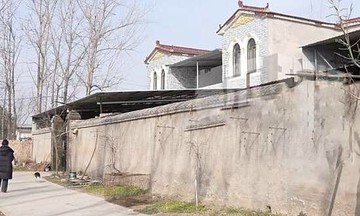
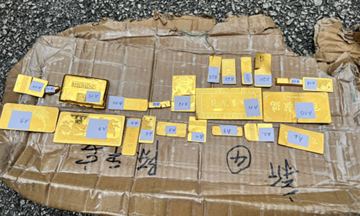
Early on 24/11, the Drug Crime Investigation Department (C04) under the Ministry of Public Security, in coordination with other functional units, raided a three-story house with a rooftop extension located in a small alley on Bach Dang street, Hong Ha ward. Inside, the drug trafficking group had barricaded themselves, firing back with military-grade weapons.
Detectives subsequently breached three layers of doors and used smoke grenades to storm the premises, subduing the suspects. Two suspects attempted to escape by climbing onto the roofs of adjacent houses but were located and apprehended by police using a drone.
At the scene, C04 seized three military-grade firearms, one grenade, numerous packages of "happy water" (a liquid drug), nitrous oxide cylinders (for "laughing gas"), and various other drugs. Among them were six vials of a highly potent liquid drug. A search of a related suspect's house yielded an additional 48,000 synthetic drug pills and one kg of crystal methamphetamine.
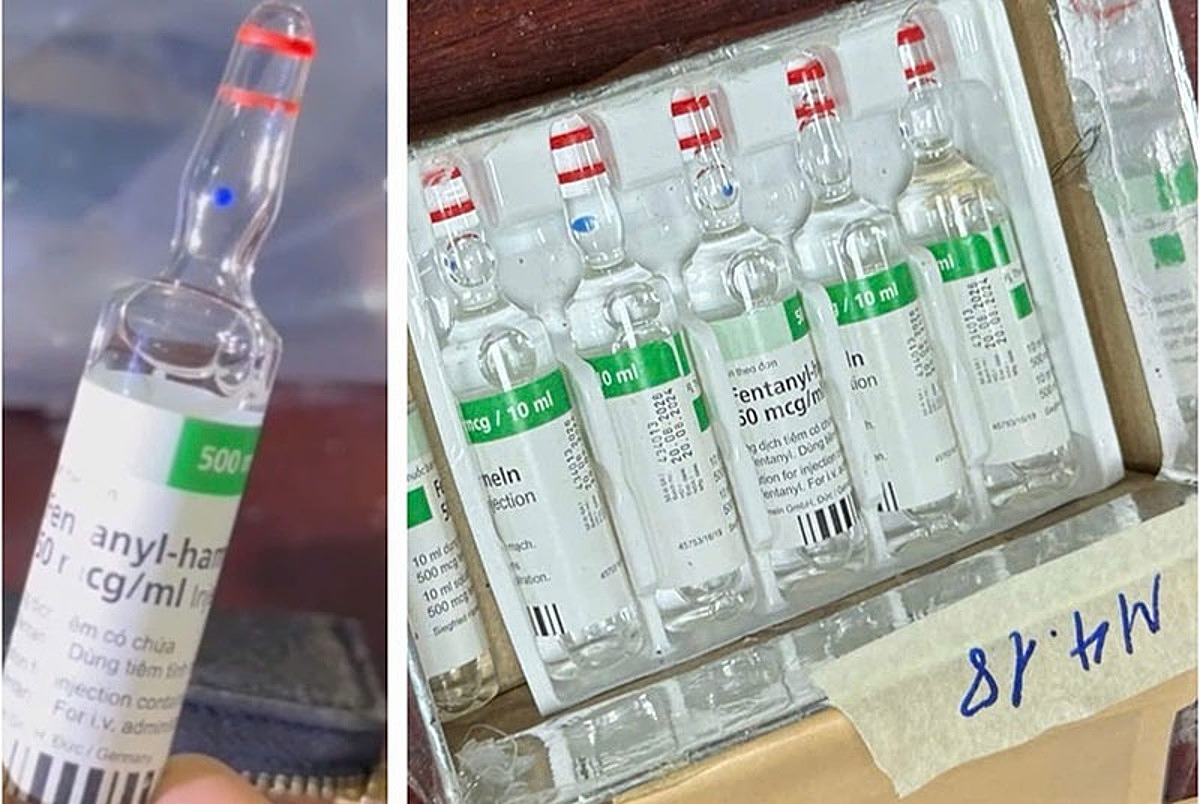 |
A vial of fentanyl, an extremely potent drug, seized by authorities. Photo: Police provided |
On 10/12, the Drug Crime Investigation Department announced that a 10ml liquid sample seized was identified as the highly potent drug, fentanyl.
During the investigation, the ringleader, Nguyen Van Tuan, 31, stated that to enhance the effects of drug use, he purchased 10 vials of fentanyl for over 7 million VND. Before his arrest, Tuan had used four vials, with six remaining.
According to police, fentanyl is a substance belonging to the opioid analgesic group, derived from opium. Fentanyl is a very potent painkiller, 50 times stronger than heroin, requiring controlled, prescription-based use in medical treatment.
However, fentanyl is also illegally synthesized and used as a recreational drug. Criminal groups often mix fentanyl with heroin, cocaine, or synthetic drugs to intensify the effects. Fentanyl and its derivatives are extremely potent, making the risk of fatality much higher than with heroin. Consequently, fentanyl and some of its derivatives are listed in Schedule I – a controlled substance under the 1961 United Nations Single Convention on Narcotic Drugs.
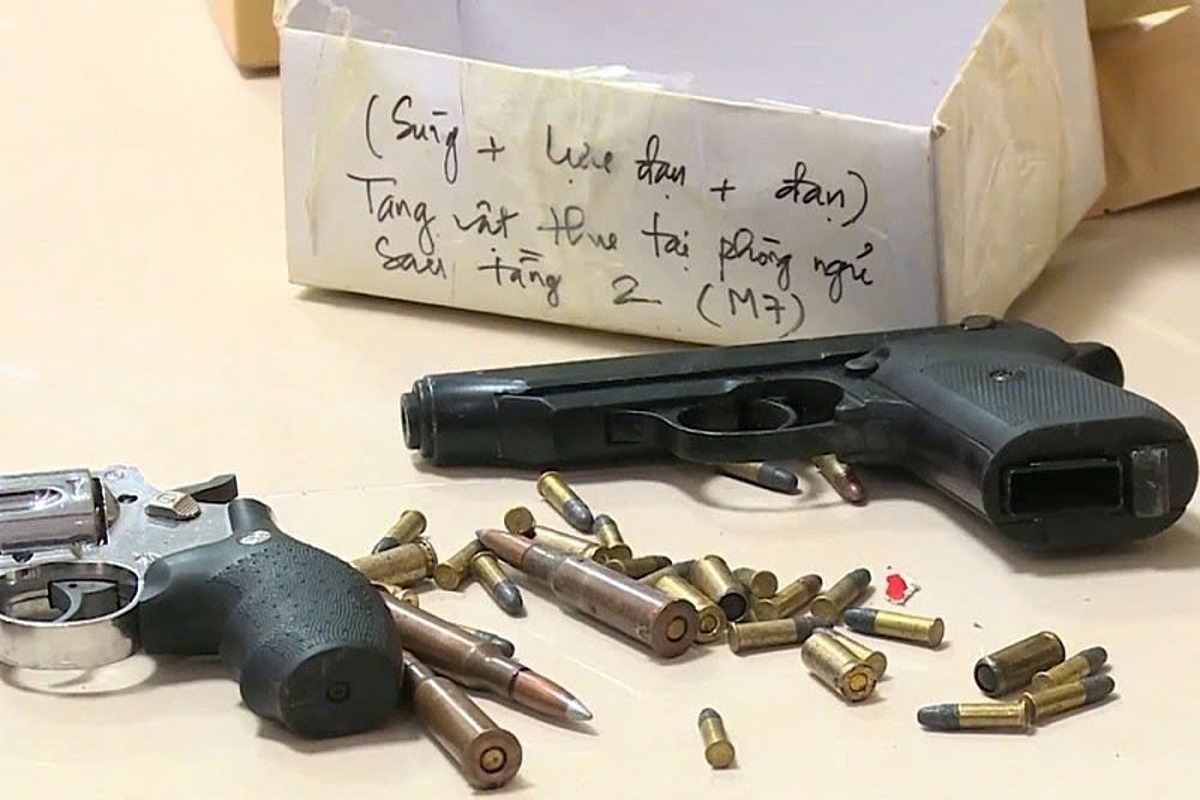 |
Firearms and ammunition seized after the raid on 24/11. Photo: Police provided |
C04 reports that fentanyl is highly addictive and a leading cause of overdose deaths in the US and several other countries. A tiny amount, about 2 mg of fentanyl – equivalent to 5 to 7 grains of salt – can be fatal due to respiratory failure.
In Hanoi, on 9/11, police in Duong Xa commune, formerly Gia Lam district, discovered a group illegally using drugs, resulting in two deaths from overdose. Twelve vials containing fentanyl were seized at the scene.
The dangers of fentanyl
Fentanyl first began spreading as a street drug in the US in 2012, replacing heroin and prescription painkillers, becoming the most dangerous addictive drug sold by criminal gangs.
In the US, in the 12 months leading up to 10/2024 alone, fentanyl claimed the lives of over 52,000 people, averaging more than 150 deaths daily. This figure escalated the opioid painkiller crisis, which had already silently caused hundreds of thousands of deaths in the US this century, to an unprecedented catastrophic level.
Like other opioids such as morphine or heroin, fentanyl produces feelings of euphoria, relaxation, and pain relief, but it comes with dangerous side effects like confusion, drowsiness, and especially respiratory depression. In overdose cases, users can quickly fall into a coma, experience cold and clammy skin, turn blue, and die from respiratory arrest.
Due to its effects on brain chemistry, fentanyl is highly addictive. This condition is diagnosed as "opioid use disorder," a chronic illness treatable with medications like methadone and buprenorphine combined with behavioral therapy.