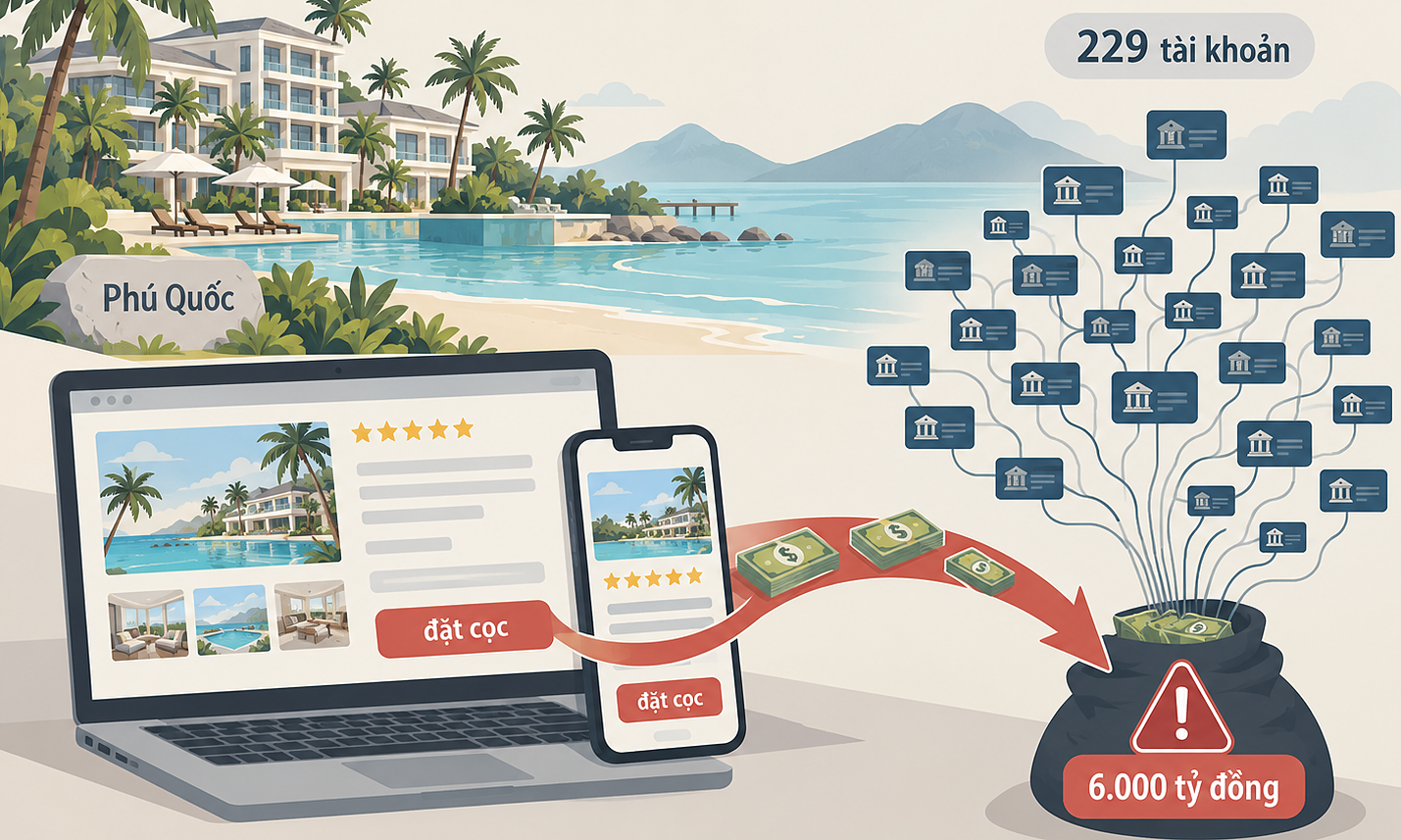
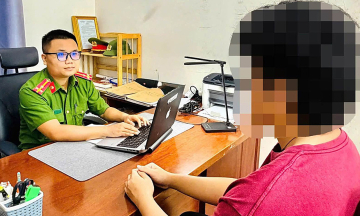
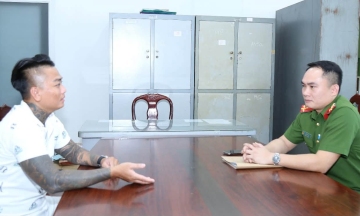
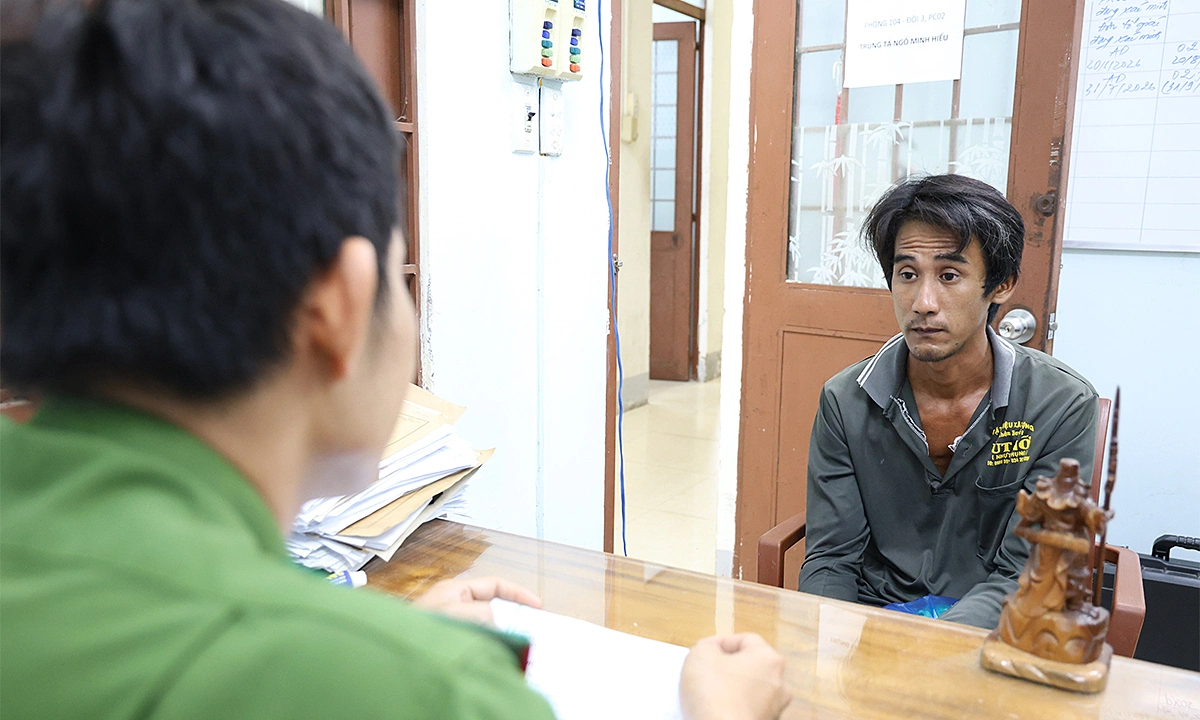
Pham Sy Huynh, 36, from Bac Ninh province, was hired by a man named "Chau Chung" to manage a network impersonating the Lazada e-commerce platform. Operating from a special economic zone in Myawaddy, Myanmar since 2022, the group specialized in luring Vietnamese individuals into performing fake tasks to increase interaction and sales, ultimately defrauding them of their assets.
On 17/11/2024, Dang Trong Khanh, a member of Huynh's group, created a Facebook account named "Thanh Thuy" using a photo of a beautiful girl. Khanh befriended and messaged Nguyen, a 68-year-old businessman from TP HCM with substantial assets. After two days of conversation, Nguyen developed feelings for the "girl". Recognizing Nguyen was "hooked," Khanh claimed to rarely use Facebook and suggested they switch to Viber for privacy, using an account named "Bong Xinh" that Khanh had created.
After "Bong Xinh" expressed admiration for Nguyen's charming conversation, accepted his affections, and spoke of a "serious, long-term relationship," Khanh handed the "Bong Xinh" account over to team leader Ngo Minh Vuong for the "client closing" phase. Vuong, playing the role of the beautiful woman, confided that her main job was an accountant, with a side hustle of increasing sales interaction on Lazada. Vuong enticed Nguyen to participate in these tasks to earn extra income and requested a Lazada shopping discount voucher as a memento.
To give the gift, Vuong instructed Nguyen to complete three tasks designed to boost sales interaction on the fake Lazada platform. Once Nguyen agreed, Vuong guided him to connect with a "customer service" account to receive product links, then take photos of the products and their prices to send back. Vuong then sent Nguyen a fake transfer bill, showing the product had been paid for at the correct price, thanking him for the gift, confirming the task completion, and promising millions of dong in commission. This tactic convinced Nguyen that the transactions on the platform were legitimate.
On 19/11/2024, seeing that their "prey" was falling into the trap, Vuong transferred the "Bong Xinh" account to Dang Thi Ngoc (group manager) and Pham Sy Huynh for the final "client closing" stage. The two escalated the emotional manipulation with promises of romantic dates and meetings. Huynh even enlisted Le Thi Tra to impersonate "Bong Xinh" and engage in flirtatious phone conversations with Nguyen to further ensnare him. After building trust, Ngoc and Huynh instructed Nguyen to perform more interaction-boosting tasks to receive gift vouchers and discounts for "Bong Xinh." In the first transfer, the group refunded 18 million dong, creating a false sense of security and making Nguyen believe he could earn commissions from these tasks.
Subsequently, the "girlfriend" continued to demand larger transfers for increasingly valuable orders, promising substantial commissions. The group returned another 18 million dong to Nguyen and provided two bank accounts for him to transfer money for the tasks. Believing "Bong Xinh" was a real woman and that the Lazada tasks could earn him money, from 19 to 21/11/2024, Nguyen made 64 transfers totaling approximately 41 billion dong from his two bank accounts to those provided by his "girlfriend." At the first-instance trial held at the Nghe An Provincial People's Court on 18/8, Nguyen was not present but sent a request to the court for the defendants to compensate him 41 billion dong. Huynh's group has only returned 392 million dong to the victim so far.
'Not scamming the poor'
Lured by promises of "easy work and high pay," recruits contacted Huynh via social media, then traveled to the special economic zone in Myawaddy, Myanmar. They worked and lived communally in a four-story building. Each day, their schedule began at 8 a.m., with a break from 10:30 a.m. to 11 a.m., working until 4 p.m., then a one-hour break before the evening shift, which lasted until around 11 p.m. Depending on work efficiency, they could leave early or work overtime until 1-2 a.m. The company provided three meals a day, free accommodation, and allowed phone use, travel, and shopping within the autonomous zone during breaks.
Huynh and Ngoc, as senior managers, were responsible for approving "clients" to ensure the scams were effective and yielded large sums of money. They excluded poor individuals, instructing staff to only target those with economic means. Daily, team leaders monitored work results, reported to Huynh, and disseminated instructions to subordinates. Monthly training sessions ensured employees followed scripts correctly and directly "closed clients" when necessary.
Huynh and Ngoc stated that the policy of "not scamming the poor" stemmed from the boss's requirement to focus on wealthy individuals. This was because employees spent significant time building trust, and if a client had no money, it was nearly impossible to proceed with the steps to induce transfers. Therefore, "prey" identified as lacking funds were eliminated early in the "client approval" stage, reserving resources for those who could be defrauded of substantial amounts.
Under company rules, each manager received a fixed salary of approximately 30,8 million dong per month. Additionally, they earned a 1-3% commission based on the total amount the group defrauded. If the group scammed between 260 million and 1,3 billion dong, the commission was 1%; for over 1,3 to 2,6 billion dong, it was 2%. If all employees defrauded over 2,6 billion dong, managers received 3% of the group's total illicit gains. Employees received a fixed salary of 15,4 million dong per month and an additional 5% of the total defrauded amount if they scammed over 2,6 billion dong. Salaries were paid on the 15th of each month.
 |
Many female defendants expressed remorse, crying in court. Photo: Duc Hung |
Employees received one to two months of training and scam script guidance before starting official work, still receiving salary during this learning period. After training, each person was given three to six phones and a computer to execute the scripts. At the end of each day, team leaders held meetings to review experiences, admonish those who made mistakes, or failed to meet targets.
Each month, managers organized one to two meetings to commend those who defrauded large sums, criticize those who did not meet targets, and compare results between teams. They established multiple Telegram groups to manage operations. Whenever an employee successfully defrauded someone, the entire group would ring bells, beat drums, shout the name, and applaud in celebration, aiming to encourage others.
Using the "beautiful girl" ploy, in addition to Nguyen, the network managed by Huynh defrauded five other individuals nationwide, aged 37 to 58. Among them, a 44-year-old man in Nghe An lost over 15 billion dong, also stemming from "love at first sight" and subsequent inducement to perform tasks on the fake Lazada platform at the "girlfriend's" request. In total, across six schemes, the group defrauded over 71 billion dong.
At the trial in mid-August, all 48 defendants expressed remorse, admitting their actions. Some cried, stating they committed errors due to difficult circumstances. The money earned from the criminal activities was primarily used for personal expenses in Myanmar or sent to their families. Many defendants stated that before going to Myanmar, they only thought they would find high-paying jobs, not realizing the actual work was fraud and the severe legal consequences. Only upon arrest did they realize the money earned from scamming others came at the cost of many years in prison and their own futures.
The judicial panel sentenced Huynh to 18 years in prison and Ngoc to life imprisonment for fraud and appropriation of property, under Article 174 of the Penal Code. The remaining 46 defendants received sentences ranging from 6 to 16 years in prison.
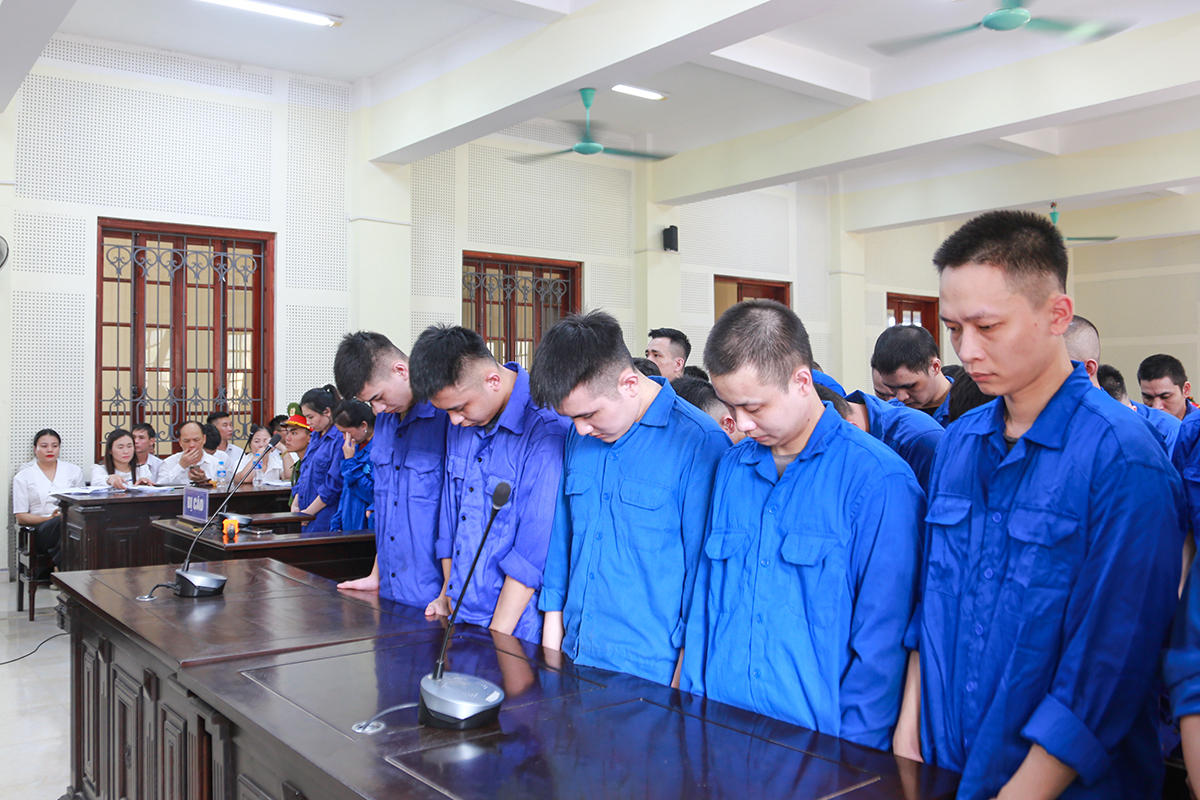 |
Some defendants listening to the verdict, afternoon 18/8. Photo: Duc Hung |
Duc Hung
* Victim's name changed.