This information was highlighted by the Government Inspectorate in its conclusion on the compliance with legal regulations in land management and use, construction planning, and construction permit issuance in Hanoi.
The inspection revealed that Hanoi lacked architectural management regulations and urban design guidelines for specific areas at the time of the review. Consequently, some residential projects received permits that did not align with planning, architectural, or construction standards for height, floor count, or density.
Furthermore, construction permits often lacked clear specifications for ground floor height, creating inconsistencies, a lack of uniformity, and negative impacts on overall architecture. Numerous permits also failed to document projects or project components that had already begun construction, as required by templates. Crucially, most permit adjustments were processed only after the structures had already been built in violation of initial regulations.
The Government Inspectorate attributed these shortcomings in construction permit issuance to both subjective factors within permitting agencies and objective issues, specifically inconsistent legal regulations governing construction permits.
Beyond permit issuance, the inspection also uncovered significant deficiencies in construction order management. Authorities were slow to detect and address projects built in violation of their permits. Furthermore, enforcement agencies often failed to decisively or thoroughly address construction violations for many projects and residential buildings from the outset. Competent authorities frequently avoided mandating the demolition of illegal structures or portions thereof, as regulations require.
These shortcomings, according to the inspectorate, significantly complicate the enforcement process for violations.
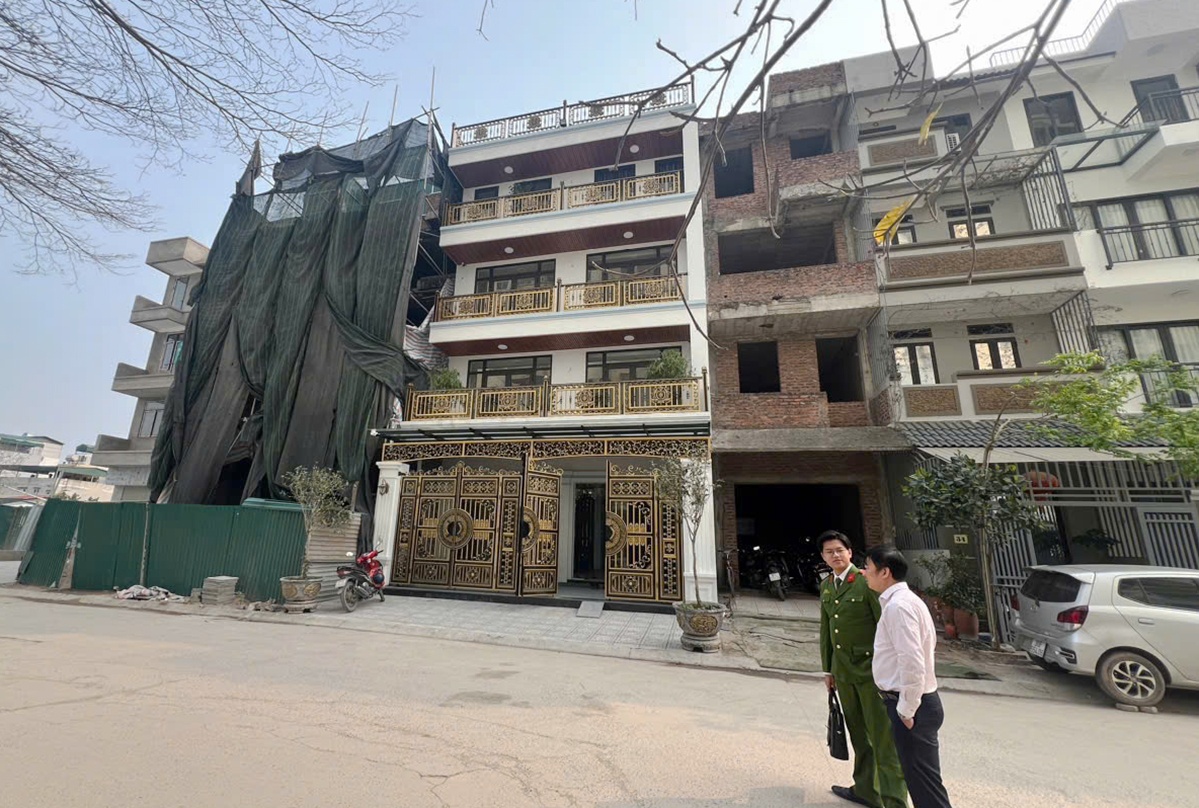 |
Over-floor buildings in Thanh Tri, Hanoi. Photo: Ngoc Bich
The Government Inspectorate urged Hanoi to promptly issue architectural management regulations and urban design guidelines for each area. These guidelines would serve as a foundation for issuing construction permits and managing construction order, particularly in urban zones that currently lack detailed construction planning.
Authorities must review construction permits for ongoing urban development and residential projects. Non-compliant permits should be revoked or adjusted.
The inspectorate further recommended that the City People's Committee direct the Department of Planning - Architecture to establish controlled building codes, including absolute codes, basement construction setbacks, and ground floor heights for each area. This measure would ensure alignment with the capital's overall planning. Specifying controlled codes should be a mandatory component of all construction permits.
Low rate of land use right certificates for households and individuals
Between 2011 and 2022, the Hanoi City People's Committee issued six legal documents providing guidance on certificate registration and issuance. However, these documents were found to contain "unclear, overlapping, and deficient" content, which did not align with land law regulations.
The Government Inspectorate noted a low rate of land use right certificate issuance for households and individuals in urban development and residential projects. This primarily stemmed from developers violating land and construction laws during project implementation. As a result, issuing certificates to customers after property transfers became challenging.
The Government Inspectorate recommended that Hanoi's departments and agencies definitively resolve existing issues in issuing land use right certificates to citizens. This action would safeguard citizens' rights and prevent the escalation of complex complaints.