On 24/9, the National Assembly Standing Committee reviewed and approved the draft Resolution on the protection regime for judges.
The resolution outlines procedures for protecting judges while performing official duties or when necessary. Relatives of judges, including spouses, biological parents, parents-in-law, adoptive parents, biological children, and adopted children, will receive protection if their lives, health, property, rights, or other legal interests are violated or threatened due to the judge's work.
Relatives can be moved to a safe location.
Competent authorities can require offenders to cease violations, relocate judges or their relatives to a safe place, implement preventive measures to restrict access by involved parties, and maintain confidentiality or change personal information, data, residences, or workplaces. When necessary, forces, vehicles, and tools can be deployed to directly ensure the safety of judges and their relatives.
People's Committees at all levels are tasked with receiving information and actively monitoring the situation in areas where judges and their relatives reside. They will direct communal police and relevant units to implement preventive and deterrent measures when situations arise.
If the life or health of a judge or their relatives is threatened due to the judge's work, the Chief Justice can request competent police or military agencies to apply protection measures.
Chief Justice of the Supreme People's Court Nguyen Van Quang stated that the risk of judges being threatened, influenced, retaliated against, or harmed while performing official duties is an inherent issue. Many cases involving corruption, economics, official misconduct, prolonged land disputes, or administrative complaints with numerous participants often lead to conflicts. Judges can face illegal influence, interference, threats, insults to their honor and reputation, and even harm to their health and lives during their duties.
Violations occur in various forms, from insults, threats, and pressure, to obstructing judicial activities, assault, and direct attacks. These incidents happen not only in courtrooms but also during on-site inspections, appraisals, mediation, or interactions with litigants.
Therefore, issuing this Resolution on the protection regime for judges is essential to prevent violations, ensure the safety of judges, and protect the independence of judicial activities.
The resolution will take effect from 1/1/2027.
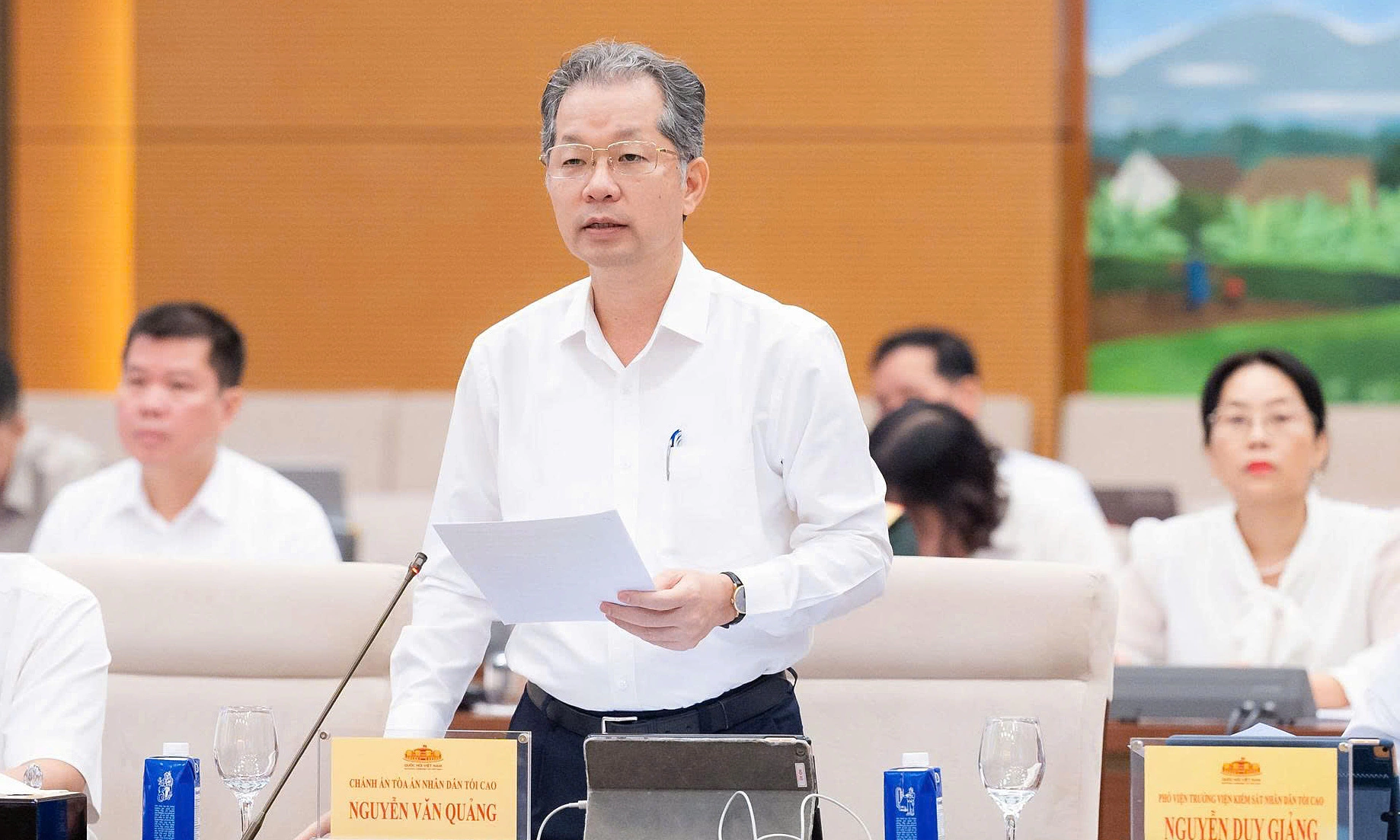 |
Chief Justice of the Supreme People's Court Nguyen Van Quang speaking at the session on 24/9. *Photo: National Assembly Portal* |
Son Ha