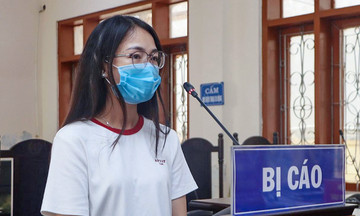
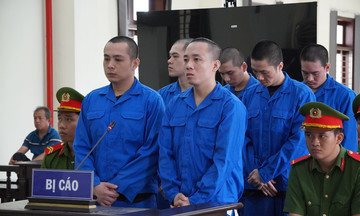
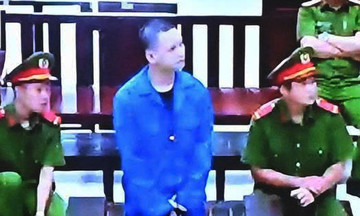
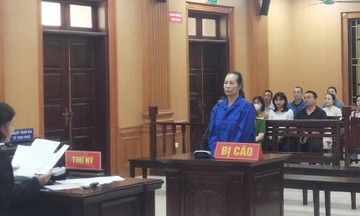
Nguyen Thi Nhu Loan, CEO and former Chairperson of the Board of Directors of Quoc Cuong Gia Lai Joint Stock Company, along with 21 other defendants, will face trial at the Ho Chi Minh City People's Court on 7/4. The trial concerns irregularities related to the transfer of a project on the 39-39B Ben Van Don land plot (formerly District 4), spanning over 6,200 m2.
Among them, Loan and 11 individuals are being tried for violating regulations on the management and use of state assets, causing losses and waste, under clause 3, Article 219 of the Penal Code.
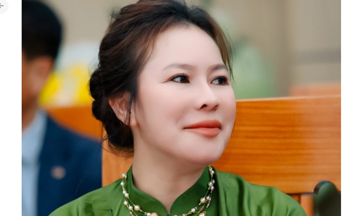
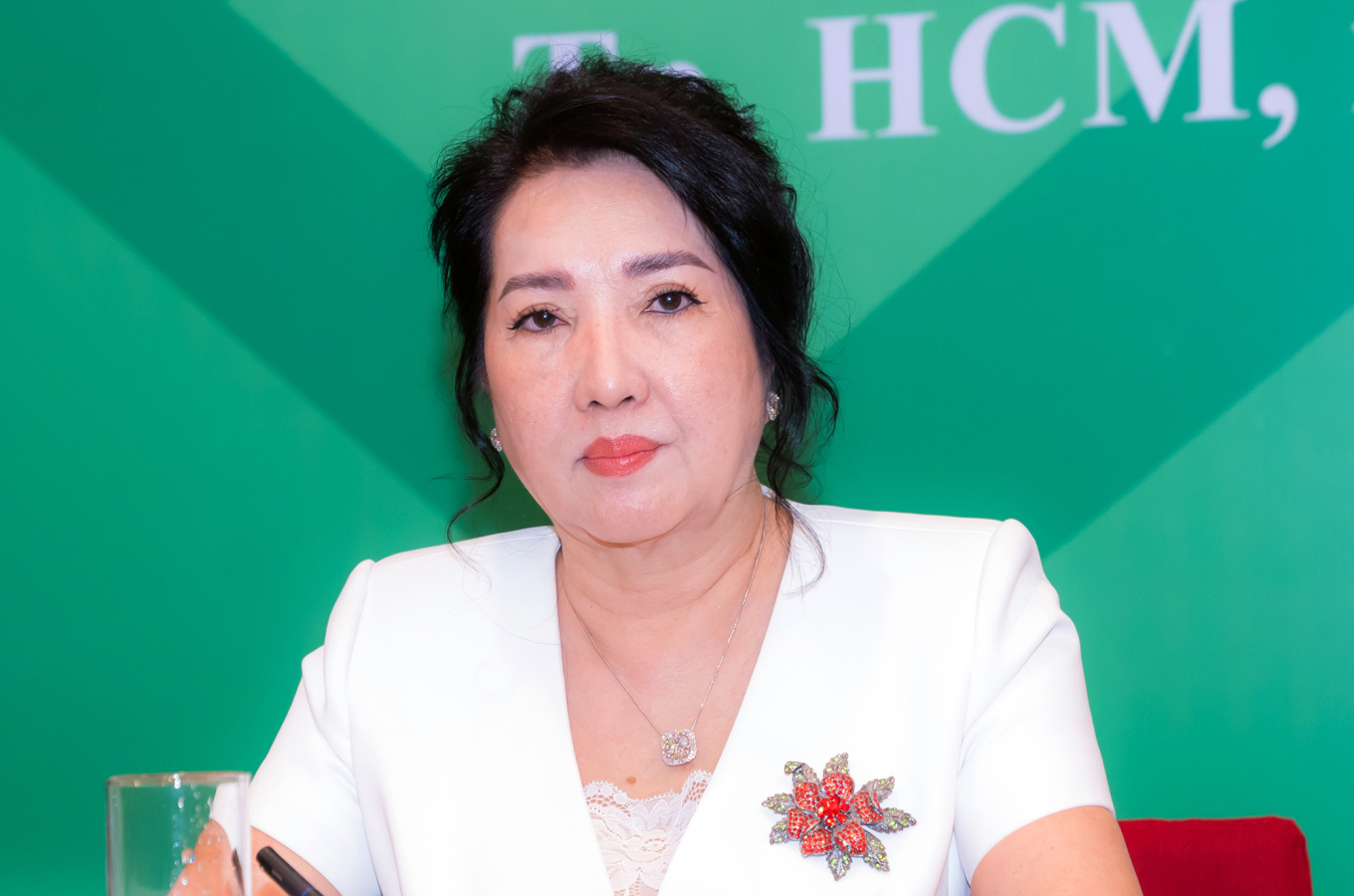 |
Nguyen Thi Nhu Loan. Photo: Quoc Cuong Gia Lai |
Two former city-level leaders involved, Nguyen Thi Hong, former Vice Chairperson of the Ho Chi Minh City People's Committee, and Dao Thi Huong Lan, former Director of the Department of Finance, are being tried for abusing their positions and powers while performing official duties.
Former leaders of the Rubber Group include: Tran Ngoc Thuan (former CEO), charged with receiving bribes; Le Quang Thung (former CEO, acting Chairperson of the Board of Directors), accused of violating regulations on the management and use of state assets, causing losses and waste, and receiving bribes.
Defendants Le Y Linh (former Director of Viet Tin Company) and Dang Phuoc Dua (former Board of Directors member of Viet Tin Company) are charged with giving bribes and violating regulations on the management and use of state assets, causing losses and waste.
The trial will be presided over by Judge Nguyen Thi Ha, Deputy Chief Justice of the Criminal Court of the Ho Chi Minh City People's Court. The trial panel has summoned 95 organizations and individuals with related rights and obligations to attend. Over 30 lawyers will represent the defendants and those with related rights and obligations. The trial is expected to conclude on 10/4.
Quoc Cuong Gia Lai CEO profited nearly 300 billion VND
The 39-39B Ben Van Don land plot (formerly District 4), covering over 6,200 m2, was state property managed by the General Department of Rubber (now Vietnam National Rubber Group) since 1976. After several divisions, management rights belonged to two member units: Dong Nai Rubber and Ba Ria Rubber.
Loan is accused of knowingly facilitating and transferring money to help Le Y Linh and Dang Phuoc Dua purchase this land plot without valuation or auction, contrary to legal regulations, to then transfer it back to herself. After receiving 100% of the capital contribution in Phu Viet Tin Company (established under Thung’s direction) for 460,9 billion VND (including land use fees paid on its behalf), Loan proceeded with the transfer.
In August 2014, Quoc Cuong Gia Lai was officially recorded as owning 99% of Phu Viet Tin's charter capital on its business license. However, as early as 5/9/2014—before acquiring the remaining one percent—Loan signed an agreement to sell the entire project to Thinh Vuong Real Estate Joint Stock Company (part of Novaland Group). By the time the official transfer contract was signed on 17/11/2014, the total value of the transaction had surged to over 846 billion VND.
The prosecution concluded that Loan's actions and those of her accomplices caused over 542 billion VND in state asset damage. Loan personally benefited and is held responsible for over 297,8 billion VND of this amount.
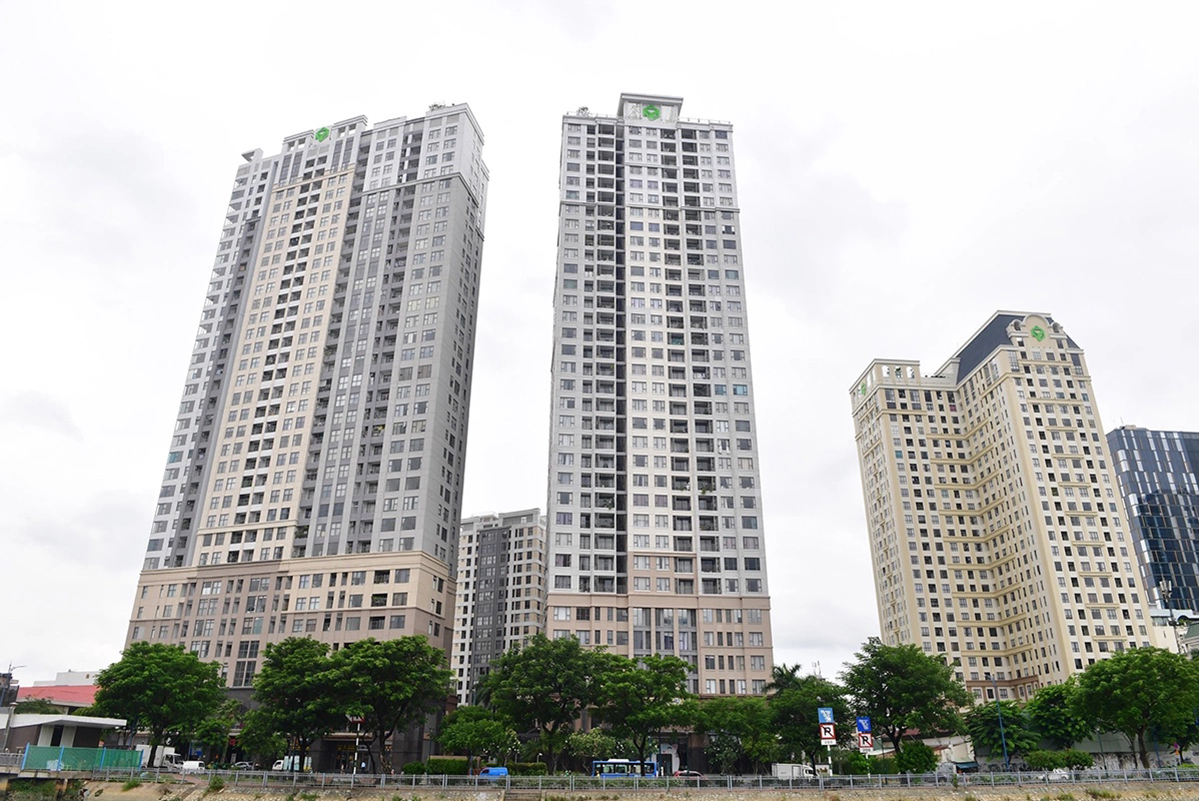 |
The current project on the 39-39B Ben Van Don land plot. Photo: Thanh Tung |
Misconduct by rubber industry executives and former Ho Chi Minh City vice chairperson
Before Loan participated in the capital contribution transfer at Phu Viet Tin Company, Le Quang Thung had proposed that the city sell this land plot to Le Y Linh. Thung stated he made this request because Linh had helped him take his son for medical treatment in Singapore.
Thung and Linh had an implicit agreement that Linh was responsible for "repaying" the Rubber Group 3 million USD. Specifically, 1,2 million USD was for Thung personally, while the remaining 1,8 million USD was to be realized by Linh selling 18 project apartments at cost to individuals within the Group. If they did not purchase, Linh had to buy back these units with a price difference of about 100,000 USD per unit.
In accordance with the agreement, Thung received 200,000 SGD from Linh (through payment of his son's hospital fees) and 300,000 USD in cash at the Palace restaurant in District 1, Ho Chi Minh City.
Thung verbally directed his subordinates at Dong Nai Rubber and Ba Ria Rubber to sign procedures for contributing capital to establish Phu Viet Tin Company. Subsequently, they transferred capital contributions to Linh's group without an auction, even signing false confirmations of receiving money.
Le Y Linh then collaborated with Dang Phuoc Dua (Chairperson of Viet Tin Company) to acquire the project and agreed on a profit-sharing ratio: Linh would receive 80% of the profits (responsible for handling the Rubber Group), and Dua would receive 20% of the profits (responsible for processing procedures with authorities).
To secure the land plot's ownership, Linh and Dua bribed a series of Ho Chi Minh City officials at that time. Leveraging prior relationships, Linh and Dua met and asked Dao Thi Lan Huong (then a permanent member of Steering Committee 09 for state asset arrangement) to arrange for the aforementioned land plot to be assigned to Phu Viet Tin Company.
Concurrently, Dua also approached Hong through her husband to discuss the matter. Based on a proposal document signed by Lan, Hong approved the policy to assign this land plot to Phu Viet Tin Company.
Dua later gave Hong 10,000 USD in a gift bag and 50,000 USD at a housewarming party to "thank" her for signing the land assignment document. Lan did not accept money but was promised an apartment by Dua once the project was completed.
In 2013, the project stalled due to conflicts and depleted funds between Linh and Dua. Loan then became involved. At the request of Linh and Dua, Loan transferred an initial 50 billion VND for Dua to use for "diplomatic expenses" with the Rubber Group (then under CEO Tran Ngoc Thuan) to finalize procedures.
Hai Duyen