The Ministry of Public Security is currently seeking public feedback on a draft amendment to the 2026 Penal Code. The public, along with various agencies and units, has 15 days remaining to submit their comments.
This comprehensive revision introduces a series of proposals spanning multiple sectors. These include reforms related to environmental protection, technology crimes, reducing the number of offenses subject to the death penalty, expanding the use of fines as an alternative to imprisonment, and increasing criminal offenses for businesses.
Specifically within the justice sector, the Ministry of Public Security is proposing a new criminal offense targeting civil judgment enforcement officers. This proposal comes in addition to another suggestion requiring lawyers to report clients who are preparing to commit crimes.
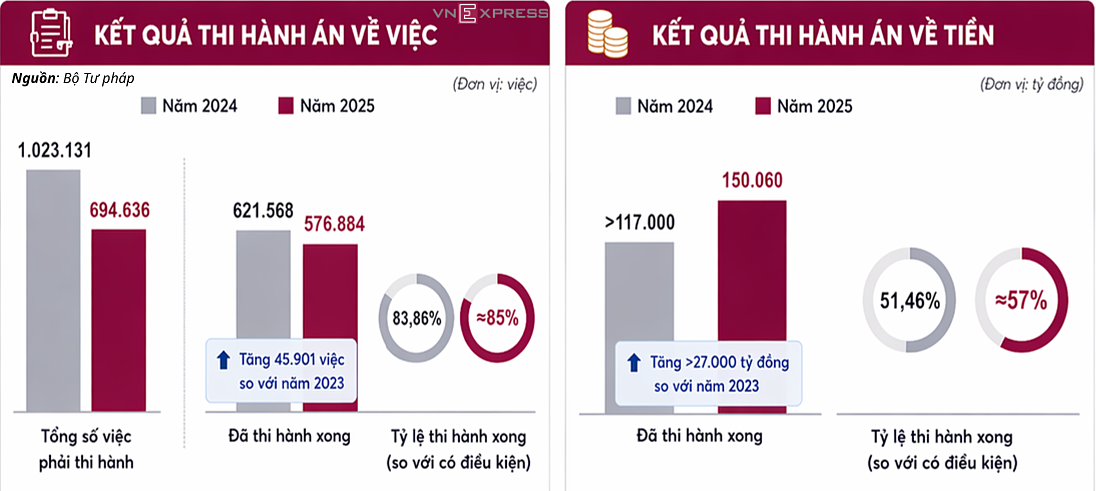
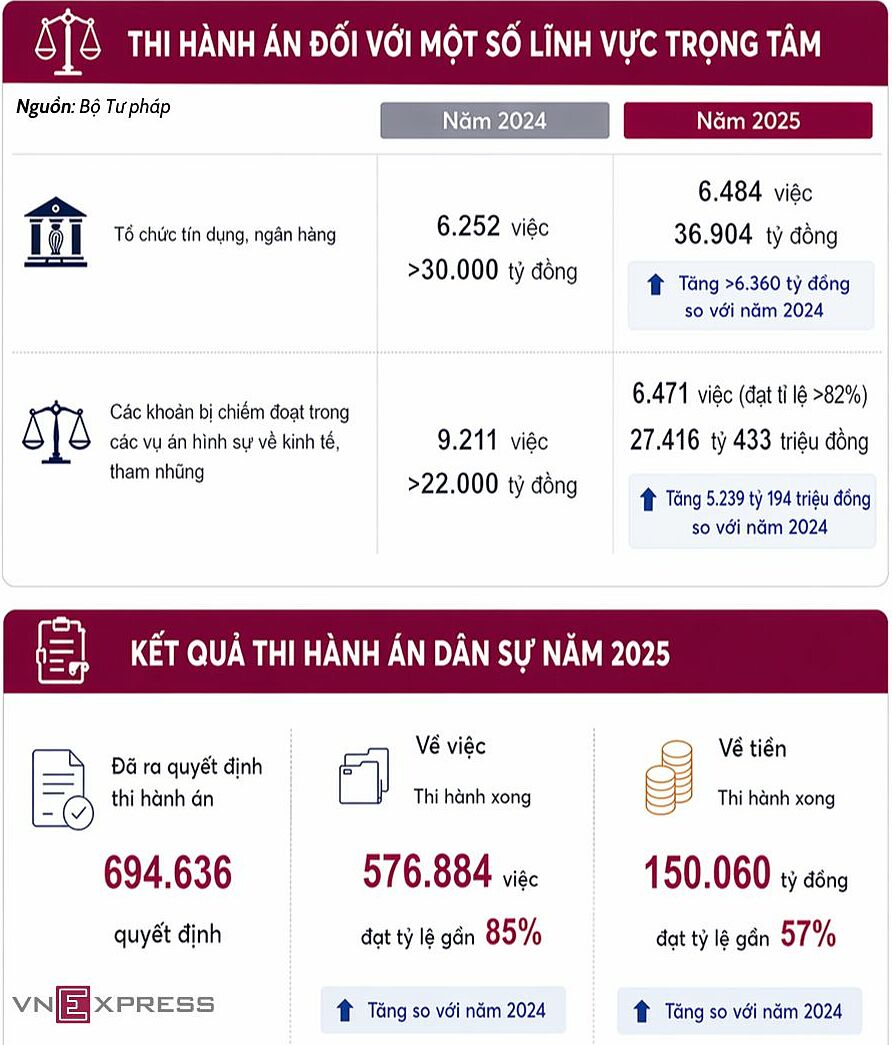
According to the drafting agency, the incorrect or incomplete implementation of civil judgment enforcement regulations by officers has caused serious damage to citizens' property, rights, and legitimate interests. The current law, however, lacks specific criminal sanctions for these actions, which has led to widespread public frustration and undermined security and order.
To address this gap, the Ministry of Public Security proposes adding a new criminal offense to the Penal Code. This offense would specifically apply to enforcement officers who commit wrongful acts or fail to fully comply with civil judgment enforcement regulations, resulting in serious damage.
 |
How are enforcement officers' violations currently addressed?
Enforcement officers are appointed, relieved, or dismissed by the Minister of Justice. They are entrusted by the State to enforce court judgments and decisions, as well as those from certain related agencies, according to the Law on Civil Judgment Enforcement.
Enforcement officers who violate legal regulations and cause damage may face various consequences. These include disciplinary action (such as reprimand, warning, salary reduction, or dismissal), being required to compensate for damages, or being criminally prosecuted, depending on the severity of their actions. They bear personal responsibility for their actions and decisions in civil judgment enforcement.
The Penal Code currently lacks a distinct criminal offense specifically for "wrongful enforcement" by enforcement officers. However, depending on the nature and motive, officers may be criminally prosecuted under offenses related to official duties or those infringing upon judicial activities, such as:
- Offense of non-enforcement (Article 379): This applies if an authorized enforcement officer intentionally fails to issue an enforcement decision or to enforce a court judgment or decision. The maximum penalty can be up to 10 years imprisonment if the actions cause damage or the dissipation of assets valued at over 1 billion VND.
- Offense of obstructing enforcement (Article 381): This applies if an enforcement officer abuses their position or authority to intentionally obstruct enforcement. Penalties can range from non-custodial re-education to 5 years imprisonment.
- Offense of irresponsibility causing serious consequences (Article 360): This applies if an enforcement officer fails to perform or incorrectly performs assigned duties due to irresponsibility, leading to damage to life, health, or property according to legally defined thresholds.
- Offense of abusing position and authority while on public duty (Article 356): This applies if an enforcement officer, for personal gain or other personal motives, acts contrary to public duty, causing damage to the interests of the State, organizations, or individuals.
 |
Hai Thu