During the ride, Anh Khanh observed his passenger clutching a plastic bag tightly and appearing anxious. He initiated a conversation. The woman explained she was taking 90 million VND to send to her grandchild in Ha Noi and had been told to do so via a post office, not a bank transfer.
Finding this unusual, Anh Khanh pressed for more information. The woman hesitated, her hands trembling, and then unexpectedly asked, "If I send the money, can I get it back if there's a problem?"
After further questioning, the driver learned the woman was not sending money to her grandchild. She was following instructions from someone claiming to be a police officer. This person had warned her not to tell anyone, stating that if she revealed the situation, "the matter would be beyond salvation."
Recognizing this as a potential scam, Anh Khanh requested a family member's phone number to inform them. He then changed direction, driving the woman to Cong an phuong Ha Huy Tap to report the incident.
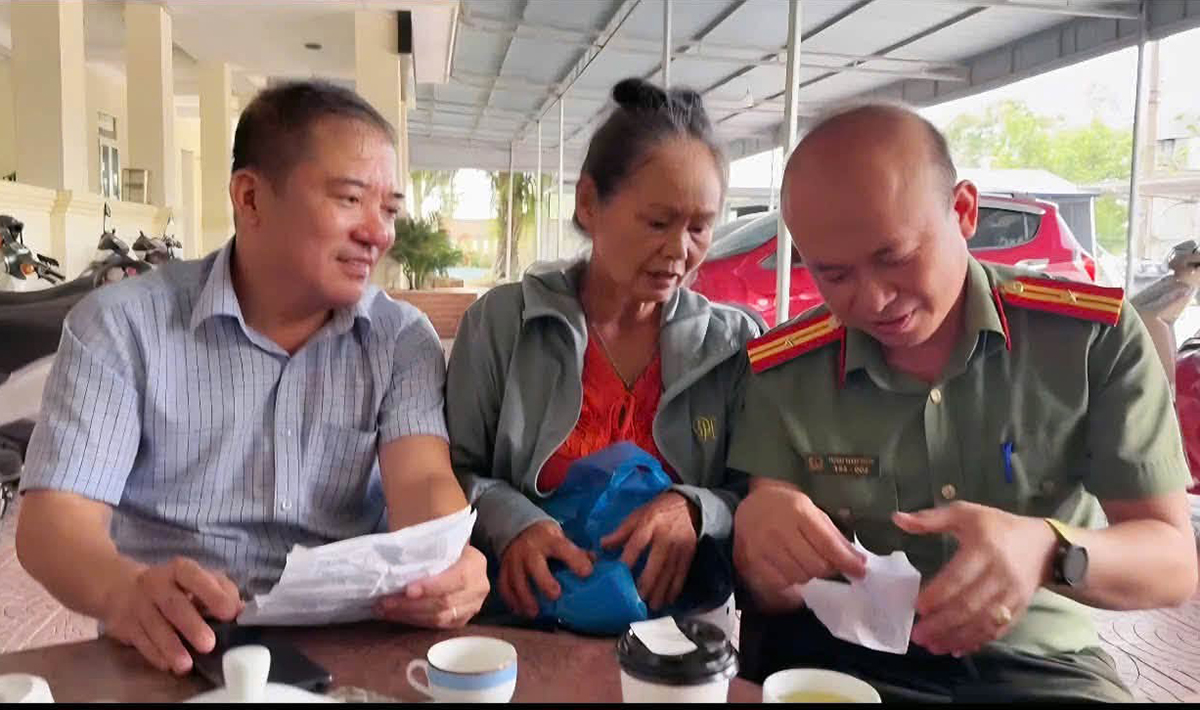 |
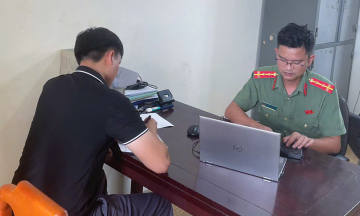
The woman (center), working with authorities. Photo: Police provided |
Speaking with the police, the woman recounted receiving a call one day earlier from someone claiming to be a police officer. This individual informed her she had a debt of 79 million VND at a bank and demanded she "come to Ha Noi to resolve it."
When she stated she could not travel, the scammer instructed her to transfer 90 million VND to a designated account. They guided her to take the money to an express post office to "complete procedures to prove her innocence." Concurrently, she received threats that if she disclosed the matter, she would be arrested for "involvement in a drug trafficking case."
Frightened, the woman hid the situation from her husband and children. She withdrew 90 million VND in savings from the bank, money accumulated over many years from farming and livestock, to carry out the transaction.
After the police explained the situation, she realized she had been scammed and abandoned her plan to transfer the money.
**New Tactic: Directing Victims from Banks to Post Offices**
According to authorities, the demand for victims to take money to an express post office instead of conducting transactions at a bank represents a new tactic to avoid detection.
At banks, tellers receive training to identify signs of fraud and promptly alert customers about suspicious transfers. In contrast, sending money through post offices often involves less scrutiny, leading many people to be less cautious. Scammers also frequently demand secrecy and designate specific transaction locations to isolate victims and maintain psychological control.
Police advise that upon receiving calls from individuals claiming to be officials who demand money transfers or secrecy for "investigation purposes," citizens should stop all transactions and report the incident to the nearest police station.
Duc Hung