Professor Li Meijin, a Chinese child psychologist, believes that every action a child takes at the dining table genuinely reflects the family's level of education. Character flaws need to be corrected promptly.
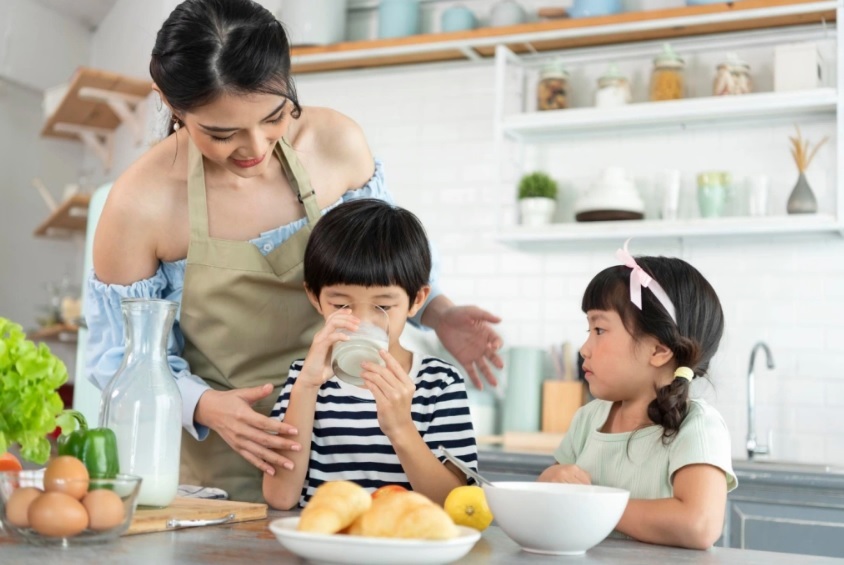 |
Illustrative photo: Freepik.
According to Professor Li Meijin, if your child exhibits the three behaviors below while eating, they are likely to face challenges in the future.
Fighting for favorite dishes
This behavior not only annoys fellow diners but also fosters selfishness in children. Research from the University of California, US, indicates that children with authoritarian and arrogant personalities from a young age are at risk of developing violent tendencies as adults, struggling to adapt to workplace and social environments.
Being noisy and interrupting adults
Shouting, making loud noises, or constantly interrupting others at the dining table shows a child's lack of empathy and disrespect for those around them.
From school to university, a child lacking such refinement will struggle to find close friends or achieve success.
Digging through communal food
Many children habitually use their personal chopsticks to rummage through dishes, picking up food and putting it back if they do not like it. This behavior is unhygienic and shows contempt for fellow diners. While parents might overlook it at home, this habit will lead to a child's isolation in society.
To best prepare children for life, psychologists and pediatricians advise parents to teach basic table manners as soon as children turn two years old – the age they begin to feed themselves:
Proper sitting posture
Sitting with a straight back while eating is beneficial for digestion and fosters a polite, confident demeanor. Parents should teach children not to hunch over the table when eating Asian dishes, but to hold their bowl and chopsticks correctly, and never to rest elbows on the table or shake their legs. When eating Western food, guide children to bring food to their mouth with a fork instead of craning their neck or leaning forward.
Respect for elders
At the dining table, observing proper order shows respect. When receiving a bowl of rice or food from an adult, children should accept it with both hands and a polite thank you to demonstrate reverence.
Do not criticize food and learn gratitude
Research from psychologists at Yale University, US, confirms that grateful children often have higher emotional intelligence and are more likely to succeed later in life.
At the dining table, gratitude is best shown by not giving negative feedback about food on the spot. This is considered impolite and disrespectful to the person who prepared the meal.
Instead of complaining, a simple compliment or a cheerful acceptance helps foster positive energy for the entire family.
A simple meal, though modest, reflects character. Table manners are not innate; they stem from parents' consistent upbringing and patient guidance from birth.
For children to have a bright future, love alone is not enough; parents must begin training them with the "first identity card" of dining culture.
Nhat Minh (According to QQ)