According to David Rivadeneira, a colorectal surgeon at Huntington Hospital in the US, users should follow these guidelines to protect their health.
Wash from front to back
Users should adjust their position to ensure the water stream sprays from front to back. This technique helps women prevent bacteria from the anus from spreading to the urethra, reducing the risk of infection.
Use gentle water pressure
A 2010 study published in the US National Library of Medicine indicated that regular bidet spray users experienced a significant loss of beneficial Lactobacillus bacteria, with levels dropping to 57% compared to 91% in non-users. Doctors advise starting with low water pressure, using warm water, and limiting spraying to 10-20 seconds to prevent damage to sensitive areas.
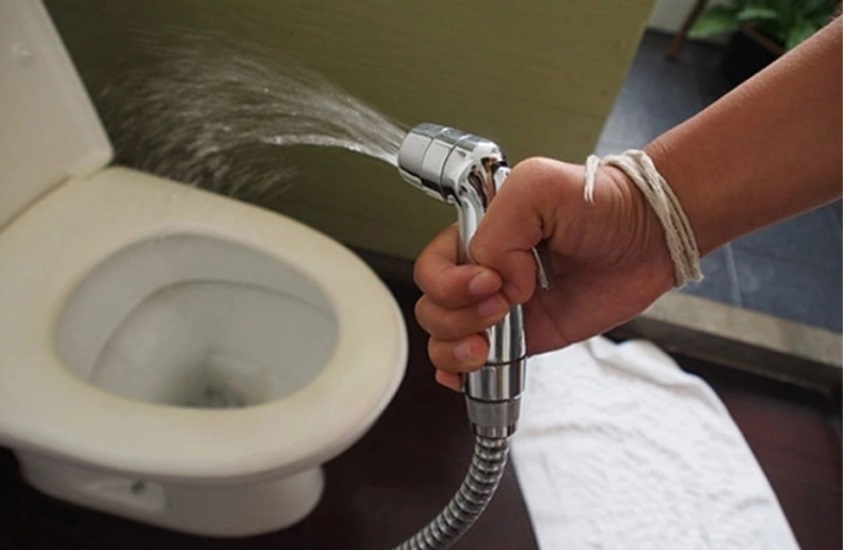 |
Illustrative photo: Instructables |
Avoid deep douching
Doctor Rivadeneira states that bidet sprays are designed solely for external skin cleansing. Users must never use a bidet spray to pump water inside the anus or for colon douching.
Dry thoroughly after washing
After using the bidet, dry the area with toilet paper or a clean cotton towel. This removes any remaining residue and eliminates the moist environment that promotes yeast growth.
Clean the device regularly
Doctor Neal H. Patel in California recommends wiping the spray nozzle clean with a disinfectant wipe every 1-2 weeks to eliminate bacterial buildup.
When to exercise caution
Doctor Danielle Antosh notes that excessive daily bidet use can cause skin irritation.
Women who have recently given birth, or individuals with eczema, psoriasis, or genital ulcers, should consult a doctor before using a bidet, as strong water streams might cause pain or discomfort. For prolonged bleeding from hemorrhoids or anal fissures, patients should seek specialist medical attention rather than attempting self-treatment with a bidet spray.
Nhat Minh (Sources: AP, Jstage, Pubmed)