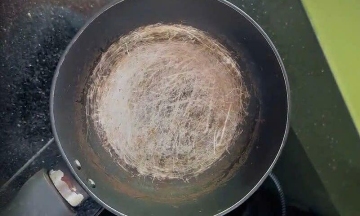
After cooking, many people habitually pour leftover oil and grease down the sink, then flush with hot water and dish soap to clean it.
Travis Arnesen, a US plumbing expert, explains that liquid grease, upon entering underground plumbing systems, solidifies when it encounters cooler temperatures. This grease adheres to pipe walls, narrowing the diameter and causing blockages.
Flushing with hot water or using soap only pushes the grease further into the system before it cools and hardens. Plumbing expert John Akhoian said: "Grease is one of the most difficult substances to remove from drainage systems. If this happens regularly, continuous hot water can weaken or deform the structure of plastic pipes."
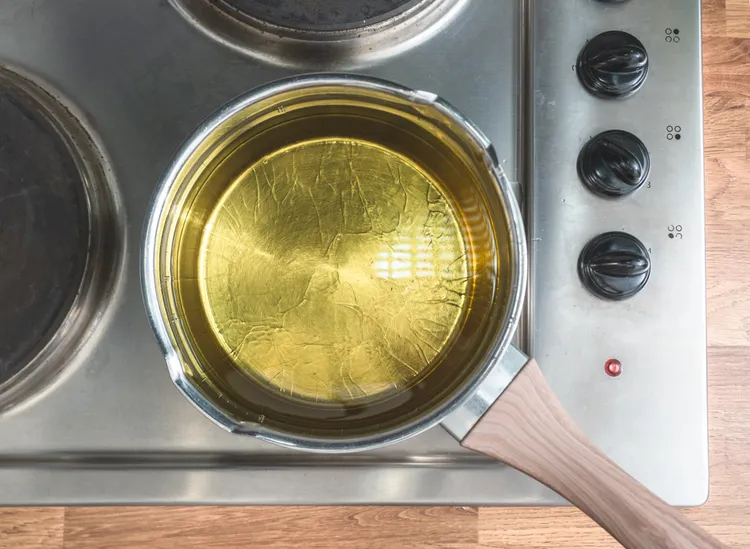 |
Grease should be allowed to cool, then refrigerated until solid, placed in a bag, and discarded in the trash, not poured down the drain. Photo: Realsimple
According to Live Science, fatbergs—accumulations of fat combined with other waste—are a major cause of blockages in urban sewer systems. In 9/2017, sanitation workers in Whitechapel, London (UK), discovered a 130-ton, 250-meter-long fatberg obstructing an underground sewer line. This mass formed from cooking grease mixed with wet wipes, diapers, and household waste.
The city spent 9 weeks clearing the pipe using high-pressure hoses and shovels. The Museum of London later exhibited a section of the fatberg in 2018 to educate the public.
In 2019, a 40-ton fatberg was found in Greenwich (UK). By 2021, another 200-meter-long mass clogged an underground sewer in Canary Wharf. Data indicates that the UK spends approximately 100 million British pounds annually resolving drainage blockages. In the US, excess grease also causes sewer overflows, costing millions of US dollars in cleanup budgets.
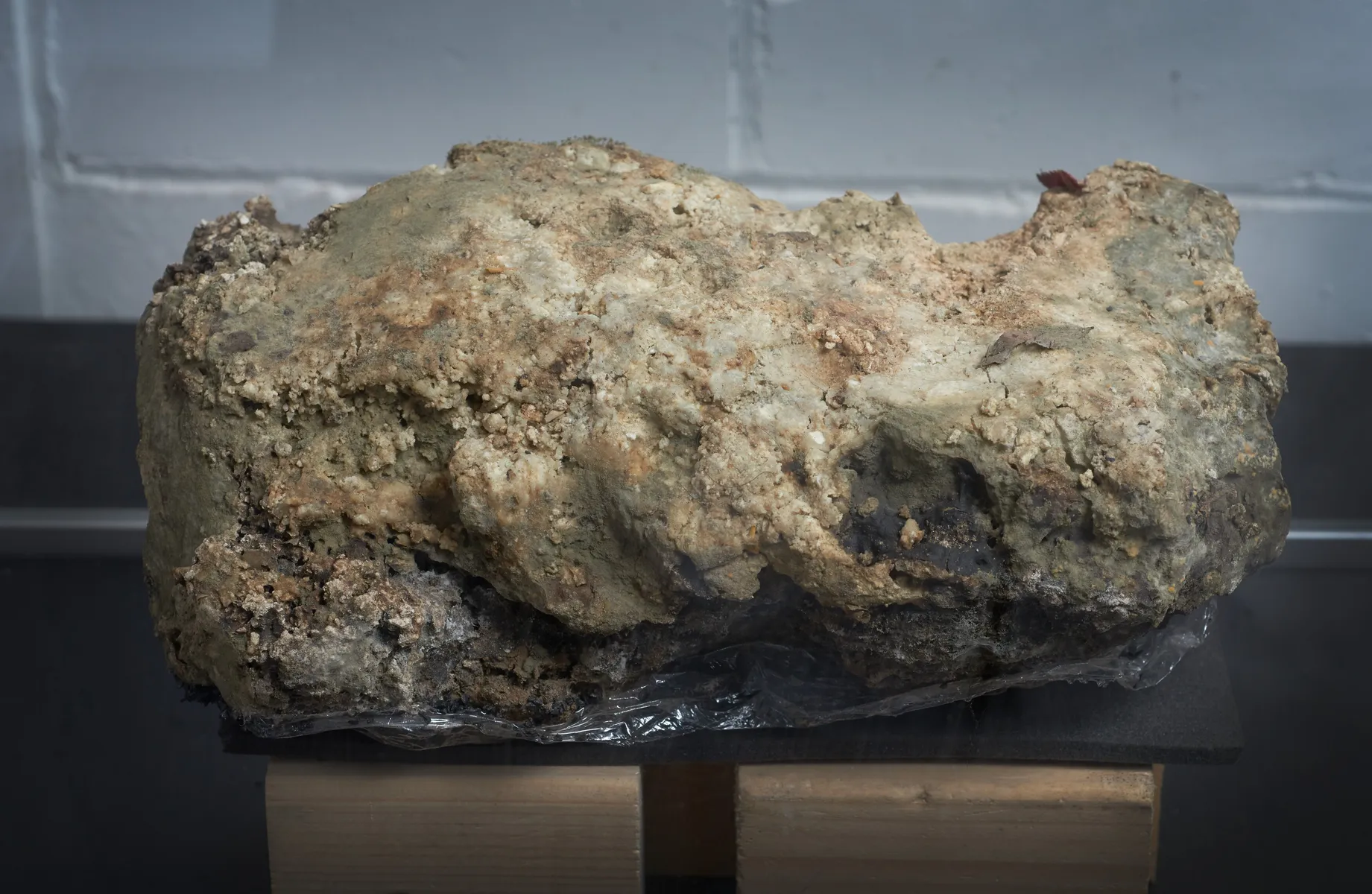 |
A dried fatberg displayed at the Museum of London warns the public about the dangers of pouring excess grease down drains. Photo: Museum of London
To protect household pipes, experts recommend following these rules:
Cool and dispose
For small amounts of oil, wipe pans clean with a paper towel and discard it in the trash before washing. For larger quantities of grease, leave it in the pan or pour it into a heat-resistant container until it solidifies, then scrape it into a trash bag.
Refrigerate
Pour liquid grease into a sealed container and store it in the refrigerator. Once the container is full and the grease is solid, discard the entire container in the trash.
Recycle
If your local area has a used cooking oil collection program, gather it into bottles and send it for recycling into biofuel.
Wash dishes properly
Expert Kelly Russum advises that after scraping off grease, wash dishes with warm water and an adequate amount of soap. In the final step, run hot water for about 30 seconds to flush away any residual grease adhering to the pipe walls. Never use boiling water.
Besides cooking oil and grease, experts advise against pouring margarine, cream-based sauces, melted cheese, meat drippings, or flour mixed with water down the sink, as these substances will turn into a sticky adhesive when they encounter cold temperatures in the pipes.
Bao Nhien (According to Real Simple, Live Science)