From october 2025 to january 2026, residents of Hengshan county faced an unusual phenomenon. All fruit orders placed on e-commerce platforms were either rejected for delivery or automatically refunded by sellers upon successful placement.
It became clear that the entire county had been blacklisted by these platforms, which refused to sell to its residents.
Police officer Zhao Siqi of the Hengshan County Public Security Bureau stated that when an order's delivery address was in this area, the platforms' cybersecurity systems automatically closed the transaction, flagging it as high-risk for fraud.
In january 2026, an online shopping platform reported the issue to the Hengshan County Public Security Bureau. This situation was not due to a system error or merchant boycott, but originated from Tan. This man used artificial intelligence to create images of rotten fruit as a pretext for refund claims.
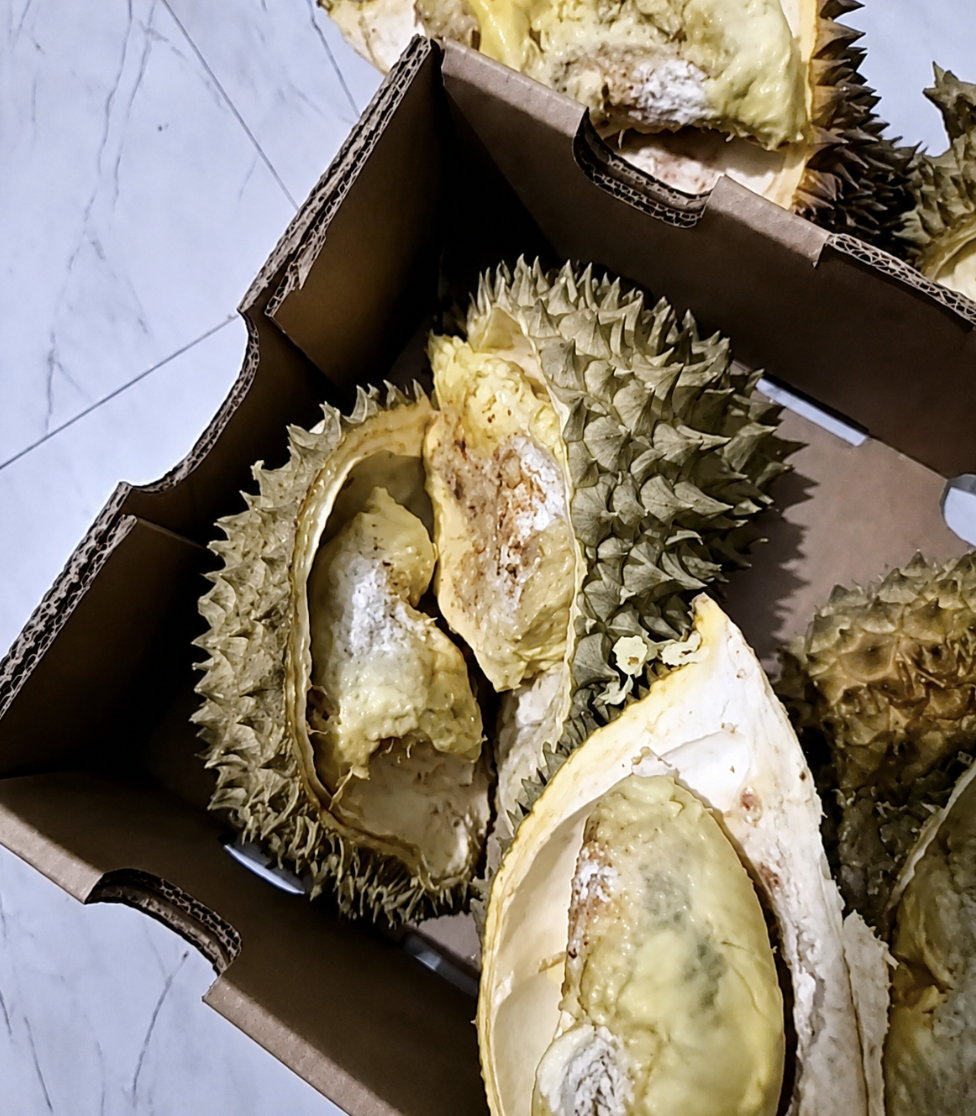 |
Durian segments "magically" turned moldy green by Tan using AI software to claim compensation, early 2026. Photo: Sina
According to investigation records, over 4 months, Tan placed more than 100 orders. The suspect used software to create images of moldy durian and cherries, then claimed poor quality to request "refunds without return." The Hengshan County Price Certification Center determined that Tan misappropriated 60 Monthong durians, 5 boxes of cherries, and 75 mobile phones used in the commission of the crime. The total value of the goods exceeded 16,000 CNY (approximately 62 million VND).
"The suspect exploited the after-sales policy to obtain free fruit, which he then resold for cash," said police officer Zhao Siqi.
In mid-july, the Hengshan County People's Court sentenced Tan to mot year in prison and a 5,000 CNY fine (approximately 19 million VND) for fraud. Despite fully compensating for the damages, Tan still received a prison sentence because he had previously been convicted of a similar offense in early 2024.
Following the case, judge Song Jian of Xicheng District Court (Beijing) stated that shop owners have the right to file lawsuits and seek civil compensation to cover business losses.
The "refund without return" policy was originally intended to protect consumers and reduce reverse shipping costs. However, platform management transformed this policy into a loophole, giving rise to professional profiteering groups. Many shop owners lost goods and money, ultimately shifting the risk onto delivery personnel through penalties.
Since february, regulatory bodies have issued rules prohibiting platforms from forcing sellers to bear unreasonable after-sales responsibilities. Economic experts propose that e-commerce platforms develop credit scoring systems, permanently ban fraudulent accounts, and establish rapid complaint channels for sellers.
Minh Phuong (According to Sina, Southcn)