According to chef Vu Nhat Thong from the Eric Cooking Class Center, garlic's flavor, ranging from subtly sweet to intensely pungent, depends entirely on whether we mince, crush, or keep cloves whole during preparation.
Flavor explodes when cells are broken
In an intact garlic clove, alliin and the enzyme alliinase reside in separate cellular compartments, resulting in almost no distinct odor. Only when garlic is cut, crushed, or minced do its cells break, allowing these two substances to interact and produce allicin. Chef Thong explains that allicin is the "essence" that creates the pungent smell and spicy taste of fresh garlic; the greater the cell disruption, the more allicin is generated.
Whole cloves: mild aroma, sweet taste
If you only peel and keep cloves whole, minimal cell damage occurs, so the amount of allicin formed is negligible. When stewed or roasted for an extended period, sulfur compounds gradually transform, while natural sugars concentrate, creating a mild sweetness. This method suits stews, braises, or roasted dishes, adding flavor without making the dish overpowering.
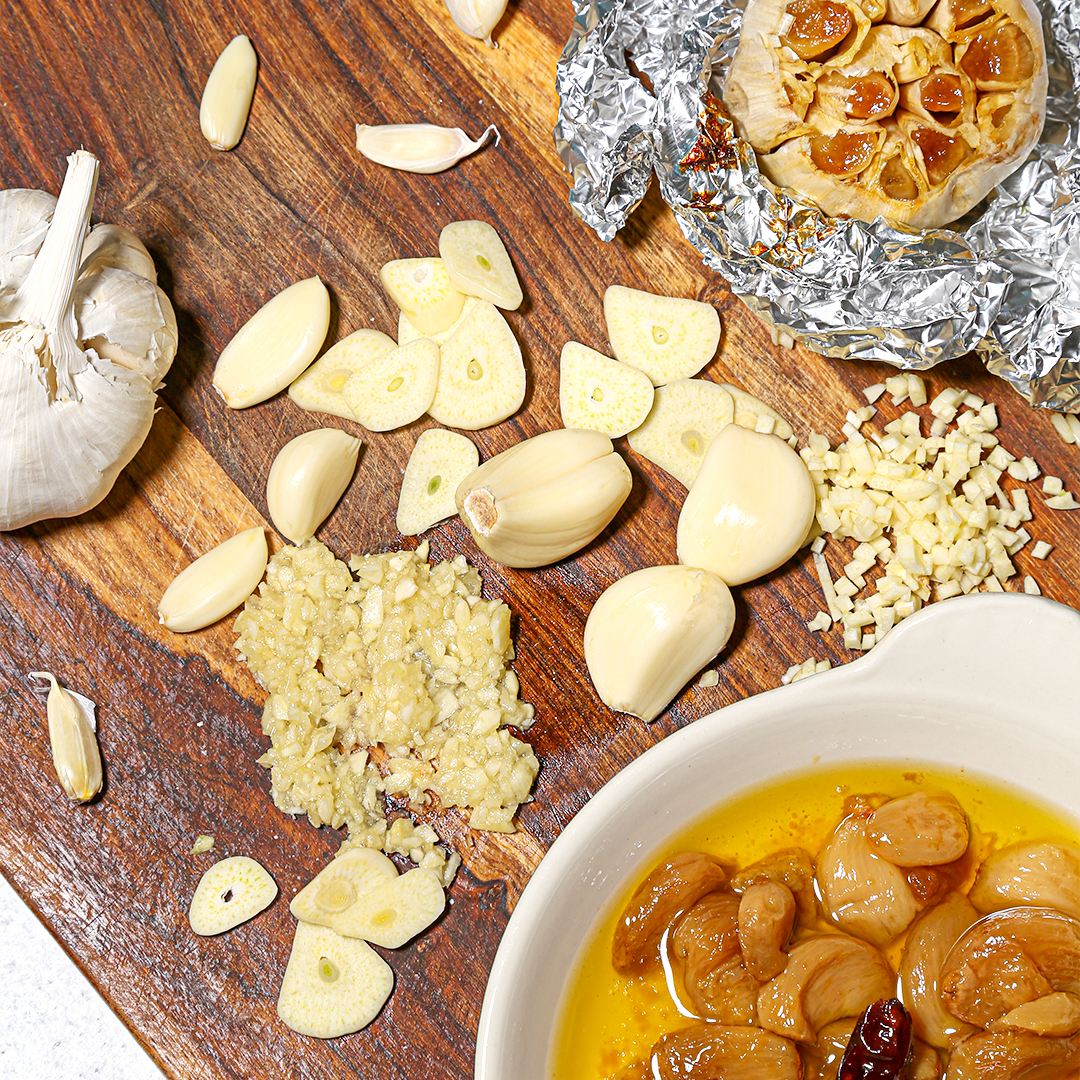 |
Each method of mincing, slicing, or keeping garlic whole creates a different flavor. Photo: Misfitsmarket
Crushed or sliced: balanced flavor
Crushing or slicing garlic partially breaks down its cell structure, producing a moderate amount of allicin. At this stage, garlic retains a distinct aroma without being overly pungent. This is a common preparation method in home cooking, ideal for sauteing in oil, stir-frying vegetables, marinating meat, or deodorizing seafood.
Minced or finely ground: strongest aroma
When minced or finely ground, almost all garlic cells are broken, maximizing the allicin production reaction. As a result, minced garlic has a much stronger aroma and pungent taste. This type of garlic is often preferred for sweet and sour dipping sauces, garlic butter sauce, or salads that require a bold flavor accent.
Chef's cooking tips for garlic
Chef Vu Nhat Thong advises home cooks to note the following principles to maximize this ingredient's flavor:
- Let garlic rest: After mincing, allow garlic to rest for about 5-10 minutes before cooking. This time helps the enzyme alliinase complete the allicin formation process. If added immediately to a hot pan, this reaction may be interrupted.
- Mind the temperature: Allicin is very unstable with heat. Cooking at high temperatures for too long will cause the pungent taste to disappear, replaced by a mild sweetness. Therefore, garlic sauteed at the beginning of a dish will have a different flavor profile than garlic sprinkled in at the last minute.
- Do not burn garlic: With its small size and high natural sugar content, garlic burns easily. Burnt garlic will produce a bitter taste, ruining the entire dish. When sauteing garlic, use medium heat and add other ingredients as soon as the garlic turns light golden to lower the temperature.
- Prioritize fresh garlic: While jarred minced garlic is convenient, its flavor cannot compare to fresh garlic. Allicin gradually diminishes over storage time, not to mention additives that can alter the original taste. It is best to mince or crush garlic immediately before cooking.
Bao Nhien