Tung's family sedan in TP HCM comfortably accommodated his two parents and three children aged three to nine. Previously, the three children simply sat in the back seat, while the parents sat in front, which was "just right". However, with the new regulation in the Road Traffic Order and Safety Law, he realizes that the back seat cannot simultaneously fit three specialized child car seats.
"The regulation requires each child to have a safety device, meaning my car can now only carry two children due to the size of the seats. Should the third child be transported by motorbike following behind?" Tung questioned.
He argued that traveling by car is inherently safer than by motorbike. "If the true concern is child safety, perhaps children should be prohibited from riding motorbikes entirely?" he suggested.
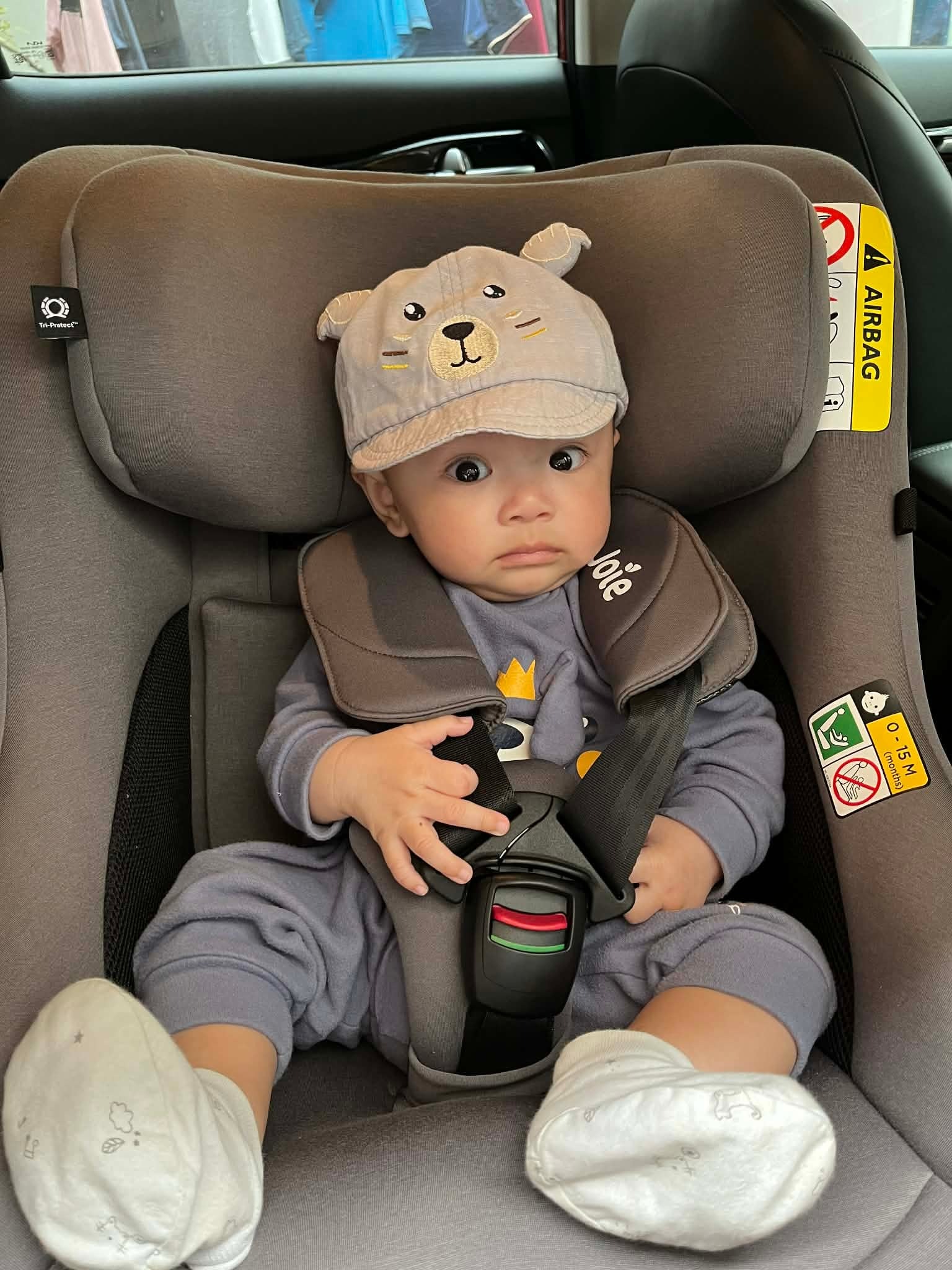 |
A family in Hanoi purchased a 6 million VND child car seat for their child. Photo: Do Giang |
A family in Hanoi purchased a 6 million VND child car seat for their child. Photo: Do Giang
Sharing this concern, Quynh Nhu, 28, from Hanoi, mentioned that the child car seat her husband and she bought early on is currently unused in storage. The reason is that their family's only car serves multiple roles: transporting their child to school and for her husband to carry partners and clients.
"Every time my husband goes to work, he struggles to remove the seat, then has to reinstall it to pick up our child, which is very time-consuming. Not to mention, our older car doesn't have ISOFIX anchors, so we have to secure it with a seat belt, which is complicated and doesn't feel secure," Nhu recounted.
Furthermore, getting her child to sit in the seat is "a battle" each time. Even for a short 3 km trip to her grandparents' house, she and her husband have to compromise by giving their child a phone to watch throughout the journey to secure their child's cooperation. "While ensuring physical safety, I worry about my child's eyes being harmed from watching a screen constantly in a bumpy car," Nhu expressed her concern.
Many families share this anxiety and confusion about the regulation, which will take effect on 1/1/2026. According to the law, children under ten years old and under 1,35 m tall are not allowed to sit in the same row as the driver and must use appropriate safety devices.
While supporting the humanitarian aspect of the law, parents argue that there is a significant gap between theory and practice, especially for families with many children or small cars. Some also contend that at an average speed of 20-30 km/h within urban areas, mandatory specialized car seats are rigid and of "unclear effectiveness" compared to the inconveniences they create.
However, according to Associate Professor Dr. Do Van Dung, former Vice Chairman of the Ho Chi Minh City Automotive and Engine Association, the views that "slow speeds don't require car seats" or "a parent's embrace is safest" are fatal mistakes.
Dr. Dung explained that when a car brakes suddenly or is involved in a collision, a child's body continues to be thrown forward by inertia. At 50 km/h, a 10 kg child can generate an impact force equivalent to 700 - 1,000 kg in an instant. "No parent's embrace can withstand this force. The child will be violently jolted and collide hard with the dashboard or windshield," the expert warned.
More dangerously, if adult seat belts (designed for people over 1,4 m tall) are used for small children, the belt will cross their neck and abdomen. In a collision, it becomes "a blade" causing severe injuries.
Bui Tan Viet, 35, from TP HCM, learned this lesson the hard way after trips to his hometown. "A few times, during sudden braking, my child, even while being held, hit his head on the front seat. From then on, I decided to buy a specialized seat," he recounted.
Initially, his child was uncooperative, but Viet persevered with practice. Now, every time he gets into the car, his child voluntarily finds his seat. He is currently looking to buy an additional new seat suitable for his infant.
Data from the US National Highway Traffic Safety Administration (NHTSA) also shows that correct car seat use reduces the risk of death for infants by up to 71%.
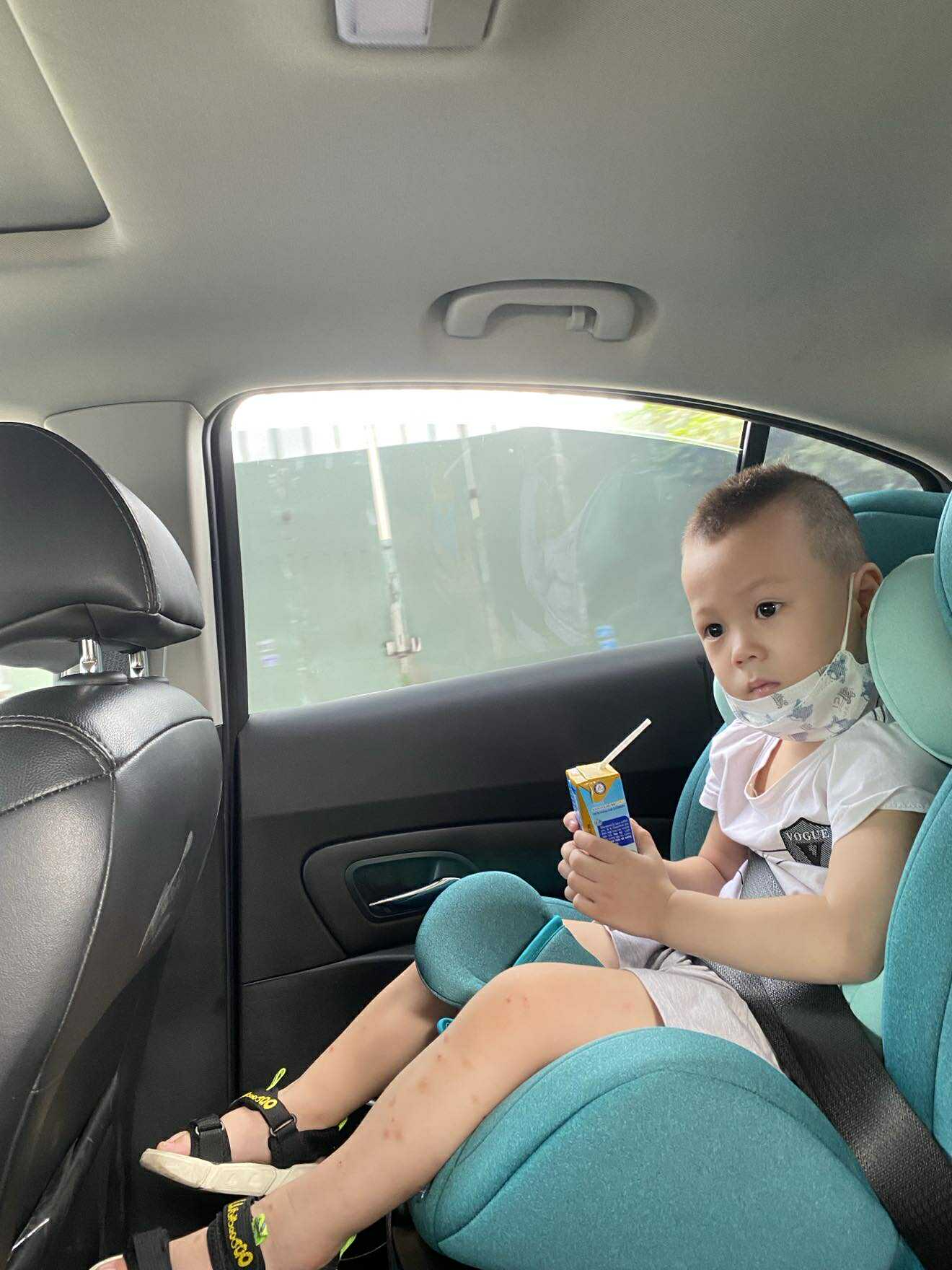 |
Bui Tan Viet in TP HCM has used a safety seat since his child was young, so the child is accustomed to it and very cooperative. Photo: Provided by subject |
Bui Tan Viet in TP HCM has used a safety seat since his child was young, so the child is accustomed to it and very cooperative. Photo: Provided by subject
Additionally, the market now offers many technical solutions to address the challenge of "small cars, many children". For children over four years old, the expert suggests parents use backless booster seats. These seats are compact, about 10 cm thin, and priced from 800,000 VND, helping to elevate the child's height to fit the car's seat belt. "Three booster seats can easily fit in the back seat of a typical 5-seater car," Dr. Dung stated.
For ride-hailing cars or families who frequently travel by taxi, foldable or inflatable booster seats weighing less than 1,5 kg are optimal choices. They can fit into a backpack and be installed quickly. Furthermore, multi-functional seats with 10-12 height adjustments, usable from infancy to 12 years old, also help alleviate the concern of children outgrowing seats rapidly.
As the regulation's effective date approaches, the car seat market is heating up, leaving many feeling lost in a maze of choices. Last weekend, Nhat Tung in TP HCM spent an entire afternoon price comparing but left empty-handed because "the price differences were too great, and the specifications were unfamiliar, making it impossible to navigate."
Regarding this issue, Associate Professor Dr. Do Van Dung advised parents to simply check the core specifications printed on the seat label: ECE R129 (i-Size) or at least ECE R44/04 certification; the expiration date (usually embossed on the plastic shell); and the seat frame material with a force-absorbing foam layer.
"Expensive seats are not necessarily safer. Many mid-range seats, costing 2-5 million VND, now meet safety standards equivalent to premium seats," Dr. Dung emphasized.
Looking globally, changing safety habits takes time. Sweden took 15 years of public awareness campaigns to achieve nearly 100% compliance. The US also offered penalty exemptions for over a decade to help people adapt. In Europe, the new i-Size seat standard had a transition roadmap spanning over ten years (2013-2024) to avoid shocking the public.
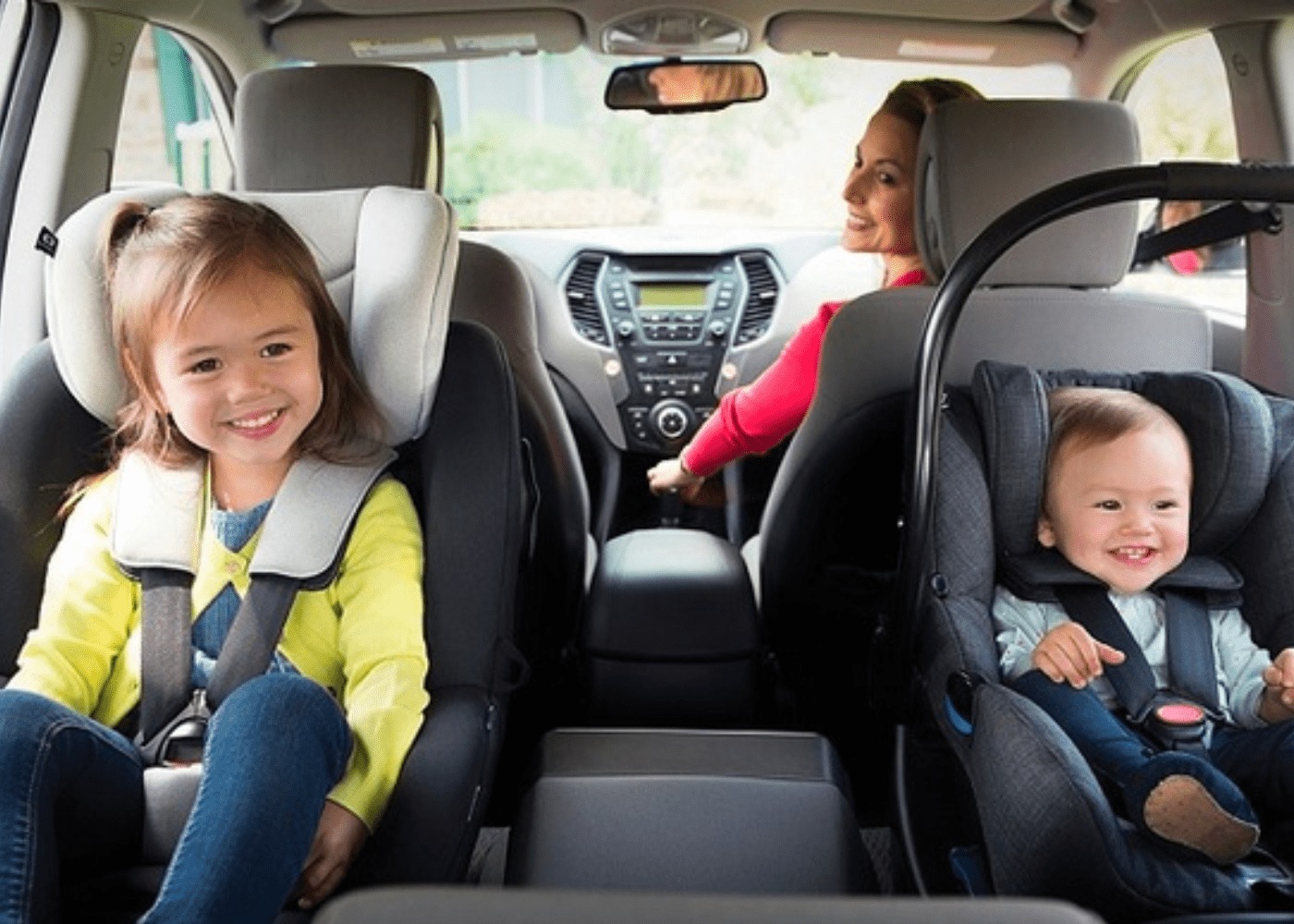 |
The US government spent over a decade promoting and exempting penalties to help people adapt to the mandatory child car seat regulation. Illustration: Comsumer Report |
The US government spent over a decade promoting and exempting penalties to help people adapt to the mandatory child car seat regulation. Illustration: Comsumer Report
From international lessons, Dr. Dung believes Vietnam needs a "buffer" roadmap of three to five years to balance urgency with public adaptability.
Phase one should focus on promotion and reminders, while also establishing hundreds of free car seat inspection stations in major cities to assist parents with correct installation. Phase two would begin with light penalties for private vehicles as a deterrent, but still grant exemptions or extensions for taxis and ride-hailing services to allow these entities time to transition their models. Phase three would implement full penalties nationwide, while also having subsidy policies for the public and encouraging car manufacturers to include safety seats with new car sales.
"A sensible and reasonable enforcement approach will transform the safety seat into a voluntary habit, much like helmet use today," the expert concluded.
Phan Duong