The Ong Tao ceremony is a significant cultural and spiritual tradition for Vietnamese families. According to folk beliefs, after the farewell ceremony on the 23rd of the 12th lunar month, the Kitchen Gods (Ong Tao) ascend to the heavens to report to the Jade Emperor (Ngoc Hoang) on family affairs throughout the year. This ritual not only serves as a farewell but also as an opportunity for families to sincerely pray for peace, happiness, and good fortune in the new year.
Offerings for the Ong Tao ceremony typically include sticky rice, soup, rice, wine, votive papers, betel leaves and areca nuts, chicken, pork, and fruits. Essential items among these are three sets of hats, robes, and shoes, along with one or three carp (either live fish or paper carp effigies).
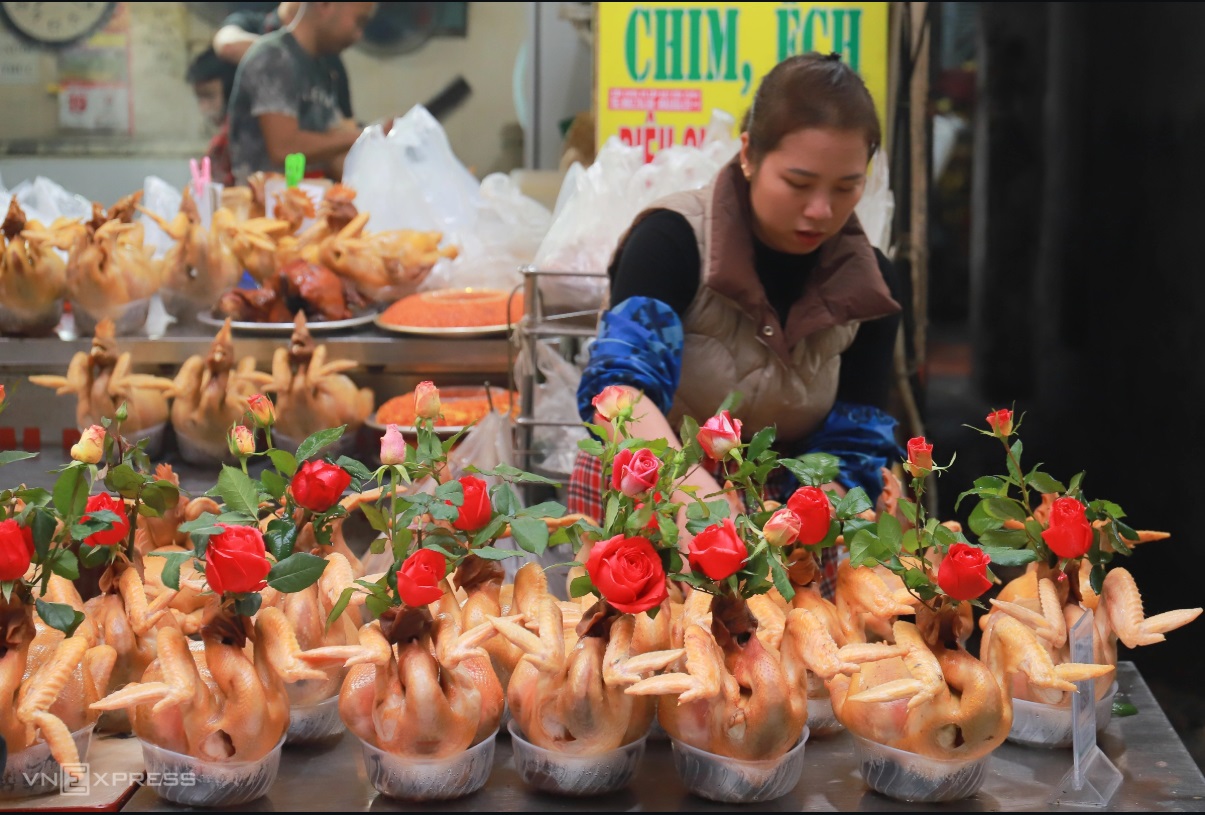 |
Ga cung ong Tao bay ban tai cho Hang Be, Ha Noi, nam 2025. Anh minh hoa: Quynh Nga
For the Binh Ngo year 2026, cultural expert Pham Dinh Hai advises conducting the Ong Tao worship ceremony on the 19th, 20th, 21st, or 23rd of the 12th lunar month.
The 18th is an Am Thac (incomplete Yin) and Dai Sat day, making it suitable only for unavoidable tasks. The 22nd is a Duong Thac (incomplete Yang) and Nguyet Kien day (when the earthly branch of the day coincides with that of the month), so worship should also be avoided on this day.
Families can refer to the following auspicious time slots for the ceremony:
- 19th lunar day: 11 AM - 3 PM
- 20th lunar day: 5 PM - 7 PM
- 21st lunar day: 9 AM - 11 AM or 3 PM - 5 PM
- 23rd lunar day: 5 AM - 7 AM, 11 AM - 3 PM, and 5 PM - 7 PM
If unable to perform the ceremony on the recommended days, householders may conduct it on the 24th of the 12th lunar month, between 5 PM and 7 PM.
The Ong Tao ceremony does not require a professional ritual master; the householder can recite the Nom prayer themselves. The Kitchen Gods are household deities, so no formal petition (so tau) is needed. The prayer serves as a farewell and a heartfelt wish from the householder to the Kitchen Gods before their journey to report to the Jade Emperor.
During the ceremony, the householder should dress neatly and respectfully, avoiding short clothing, short skirts, or exposing the chest or armpits. All family members, including children and grandchildren, may participate. The prayer should clearly state the date, time, the householder's full name, and address. It is important to clearly report good deeds to encourage the entire family and acknowledge any shortcomings to learn from them.
This sincere and earnest worship embodies the true meaning of the ceremony, promoting education and a spirit of goodwill. This is the most crucial aspect of the Ong Tao ceremony, as it carries significant moral and spiritual value.
After the ceremony, the burning of votive offerings should proceed slowly. Wait for each item to almost completely burn before adding the next to minimize smoke, dust, and fire hazards. Avoid using sticks to stir the ashes, which can scatter dust. The cooled ashes should be securely wrapped and disposed of in a trash bin, not dumped into ponds, lakes, or rivers, to prevent pollution.
Below is a reference Nom prayer for the annual Ong Tao ceremony:
"We respectfully bow to the household God of the Eastern Chamber, the Overseer of Destinies, the Kitchen God!
We respectfully bow to the household spirits, the local tutelary deity, the Five Directions and Five Paths Dragon Vein Wealth Gods, the Five Directions and Five Earthly Gods of Blessing and Virtue, and all revered deities serving in this household!
We, your humble servants: (names of grandparents, parents, children, grandchildren...) and all family members.
Today is the day when the God of the Eastern Chamber, the Overseer of Destinies, the Kitchen God, ascends to heaven to fulfill the Jade Emperor's command. We, your humble servants, sincerely prepare incense, flowers, offerings, robes, hats, and shoes, with humble rituals, presenting them before the altar, offering them to the revered deities, lighting a stick of heartfelt incense, and earnestly bowing in request.
We respectfully invite:
The God of the Eastern Chamber, the Overseer of Destinies, the Kitchen God, to descend before the altar and accept the offerings.
We respectfully invite the household spirits, the local tutelary deity, the Five Directions and Five Paths Dragon Vein Wealth Gods, the Five Directions and Five Earthly Gods of Blessing and Virtue, and all revered deities serving in this household, to sit together and accept the offerings.
Following ancient custom, the God of the Eastern Chamber, the Overseer of Destinies, the Kitchen God, is the master of the Five Household Deities. We humbly ask you to examine our earthly hearts and bestow blessings and prosperity. Should our family have committed any transgressions or errors this year, we ask the revered deities to graciously overlook them (at this point, the householder may express the family's good and bad deeds, admit faults, repent, and promise to amend). As you ascend to heaven to attend the Jade Emperor, we implore you to petition the Jade Emperor to bestow grace and blessings, protecting our entire family, young and old, male and female, with peace and good health!
We humbly express our sincere hearts. We humbly ask the deities to bear witness!
Respectfully announced, respectfully enjoyed!"
Pham Dinh Hai, cultural researcher