In Vietnamese spiritual culture, fruit offerings are symbolic, representing the essence of heaven and earth, and the fruits of labor. However, as material life improves, many tend to embrace the idea that 'wealth gives rise to elaborate rituals', inadvertently falling into misconceptions that distort the true nature of worship.
Master of Vietnamese Studies and cultural research expert Tran Thi Kim Hoa identifies five common mistakes when preparing fruit offerings.
The misconception that 'a larger offering brings more blessings'
Many believe that an altar must display a large quantity of fruits to show thoughtfulness. In reality, worship is not a competition of display in terms of quantity.
The core of making offerings lies in meticulousness, neatness, and sincere devotion. A small fruit platter that is fresh, clean, and respectfully arranged holds more value than a lavish spread that is messy or perfunctory. The respect and moral lifestyle of the host are the most important offerings.
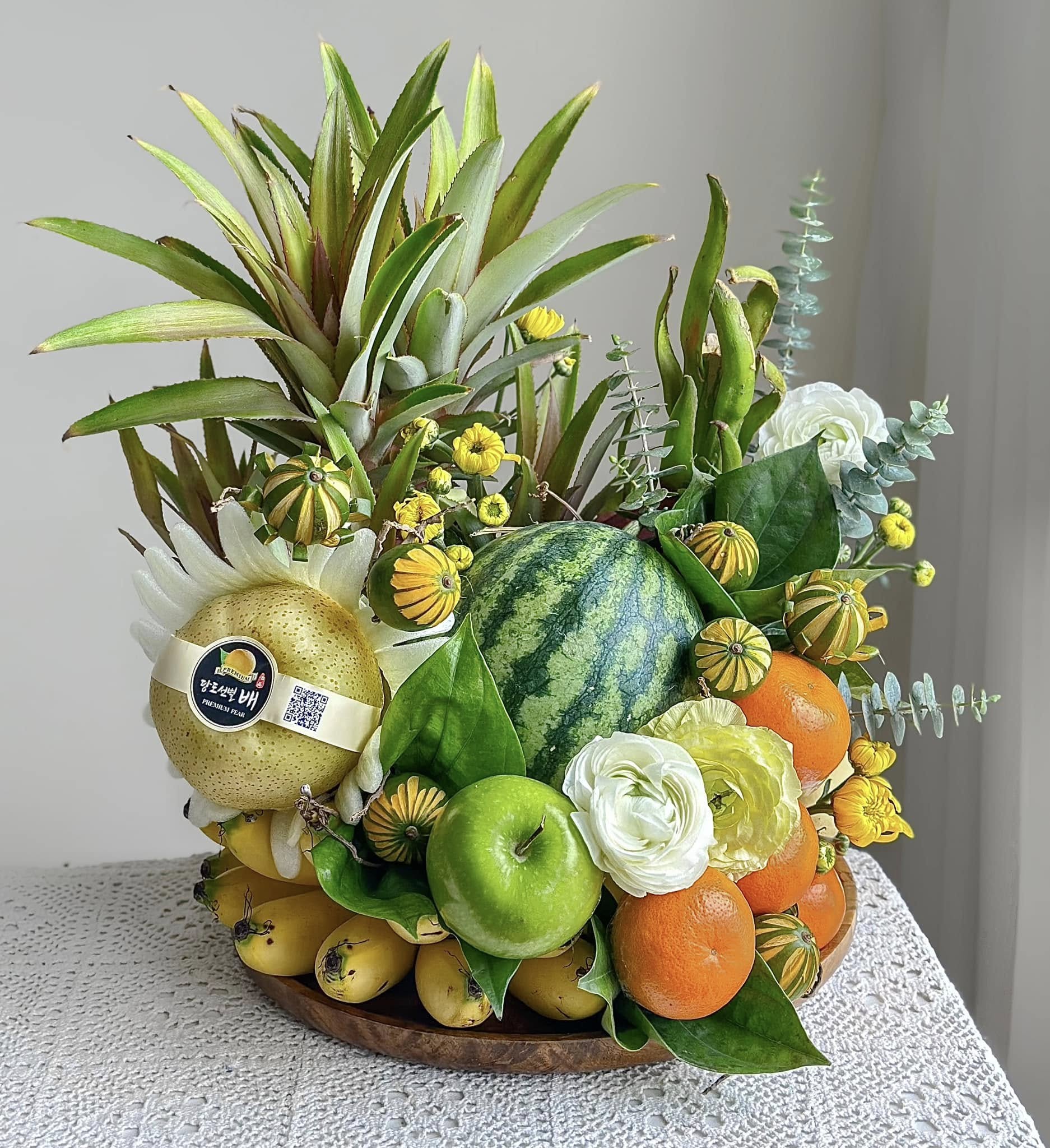 |
An offering fruit platter. Photo: Cao Thanh Thuy |
Insisting on a 'five-fruit tray'
The five-fruit tray (mam ngu qua) is a cultural beauty, symbolizing the five elements and prosperity. However, this is not a rigid requirement.
Families can offer a flexible number of fruit types, usually an odd number, depending on economic conditions and regional characteristics. Offering seasonal fruits is still proper, provided they are fresh and presented respectfully. There is no need to create unnecessary pressure by strictly adhering to form.
The debate over banana bunches
The choice of fruit for offerings varies significantly by regional culture, notably with banana bunches. In the North, a banana bunch is an important item on the Tet holiday five-fruit tray, symbolizing the protective and embracing hand of deities and ancestors.
Conversely, people in the South often avoid offering bananas because the pronunciation 'chuoi' sounds similar to 'chui' (meaning to stoop, to fail) or 'truot vo chuoi' (to slip on a banana peel). Therefore, whether to use a banana bunch depends on local customs; there is no absolute right or wrong.
Hesitation to use homegrown fruits
A common sentiment is that homegrown fruits are 'not elegant enough' or not beautiful enough for offerings. In reality, products cultivated and cared for by the family themselves carry immense spiritual significance.
Offering fruits from one's own garden represents the fruits of labor and reverence for one's roots. Even a single flower or a ripe fruit from the tree holds higher spiritual value than items hastily bought from the market.
Prioritizing expensive fruits over suitability
Many families prioritize expensive or exotic imported fruits with the mindset of 'buying beautiful fruits just for incense burning' to make a lavish display, overlooking their suitability for the altar space. Sometimes, imported fruits today are also soaked in many chemicals, posing health risks to those who 'receive blessings' when the offerings are taken down.
Additionally, when arranging the five-fruit tray, fruits should be placed naturally, with stems pointing upwards. An odd number of fruits should be chosen, as in numerology, odd numbers are considered yang.
Bao Nhien