At 10h, Huong Hanh, 57, sat greeting customers in front of an alley about one meter wide on Hang Chao street, O Cho Dua ward. Inside, her daughter served customers. Four plastic tables were lined up against the wall, leaving just enough space for one person to pass. The preparation area had been moved into the family's kitchen.
For over 10 years, Hanh's vermicelli soup eatery operated on the opposite sidewalk, alongside the archway of Hang Day stadium. The eatery once had 10 tables, selling 80-100 bowls daily. For the past month, as authorities cracked down on violations, she moved her business into the alley to avoid a 2,5 million dong fine and the risk of having her equipment confiscated. "It's been half a month since we moved here, and customers aren't used to it yet, so I have to sit out front to welcome them", Hanh said.
Moving the eatery into the narrow alley resulted in cramped serving space, and Hanh's revenue dropped by two thirds. On rainy days, the eatery has to close because there is no roof. Most of the food stalls that once operated on the sidewalks in this area have now closed. Hanh's eatery is one of the few trying to hold on. "Without a pension, I'm trying to sell for a few more years to ease the burden on my children", she stated.
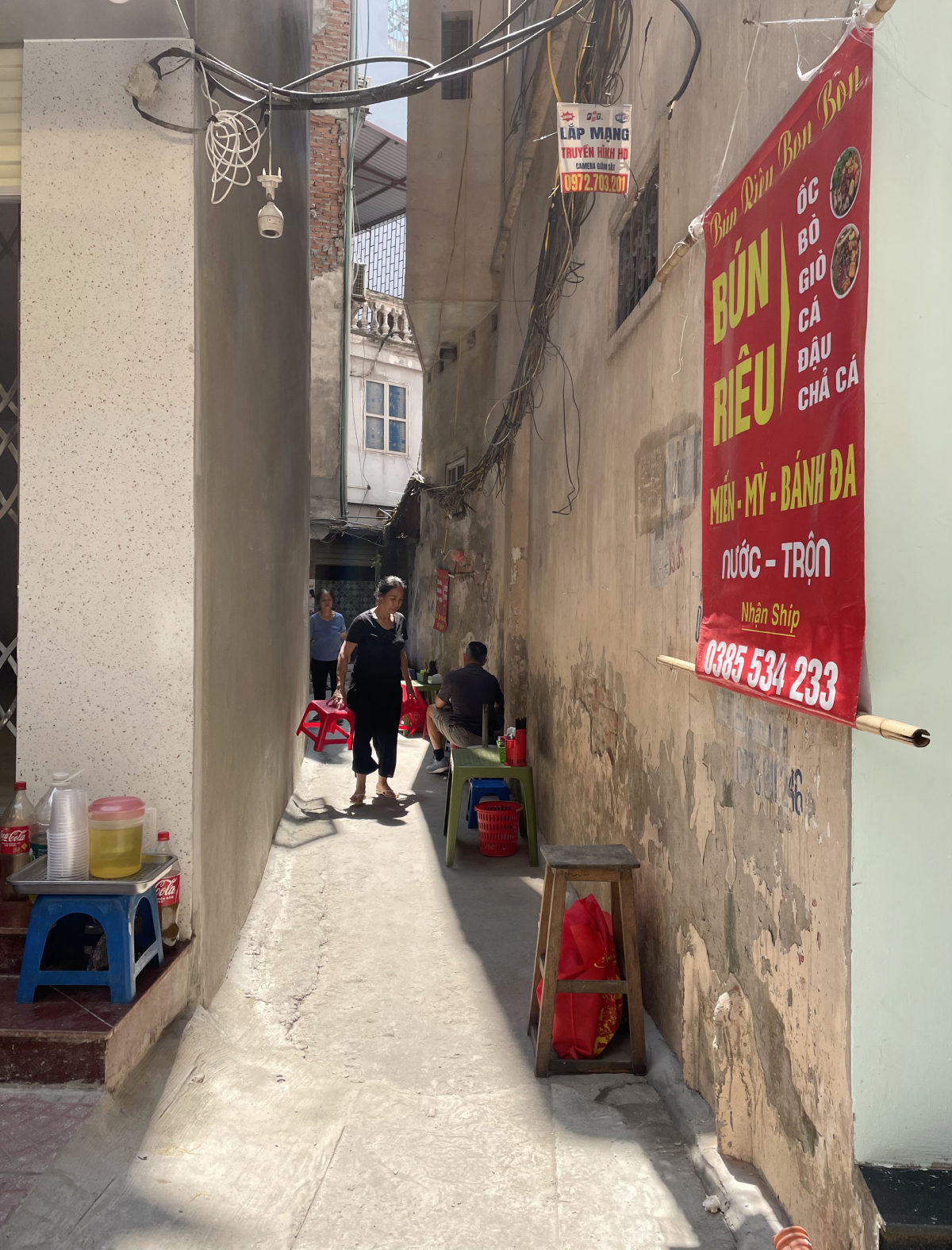 |
Huong Hanh moved her vermicelli soup eatery from the sidewalk into an alley on Hang Chao street, O Cho Dua ward. Photo: Quynh Duong
Next to Hanh's eatery, Van's iced tea stall, which had operated for 10 years on the Hang Day stadium sidewalk, has now "drifted" to the porch of a street-facing house. She explained that when customers want to drink on-site, she stands up to offer them her only chair. "Now I just sell to keep myself from being bored", she said.
Hanoi is implementing Plan 332 to reclaim sidewalks for pedestrians. Authorities are increasing remote fines via cameras. According to statistics from authorities, the capital has about 1,100 streets with sidewalks. A 2025 survey by the Hanoi Department of Construction on 120 streets showed that over 90% were encroached upon for business and parking.
Unlike previous temporary campaigns, Plan 332 is divided into three phases: communication, comprehensive inspection and enforcement, and maintenance to prevent re-encroachment. The city hopes that combining policy amendments and the application of monitoring technology will completely address violations. The director of Hanoi Police requested strict accountability from officials for urban order violations. Officials who allow sidewalk encroachment to recur will face demotion in ranking and potential reassignment.
In addition, remote fines via camera have also contributed to effectiveness. In march, the city processed 3,900 cases. In the central area of Hoan Kiem ward, from early 11/2025 to late 3/2026, authorities handled over 2,400 violations.
A representative from Ngoc Ha Ward Police stated that they have completed clearing spontaneous business hotspots on many roads such as Hoang Hoa Tham, Kim Ma Thuong, and Doi Can. Civil defense forces continuously patrol to prevent re-encroachment. Shop owners in these areas have proactively moved their goods inside their premises for business.
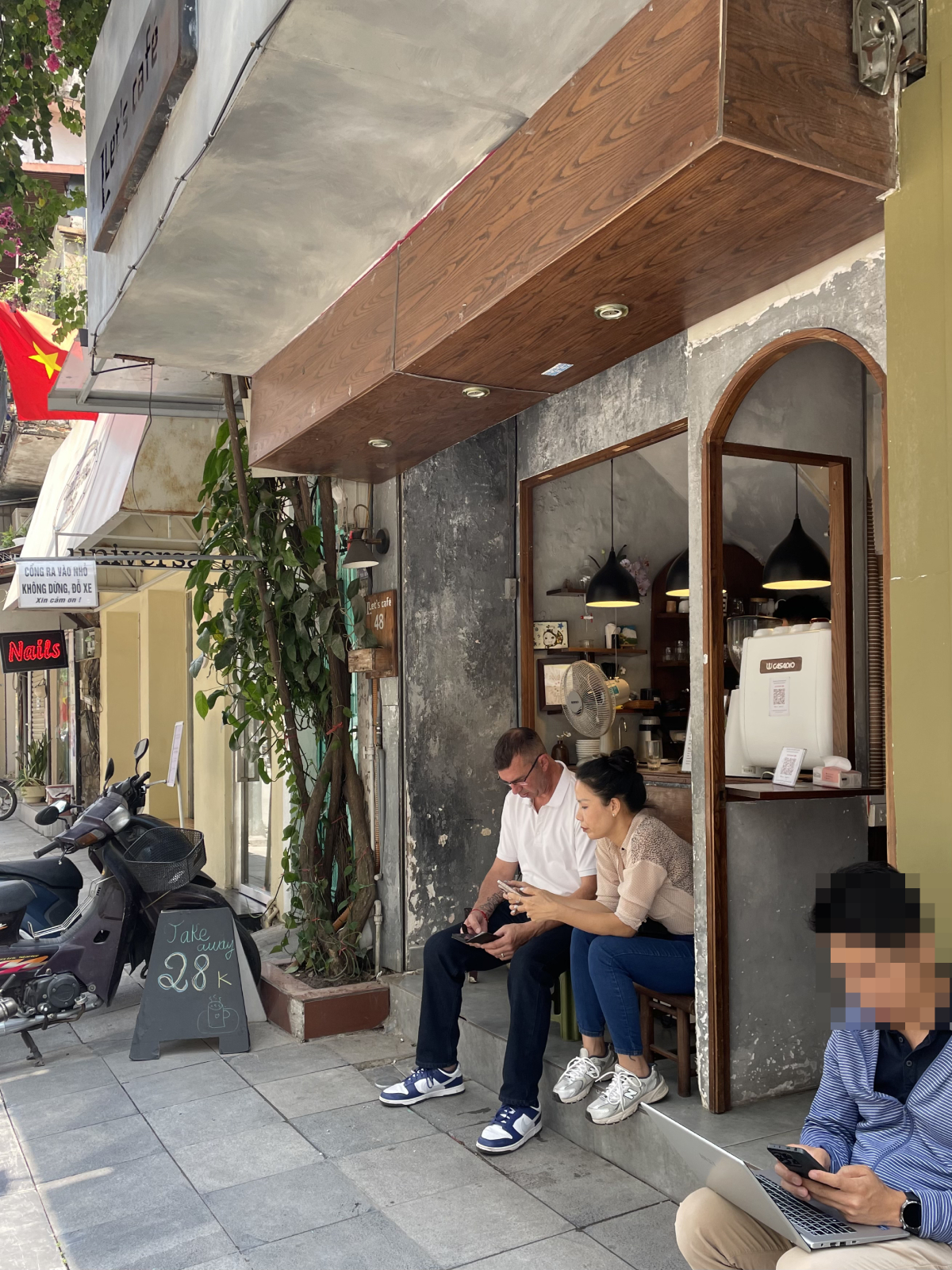 |
A coffee shop on Tran Quoc Toan street boosts takeout sales by offering all items at a uniform price, on 5/5. Photo: Quynh Duong
The tightening of management forces workers reliant on the "sidewalk economy" to find ways to adapt. Besides scaling down operations like Hanh, some businesses are accepting higher costs to rent premises. A noodle shop that once operated on Hang Chao street moved to a 100 m2 space on Giang Vo street from 20/4. The owner said they only open from 7h-13h, yielding the space to a hotpot restaurant in the afternoon and evening to share costs.
In Dong Xuan ward, Ngan, owner of a sticky rice stall, also moved from her old location to rent a shop on Hang Khoai street 200 m away. She accepted a rent of 10 million dong per month, double her previous cost, to secure a stable business location. "I was lucky to secure the lease early, so I found a place close to the old one", she remarked.
Losing sidewalk space, some businesses are forced to change their business strategies. A coffee shop on Tran Quoc Toan street (Cua Nam ward) places a maximum of four chairs near the door. When it is crowded, customers have to sit on neighboring porches and are always ready to move when urban order teams pass by. The owner explained that to maintain revenue, the shop reduced drink prices from 30,000-50,000 dong to a uniform price of 28,000 dong for takeout customers.
Evaluating this sidewalk reclamation campaign, associate professor Doctor Dinh Trong Thinh, former head of the International Finance Faculty - Academy of Finance, observed that streets have become tidier and more orderly. To maintain urban discipline and ensure livelihoods, he suggested that small business owners shift strongly towards online sales to optimize costs.
"Authorities also need to consider piloting concentrated business zones, creating legal trading spaces for residents", he advised.
Quynh Duong