An Thuy, who enjoys collecting old household items, frequently cleans and polishes these pieces in Thanh Xuan ward, Ha Noi. After observing a store employee use a white powder to clean stains and rust from a stainless steel cabinet, she investigated and learned it was limestone powder (CaCO3).
Thuy purchased a 5,000 dong bag and noted the material has no strong odor, cleans quickly, and requires no gloves. When using the powder on stainless steel pots, induction cooktops, sinks, and cast iron pans, it removed all deposits. Limestone powder also works on greasy air vents or yellowed glass bottles.
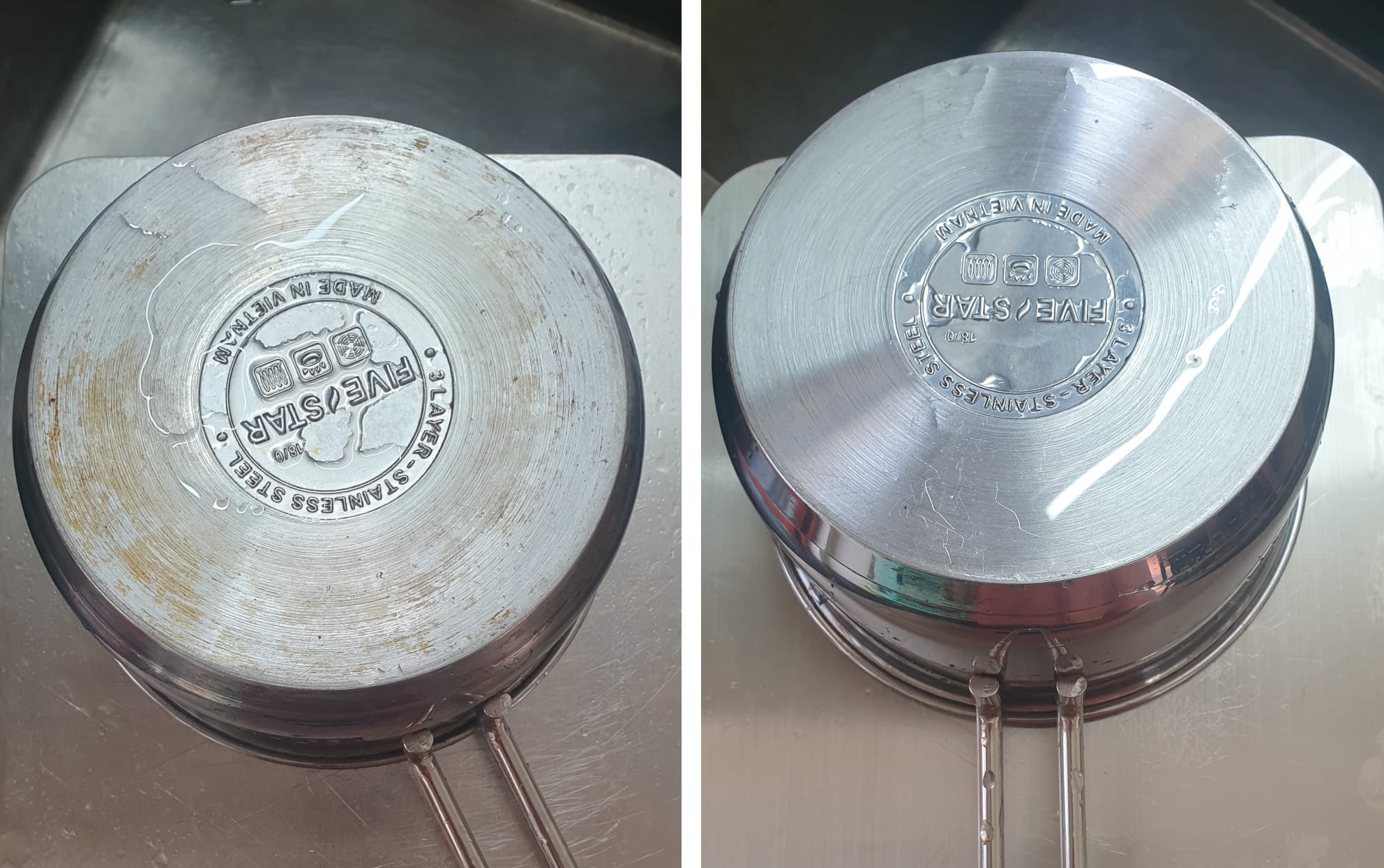 |
Stainless steel saucepan before and after cleaning with limestone powder and lemon juice. *Photo: An Thuy*
According to the organic cleaning brand Therapy Clean (US), limestone powder is a natural mineral. It acts as a mild abrasive and is a main ingredient in many kitchen cleaning creams.
On the Mohs hardness scale, limestone ranks at level 3, making it harder than grease and rust deposits but softer than stainless steel, glass, and ceramics (levels 5-7). This difference allows the limestone crystal particles to dislodge grime without scratching materials during scrubbing. This mechanical method produces no toxic gases and does not corrode skin, unlike chemical stain removers.
For cleaning, users need to prepare limestone powder, lemon juice, an old brush, a damp cloth, and a dry cloth.
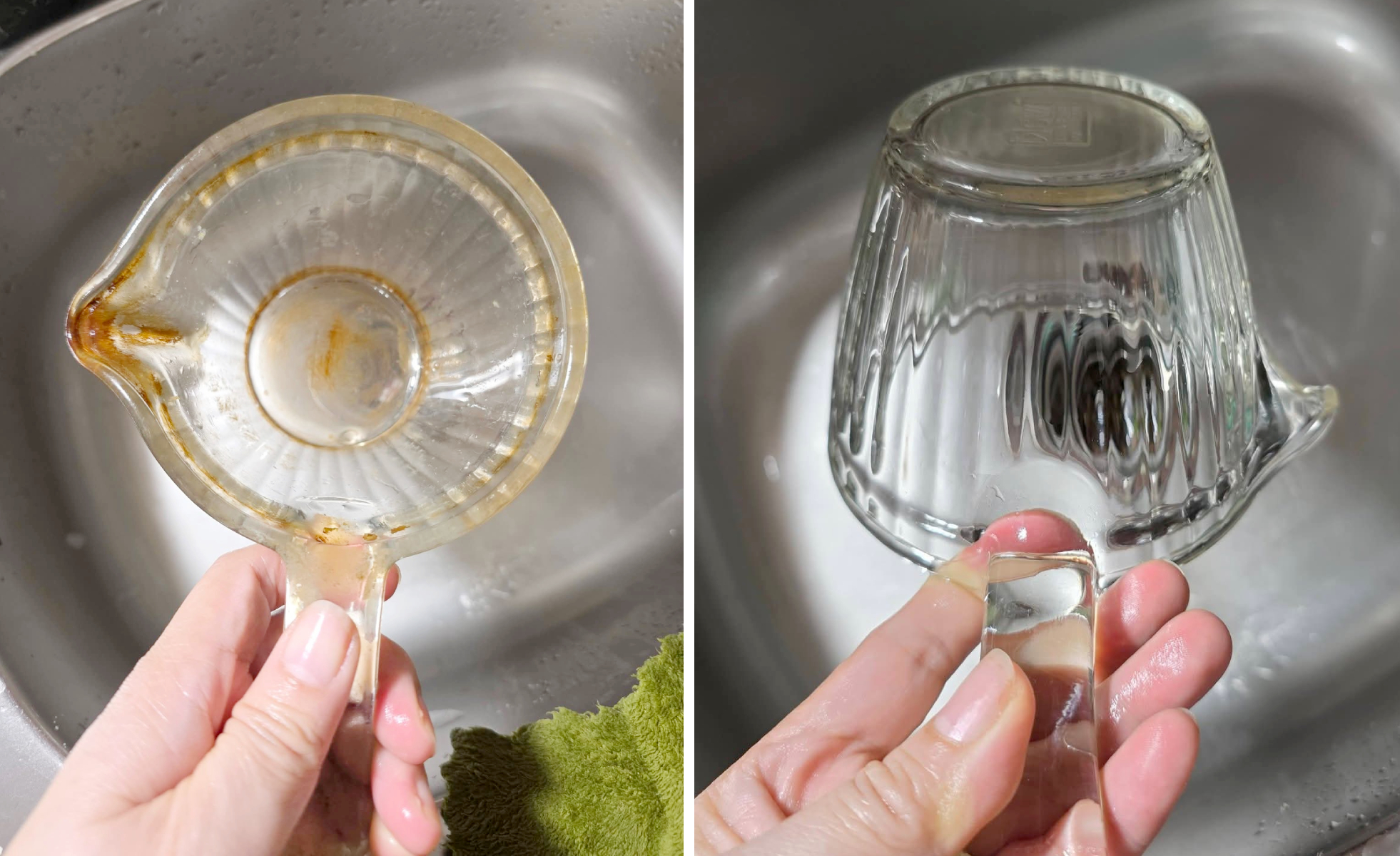 |
A glass item before and after cleaning with a solution of limestone powder and lemon juice. *Photo: An Thuy*
How to clean:
Wet the item to be cleaned.
Dissolve one to two spoons of limestone powder in lemon juice. Dip a soft cloth into the mixture and scrub the stained area. Repeat this step to remove grease and deposits.
Use a brush to scrub hidden corners or handle crevices.
Rinse the item under running water. Wipe with a dry cloth for a shiny surface.
Since limestone powder does not dissolve in water, users must rinse thoroughly and dry the item. Otherwise, residual powder will create a hazy white film on the surface. Avoid using it on easily scratched materials such as non-stick pan interiors (Teflon coating), soft plastics, electronic screens, wood surfaces, or glossy painted metals. Limestone powder is also ineffective at removing limescale from kettles.
Thuy advises maintaining the habit of cleaning pots and pans immediately after cooking to remove fresh stains, which helps prolong the lifespan of kitchenware.
Limestone powder is available at plumbing and hardware stores. On e-commerce platforms, the product costs approximately 10,000 - 15,000 dong per kg.
Video: Cleaning a cast iron pot with limestone powder and lemon juice.
Bao Nhien