


For the past two years, Pham Dung, 52 years old, has maintained a dual life between the city and the countryside. On a recent afternoon, as Ho Chi Minh City showed signs of dry haze, he leisurely strolled around his 3,000 m2 garden in Bao Loc, Lam Dong, breathing in the cool highland air.
"I feel like I live in two worlds," he said. In the city, even with prolonged sleep, he often felt tired and experienced chest pain. However, after a few days in Bao Loc, his sleep became deep and uninterrupted. His decision to "partially migrate" was made in 2023, when his air purifier app consistently reported hazardous levels, coinciding with a decline in his health at 50 years old. He hired a manager to run his company, accepting monthly operational costs of approximately VND 15 million for his garden home in exchange for balance.
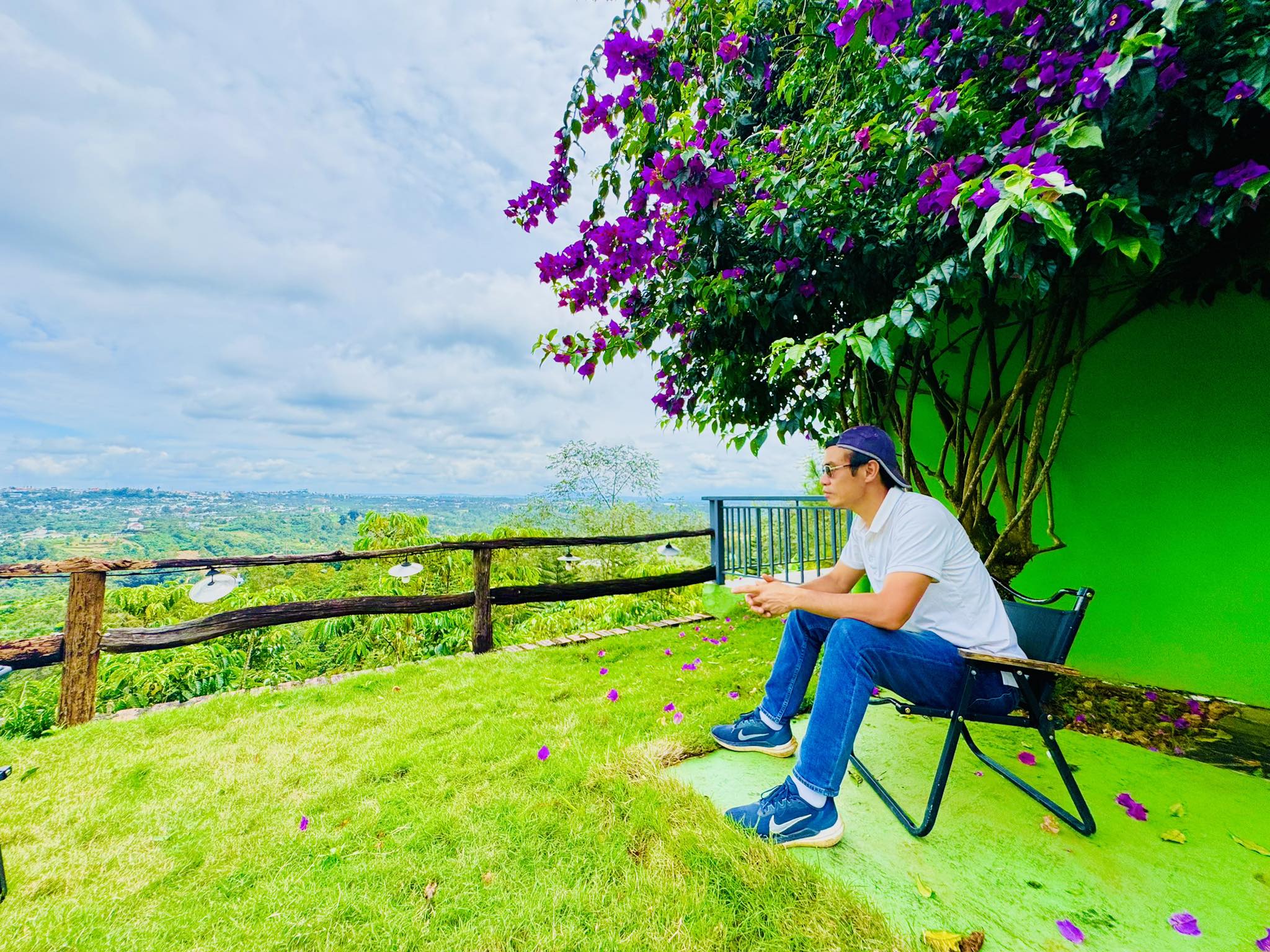 |
Pham Dung enjoys the fresh air at his second home in Bao Loc, 2025. Photo provided by character |
The trend of seeking "green zones" to escape pollution is rapidly increasing. This wave has become particularly pronounced as Hanoi's air pollution worsens.
Unlike the affluent Pham Dung, Kieu Trinh, 30 years old, and her husband in Hanoi are also "finding ways to escape fine dust" despite their limited finances. Three years ago, they took out a bank loan to buy a 70 m2 apartment in Thanh Xuan District. However, when their first child was born during a period of "hazardous" air quality in Hanoi, their plans for a stable life in the capital faltered.
"Every time the air purifier warned us, I felt like I was keeping my child in a glass cage," Trinh recounted. After repeatedly having to evacuate with her child, she and her husband risked borrowing more from relatives to buy a simple house in Nghe An for over VND 1 billion.
Now, whenever Hanoi is engulfed in smog, they take time off work and bring their child to the countryside. There, Trinh dares to let her child run barefoot in the garden without a mask.
However, the cost is not cheap. The couple's combined income of VND 50-60 million is currently just enough to cover interest payments for two properties and minimal living expenses. The house in the countryside remains vacant for most of the time, while the principal debt remains untouched.
Not everyone can afford to buy an additional property. For many young people, renting a home offers a more flexible way to "escape dust," with fewer financial constraints. Ngoc Trang, 26 years old, living in Long Bien, Hanoi, who is in her seventh month of pregnancy, has spent over VND 100 million in the past six months to rent suburban homestays every weekend. "It's not tourism; it's protecting our lungs," Trang said, adding that the feeling of removing her thick mask compensates for all the expenses.
 |
Ngoc Trang and her husband spend money on "dust-escaping" trips from Hanoi, 12/2025. Photo: Provided by character |
The trend of buying or renting homes in "green zones" to escape dust is no longer a temporary fad but an essential shift driven by health concerns. Prolonged periods of air pollution, exceeding hazardous levels (above 200) in Hanoi in recent years, have significantly impacted settlement behaviors, giving rise to the "two-home" or "second home" trend.
According to PropertyGuru Vietnam's 2025 Consumer Sentiment Report, 86% of homebuyers prioritize "green" factors, and 94% are willing to pay extra for a clean living environment.
Data also shows a clear reversal: real estate searches in inner-city areas have stalled, while satellite provinces like Hung Yen saw a 111% increase, Vinh Phuc a 42% increase, and highland regions such as Lam Dong and Moc Chau experienced over 100% growth in interest. For the middle class, a second home is now more than just an asset; it is a "shield" protecting the family's lungs from urban fine dust pollution.
However, the "green dream" often comes with financial and operational traps.
Architect Pham Thanh Truyen from Ho Chi Minh City, who has years of experience with this trend, calls these "points of disillusionment." In 2015, he tried to buy a garden house near Saigon but failed due to excessively high land prices or remote locations. In 2022, he decided to renovate his family's 6-hectare plot in Quang Ngai to create a retreat. From his practical experience, Architect Truyen believes that many people buy a second home to escape dust but then encounter localized pollution in the countryside, such as odors from livestock farming, craft village waste, or pesticides.
Additionally, there is the burden of maintenance. "A vacant house deteriorates quickly. If you only go home on weekends to clean and repair, it's torment, not relaxation," he noted.
According to him, the determining factor for a "green home" is not air purifiers or the number of trees, but rather natural ventilation, microclimate control, and the selection of safe materials. "A sealed house amidst nature is not much different from a concrete box," he stated.
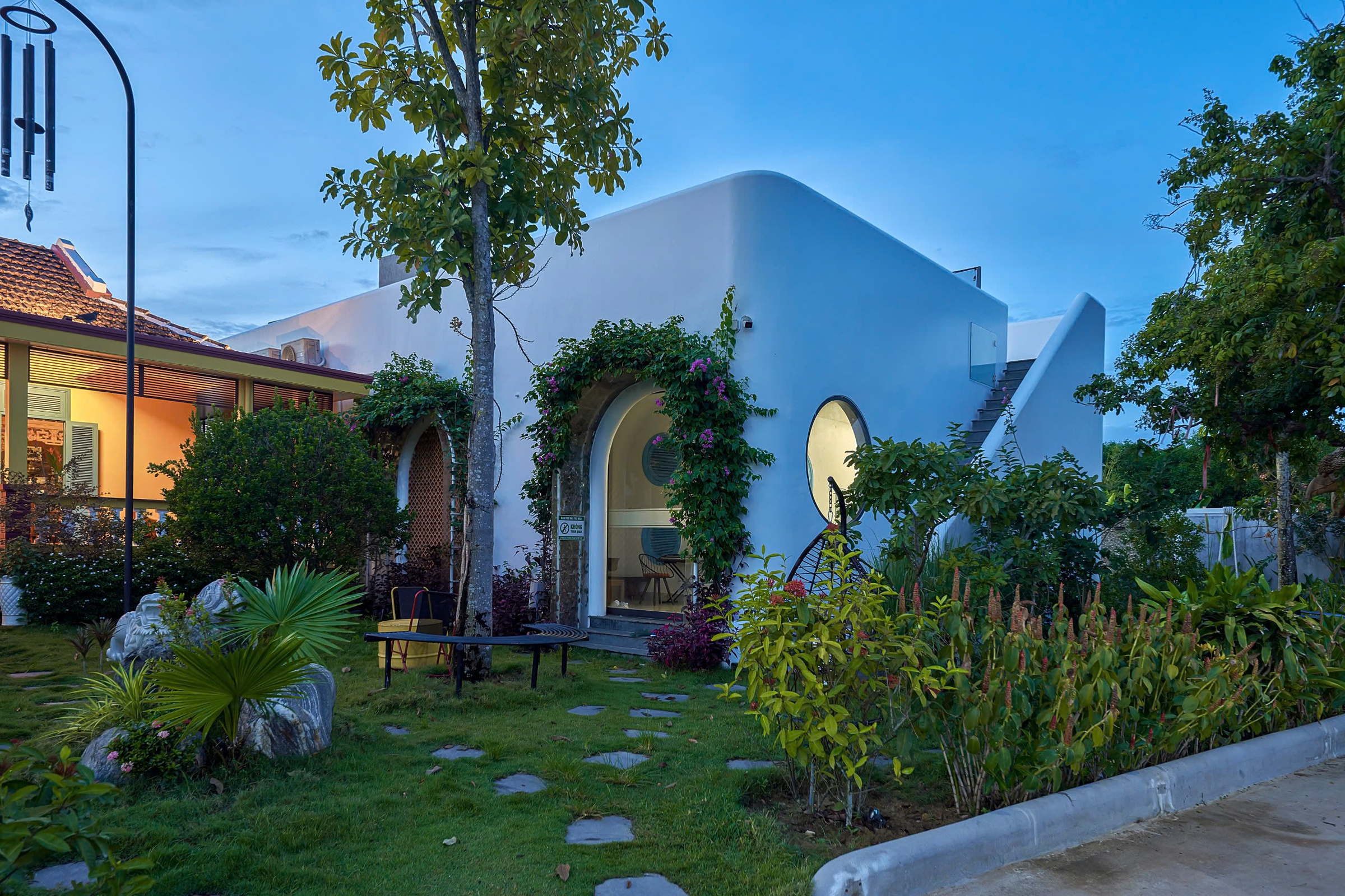 |
A corner of Architect Truyen's "second home" in Quang Ngai. Photo: Provided by character |
Lam Tuan, founder of the financial services company Financial Planner, said that in the past two or three years, he has increasingly encountered young families in Hanoi and Ho Chi Minh City seeking a "green zone" to protect their children and their own mental well-being from air pollution. According to him, pollution has become a direct factor influencing long-term financial decisions.
However, he warns that taking on debt to buy a second home when the first mortgage is not yet paid off is a double risk. "The issue is not whether to buy a second home, but whether the family has clearly answered three core questions," he said.
First, does the house serve regular living needs or only provide temporary emotional relief? Second, is there enough financial "cushion"? If total debt obligations exceed 35–40% of income, the risk is substantial. Third, there are less stressful intermediate options, such as long-term rentals in suburban areas, seasonal rentals during peak pollution, or flexible living arrangements during the first few years of raising children.
Nevertheless, for mothers like Kieu Trinh, this trade-off is still worthwhile in the short term. "I might have to 'work hard' to pay off debt for another 10 years, but at least my child won't grow up entirely in smog," she said.
Song Nga


