According to American culinary expert Natasha Kravchuk, this method utilizes the corn's natural husk to create a miniature steamer. When microwaved, the husk retains steam and internal moisture. This mechanism ensures even cooking and loosens the connection between the silks and kernels, making them easier to remove after cooking.
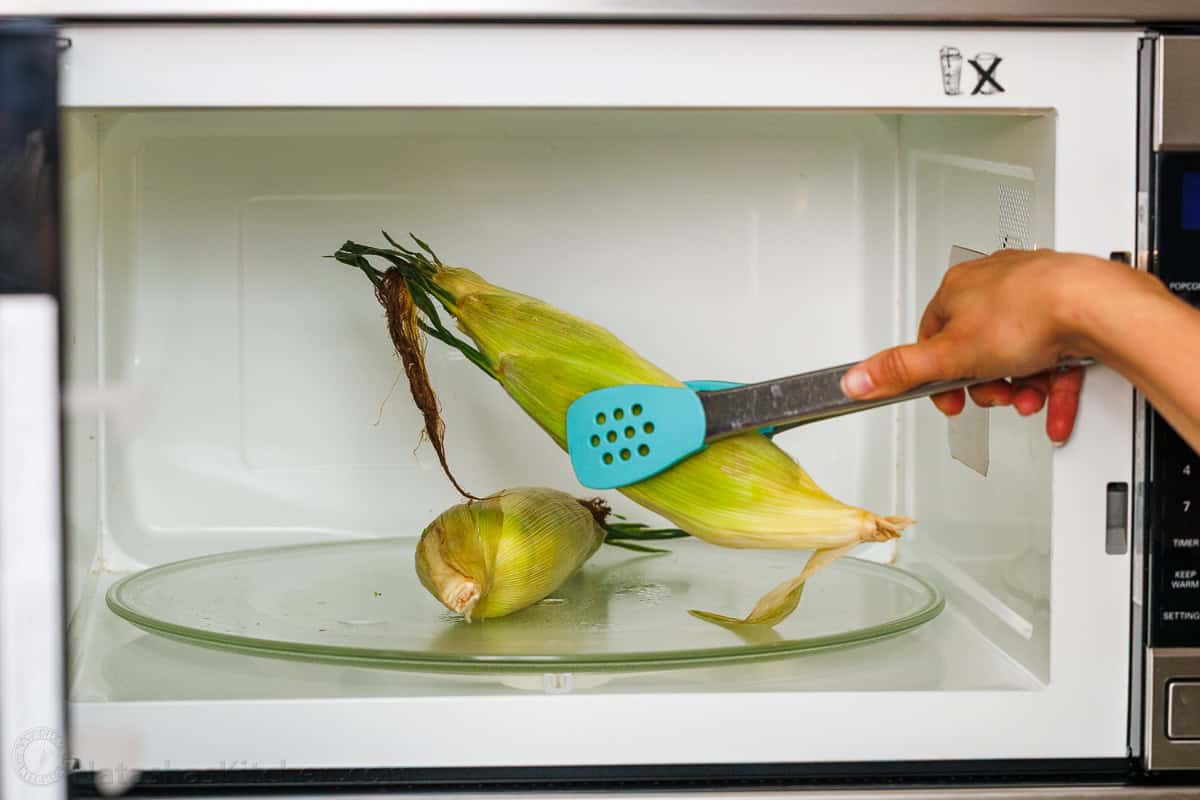 |
Keep the husk on when microwaving corn. Photo: Natasha's Kitchen |
The process involves three simple steps:
- Keep the green husk and silks intact. Arrange the cobs in a single layer in the microwave.
- Microwave on the highest power setting. Cooking time depends on the quantity and size of the cobs: one cob requires about 3 minutes; two cobs take 4-5 minutes; three cobs need 6-7 minutes; and four cobs take 8 to 9 minutes. If cooking three to four cobs simultaneously, it is recommended to flip or rearrange them halfway through the cooking time for more even heat distribution.
- After the microwave stops, use tongs to remove the cobs and let them rest for 1-2 minutes. Next, place a cob on a cutting board and use a sharp knife to cut off about 2,5 cm from the stem end, ensuring to cut just past the last row of kernels. Hold the pointed end with the silks firmly with a clean kitchen towel and gently squeeze to push downwards. The entire cooked cob will slide out, leaving the husk and silks completely clean.
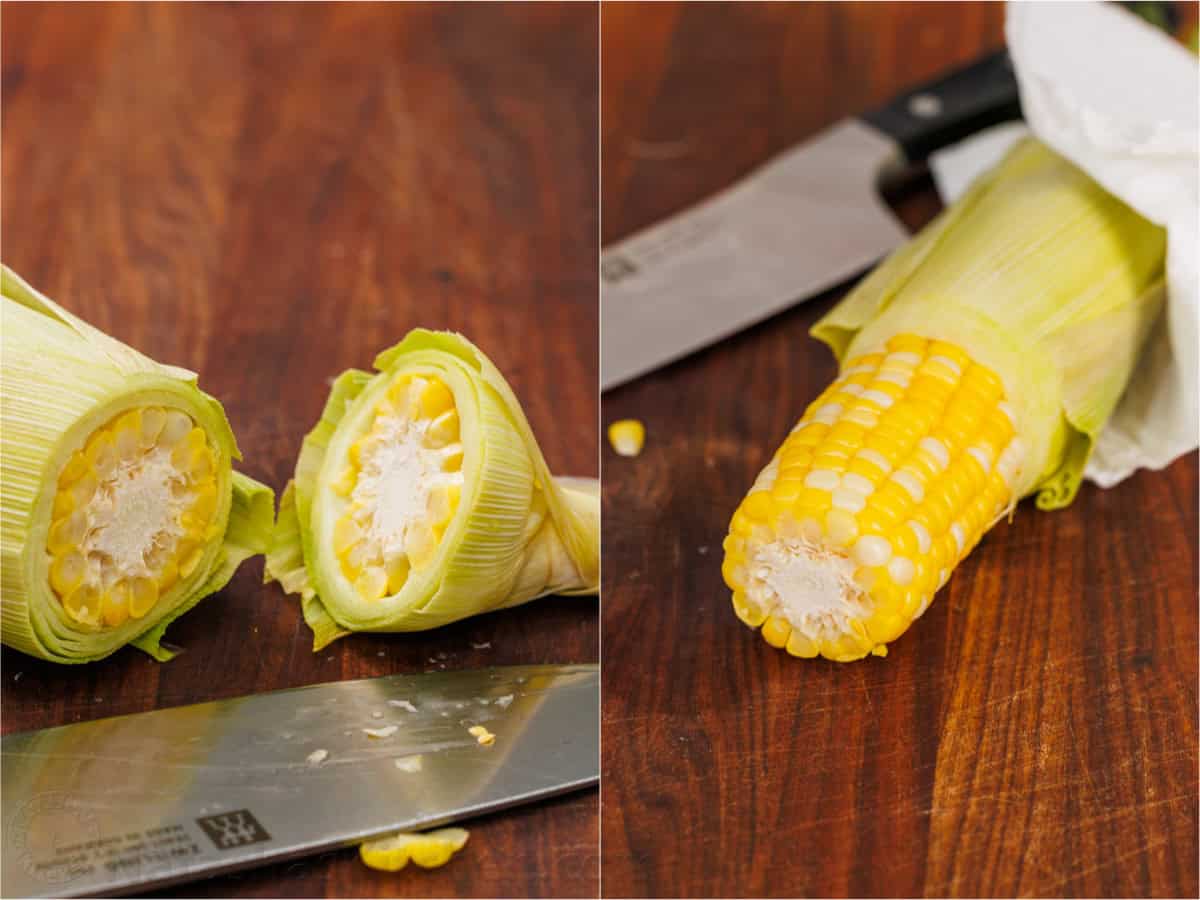 |
Cut off the end, then pull the husk and silks from the cob. Photo: Natasha's Kitchen |
If the corn has been shucked beforehand or its outer husks are too dry, Natasha Kravchuk advises wrapping each cob in a damp paper towel before microwaving to compensate for lost moisture and prevent the kernels from becoming dry and hard.
Microwave-cooked corn can be eaten immediately with butter and a sprinkle of salt, or served as a side dish for barbecues. If not consumed entirely, home cooks can store the corn in an airtight container in the refrigerator for a maximum of four days, reheating it by wrapping it in a damp paper towel and microwaving for 20 seconds. For longer preservation, remove the kernels, place them in an airtight container, and freeze.
Bao Nhien (Natasha's Kitchen, Southern Living)