The sight of people swimming freely in Copenhagen's canals despite the cold winter, or women sunbathing topless in spring, demonstrates an open culture that embraces the human body without inhibition.
The "sex recession" trend is spreading across many Western countries. According to a 2024 global survey by dating app Feeld and the Kinsey Institute, 37% of Gen Z (those born between 1997 and 2012) had not had sex in the past month, a higher percentage than Millennials (19%) and Gen X (17%). In the UK, YouGov data indicates that only one in four people had sexual intercourse in the previous week.
In contrast, Danish national data records that almost half of men and 43% of women regularly engage in sexual activity. The average age for starting sex in Denmark has remained stable at 16,4 since the 1950s, even though the legal age of consent in the country is 15. Surveys show that Danish Gen Z do not have less sex than previous generations, and most are satisfied with their sex lives.
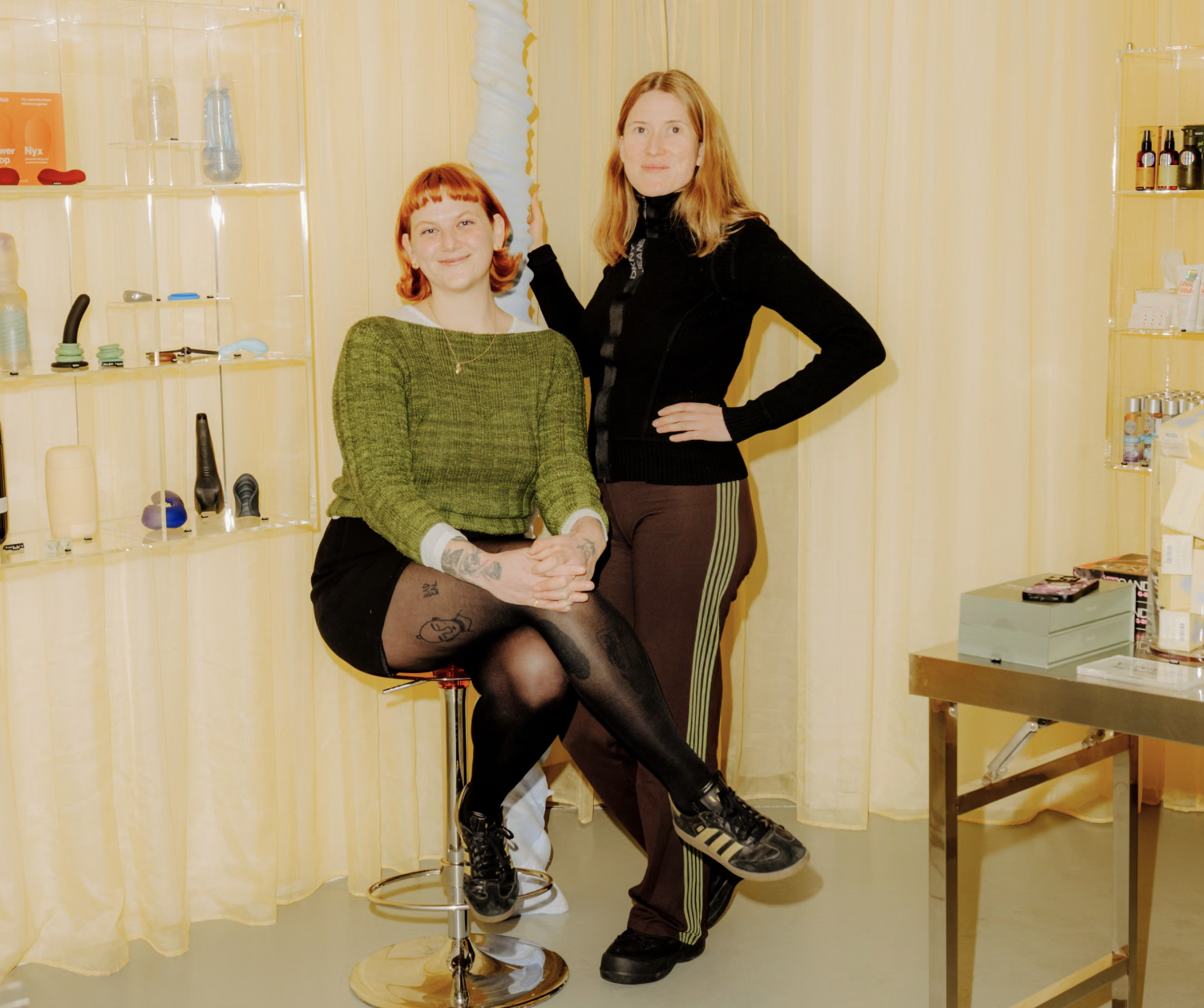 |
Kathrine Graa, 33, and Clara Filippa Andersen, 34, in a sex toy store in Copenhagen, Denmark. Guardian.
Carl Christian, 23, a psychology student at the University of Copenhagen, stated that casual relationships are common among his friends. Having sex in one's 20s is not seen as taboo or negative; on the contrary, friends often celebrate when someone finds a suitable partner.
According to experts, a strong economic foundation helps Danish youth establish independence early. Statistics show that only 11% of Danes live with their parents at 24, compared to 18% in the UK. Universities here do not charge tuition fees, and students receive over 600 euros per month in government subsidies. Free from financial burdens and academic pressure, young people have more space and time for their personal lives.
Furthermore, the sex education system in this Nordic nation is practical and inclusive. Students are taught how to use condoms from the age of 13. The curriculum also emphasizes women's emotions, diverse sexual orientations, and the principle of consent.
This positive attitude is evident in public policies. Even during the Covid-19 pandemic, Danish health authorities affirmed that sexual activity is an "essential need". Health units consistently organized mobile testing at universities to protect young people. As a result, despite high levels of sexual activity, dangerous sexually transmitted diseases like HIV are largely controlled, with 103 new cases in 2024 among a population of 6 million people.
Public spaces in Copenhagen also reflect this openness. Sex toy stores are openly displayed like sophisticated cosmetic boutiques. Kathrine Graa (33) and Clara Filippa Andersen (34), entrepreneurs in this field, shared that they want to create spaces where people can talk frankly about pleasure. Here, sexual products are presented in the context of self-care, rather than being viewed with shame or prejudice.
Denmark was the first country in the world to decriminalize pornography in 1969. This legacy from the 1960s and 1970s fostered an open, safe, and civilized approach to sexuality.
While many countries blame social media and dating apps for stifling sexual desire in Gen Z, Denmark has proven the opposite: when young people are properly educated and not struggling to make a living, they know how to balance their lives.
Ngoc Ngan (According to Guardian)