In late February, a video of a beauty influencer accidentally revealing her real appearance due to a technical glitch went viral on social media.
While she was engrossed in demonstrating makeup techniques on camera, her beauty filter suddenly disappeared. The incident exposed her everyday face, featuring natural skin and features that appeared somewhat older than the flawless image the streamer typically presented. Rumors suggested she lost thousands of followers instantly, but this information remains unverified.
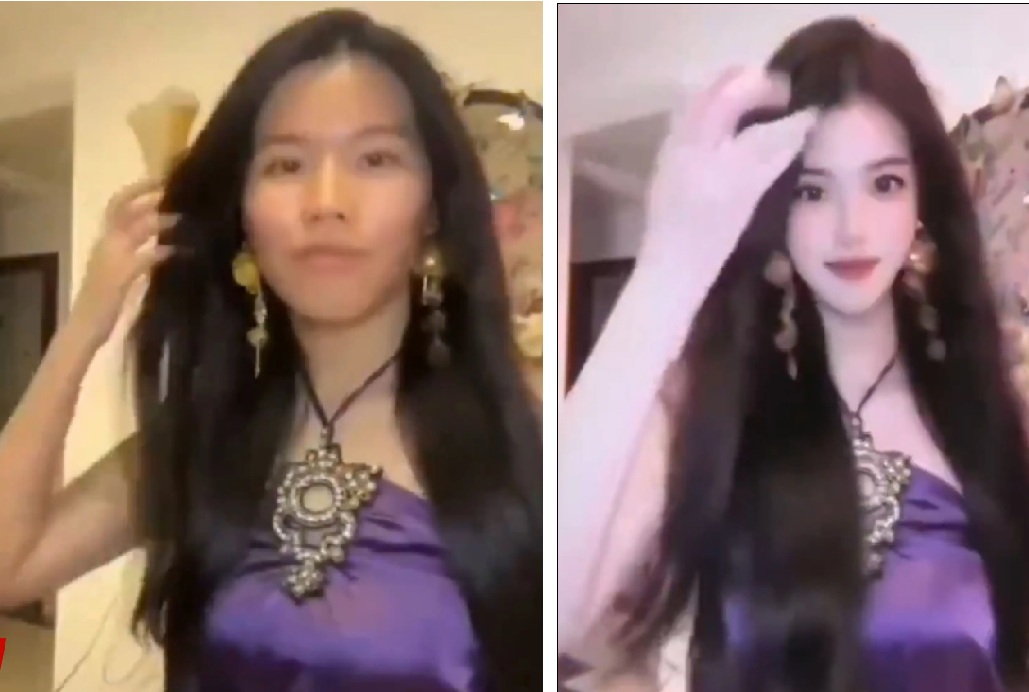 |
The streamer's real face (left) and filtered face.
Instead of criticism, many viewers defended her, stating they preferred her real appearance. "I think she is much prettier than her edited photos. Those pictures look lifeless", one person commented.
Another comment was more critical, condemning the overuse of digital tools: "She is actually very beautiful. I am crazy about this authenticity and utterly hate those virtual masks".
Many social media users also took this opportunity to criticize "East Asian beauty standards", which heavily emphasize porcelain white skin and flawless faces.
The incident reignited debate about content creators' use of beauty tools. In 2019, Chinese social media was shocked when the "goddess" Qiao Biluo was revealed to be a middle-aged woman, far different from her usual youthful image.
According to NY Post, the proliferation of high-tech filters like "Bold Glamour" on TikTok makes self-enhancement easier but also carries consequences. Many users admit to feeling insecure about their real appearance after seeing themselves through AI filters.
"I used to be happy with how I looked until I tried this tool", an English influencer shared.
_Nhat Minh (According to NY Post)._