Santo Tomas, the capital of Chumbivilcas province in the Peruvian Andes, sits at an elevation of 3,600 meters and is home to over 10,000 residents. The indigenous Korilazos community primarily speaks Quechua.
The town has only three police officers, and the nearest courthouse is a 12-hour drive away. Local residents rarely have the time or money to pursue legal proceedings. Consequently, they opt to resolve disagreements through fisticuffs.
Annually from 24 to 26 December, Santo Tomas residents celebrate the Takanakuy festival, which means "to punch each other", to clear conflicts accumulated throughout the year. Every fight begins and ends with an embrace.
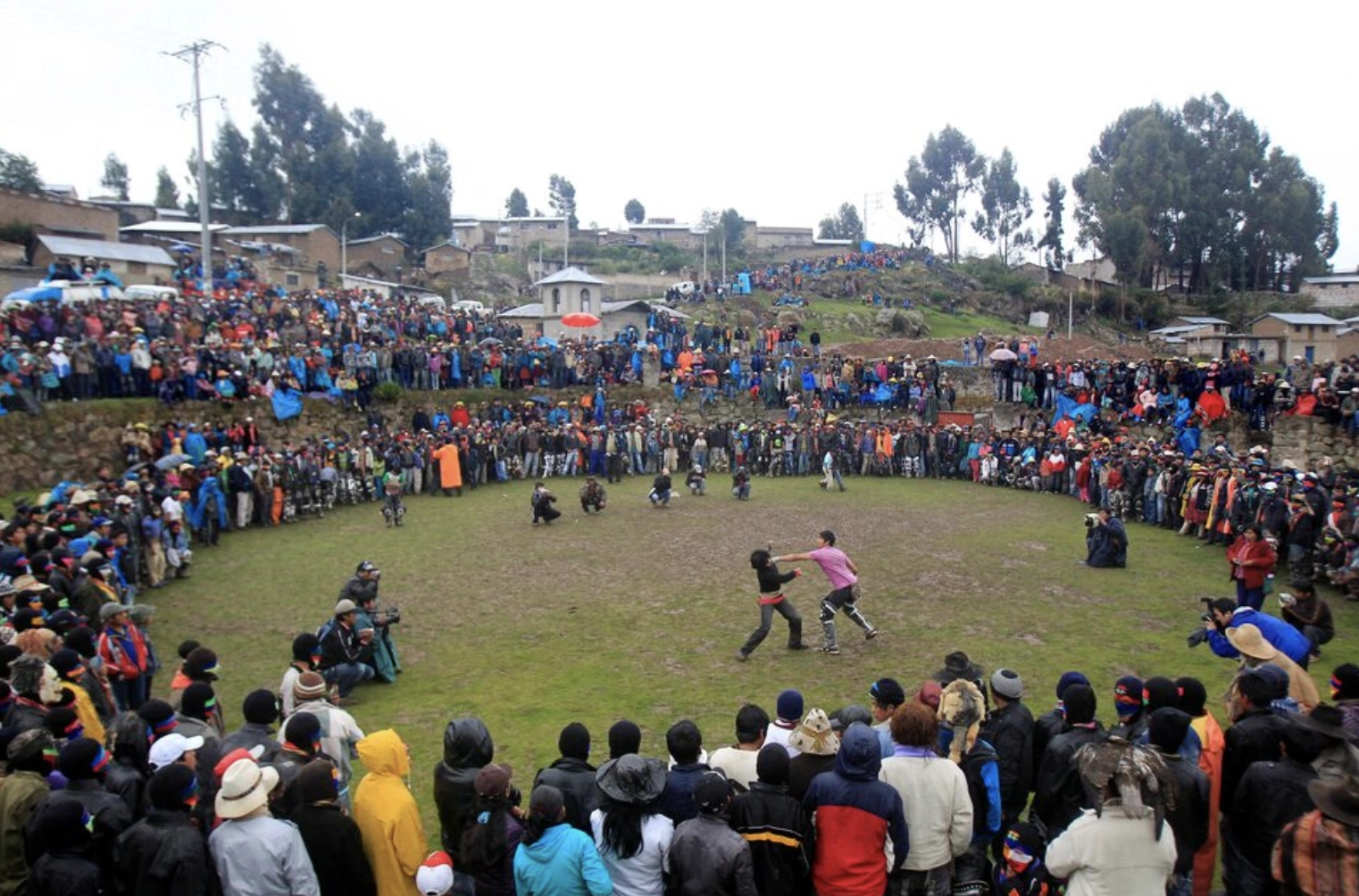 |
Peruvians fight to resolve conflicts during the Takanakuy festival on 25/12/2011. *Photo: REUTERS/Enrique Castro-Mendivil* |
During the festival, people drink, parade, wear traditional attire, don masks, and dance to the Huaylia rhythm. The community views the Takanakuy festival as an alternative justice system. Fighters resolve land, family, or emotional disputes in a circular arena, amidst the cheers of the crowd.
The Ronderos, a local justice force, and referees wielding whips surround the arena, ready to intervene. Referees permit punching and kicking but strictly forbid biting, hair pulling, grappling, or attacking a fallen opponent. A match concludes when one participant bleeds, falls, or becomes unable to defend themselves.
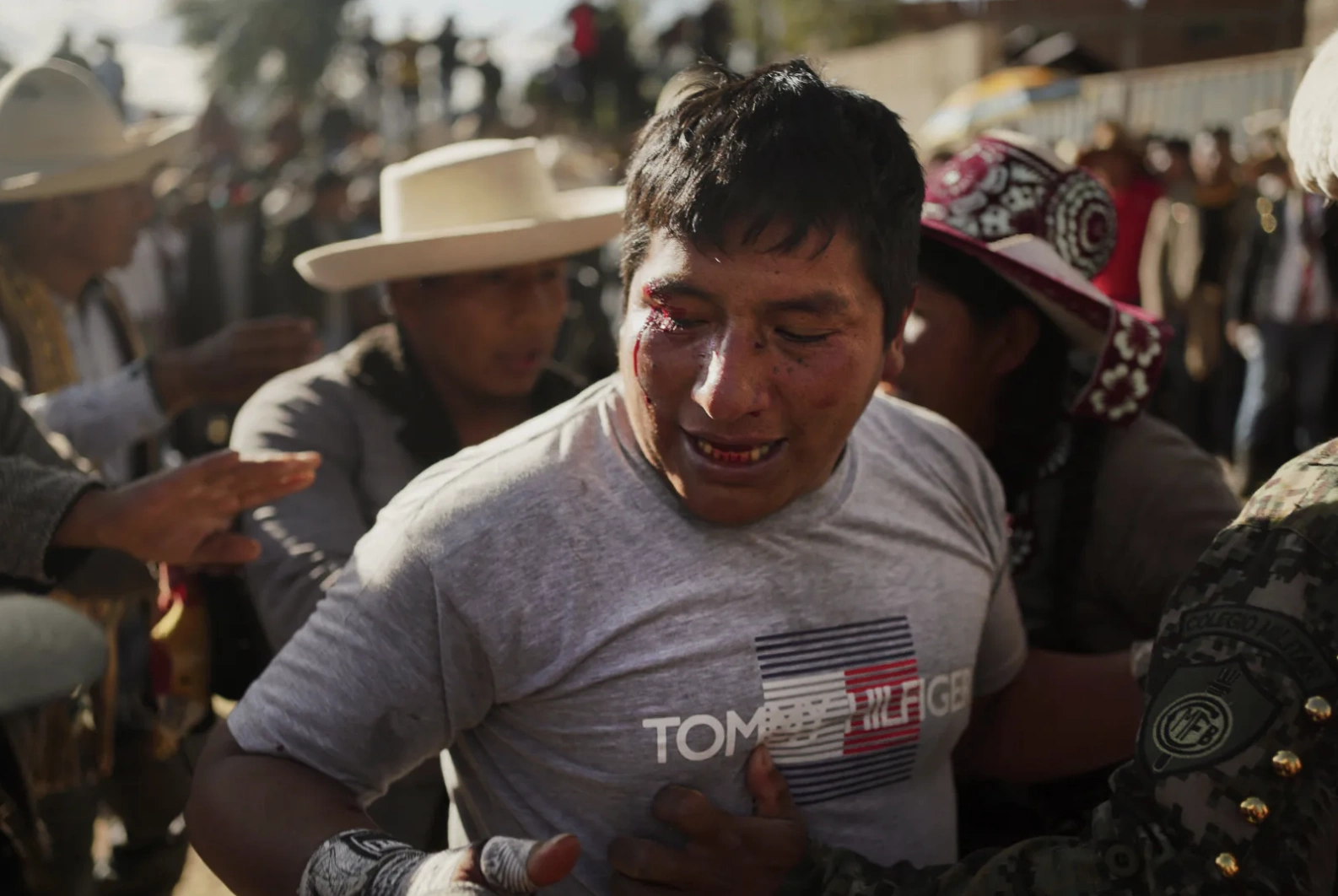 |
A man in Santo Tomas town bleeds during a fight, forcing the match to stop. *Photo: VICE* |
The festival's origins are unclear. Many believe its roots lie in indigenous rituals or 16th-century clashes with Spanish colonists.
Fighter Victor shared that engaging in combat provides a sense of satisfaction and demonstrates his ability to protect his family from injustice.
On the day of the festival, social status boundaries completely disappear. Superiors fight employees, and merchants contend with servers. Unlike a courthouse, Takanakuy has no winners or judgments of right or wrong. Each individual is free to interpret the outcome as a victory, psychological release, or an act of revenge.
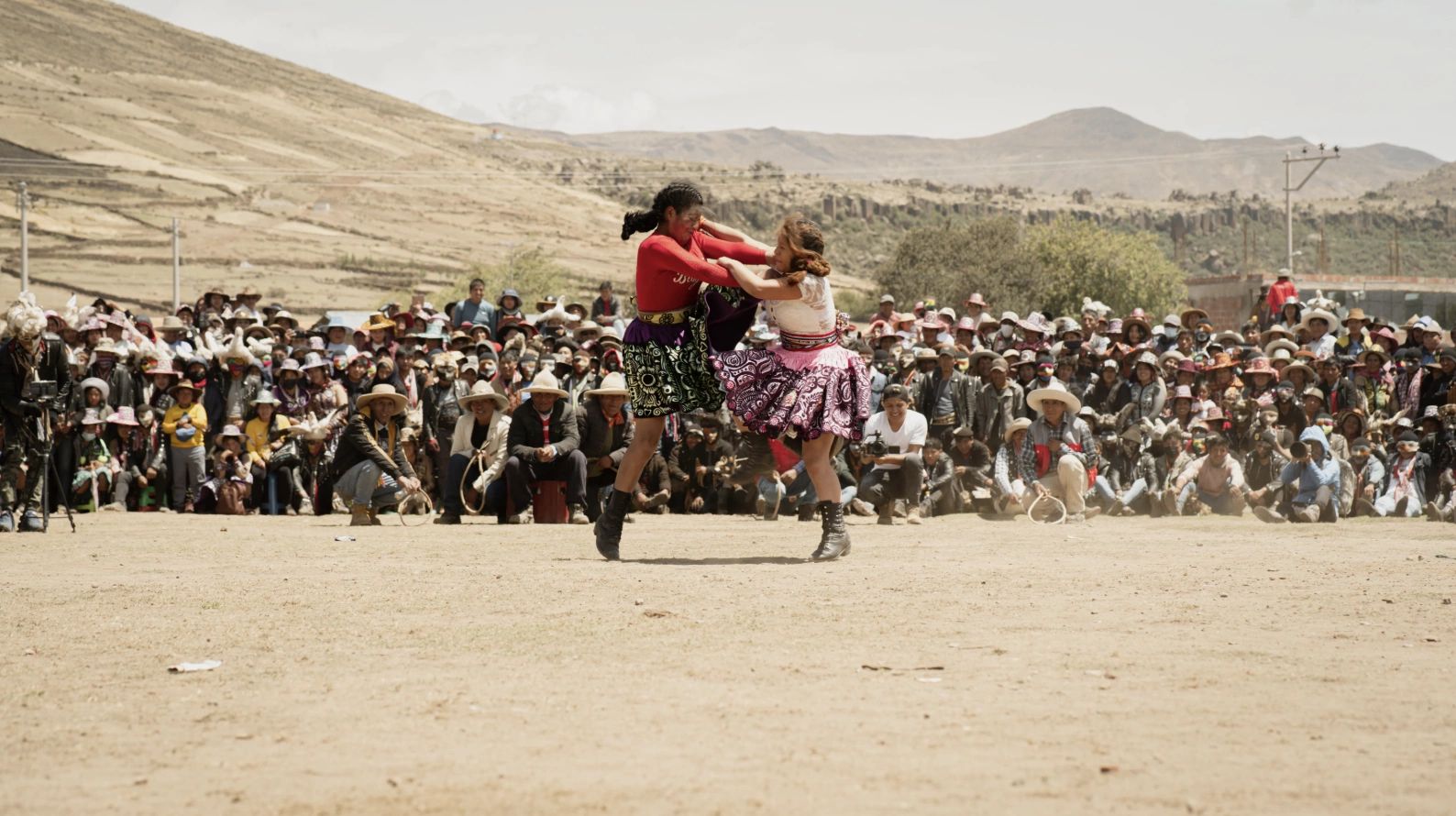 |
Women in Santo Tomas town (Peru) also wear traditionally embroidered attire to fight. *Photo: VICE* |
Recently, more women are stepping into the arena despite some opposition. Jero, a local resident, affirmed that the community is gradually accepting women's right to participate.
Two women, Yani and Vicentina, exemplify this change. After a handshake, they exchanged a series of punches and kicks in the arena. When Vicentina conceded, the referee immediately intervened. The match concluded with an embrace, signifying the resolution of their conflict and readiness for a bright new year.
By Minh Phuong (Sources: VICE, Reuters, NyTimes)