Each morning, tens of thousands of people rush across borders to work in Luxembourg, drawn by Europe's most attractive salaries. Many individuals from around the world also flock here, dreaming of a better life. However, behind the record economic figures, poverty quietly persists.
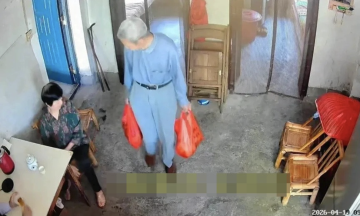
Moufida, 67, pays 50 cents (approximately 0,55 USD) for her meal before quietly joining the queue at the Stëmm vun der Strooss (Voice of the Street) charity kitchen. Each month, she struggles to live on 300 euro, sleeping in a nursing home and considering the charity kitchen her only lifeline.
 |
Moufida at the charity kitchen on 19/2. Photo: Carlos Martinez |
Jhoana Rojas, 46, a Venezuelan lawyer now working as a cleaner, finds her situation slightly better. She and her husband remain in Luxembourg, sending their son to live in a French border region to save costs. "Eating here helps ease my financial burden, as the cost of living in Luxembourg is truly too expensive", she shared.
Bob Ritz, a spokesperson for the charity, stated that the 50 cent price is symbolic, intended to help people appreciate their meals; those without money are still served free of charge. The kitchen welcomes guests of all ages: from refugees and the homeless to those who are employed. Many are minimum wage earners, seasonal contract workers, or undocumented laborers.
The number of meals served by Ritz's organization has doubled, from 50.000 in 2015 to over 100.000 currently. "Ten years ago, clients were mainly homeless individuals, but now there are increasingly more working poor, single mothers, and retirees who cannot make ends meet", Ritz noted.
 |
An average of 450 people dine daily at the Stëmm vun der Strooss facility in Luxembourg. Photo: Carlos Martinez |
Exorbitant rental prices create a labor paradox in this nation of 690.000 residents. According to a Deloitte report, Luxembourg City is Europe's most expensive rental market, with average prices reaching over 43 euro per square meter. A one-bedroom apartment can cost around 1.600 - 2.000 euro per month, nearly consuming a general laborer's minimum wage. This explains why approximately 230.000 people choose to live in neighboring countries like Belgium, France, and Germany, commuting across borders daily. Even many native Luxembourgers are forced out of their homeland due to unaffordable housing costs.
Luxembourg is the richest country in the European Union by GDP per capita and a major financial hub. However, its rate of workers facing poverty risk is the highest in the bloc, at 13,4%. The wealth of the financial sector coexists with the precarious lives of ordinary workers, despite Luxembourg having Europe's highest minimum wage, projected to exceed 2.700 euro per month by 2026.
Member of Parliament Djuna Bernard stated that the housing crisis is causing Luxembourg to lose its appeal, directly threatening its labor supply. A Eurofound report also identified housing as a core cause of instability. Rental costs devour the income of the poor and deepen the wealth gap.
 |
Aggressive begging has been banned in central Luxembourg since 2024. Photo: Carlos Martinez |
In central Luxembourg City, a begging ban enacted in early 2024, carrying fines of 25-250 euro, is sparking significant debate. Officials argue it is necessary to prevent organized begging, while opponents criticize it as "criminalizing poverty".
Angel Batum, 55, a Spaniard who once held a stable job, became homeless after an act of violence led to him losing his documents and ability to work. Having experienced both extremes of society, he concluded: "Luxembourg has no place for the middle class. Many mistakenly believe it is a paradise with a 5.000 euro salary, only to become disillusioned, lose everything, and end up on the streets, relying on charity kitchens."
Minh Phuong (According to Elpais English)