Many wonder why homemade french fries often become soft and soggy within minutes, while restaurant fries retain their crispiness for much longer.
The reason lies in fresh potatoes' high water content, about 80%, along with a network of starch and pectin, a natural adhesive that binds cell walls. If potatoes are sliced and fried immediately at high temperatures, the exterior quickly browns, but internal moisture remains trapped. Once removed from the oil, steam from the core escapes, seeping outward and breaking down the newly formed crust, resulting in soggy fries.
To overcome this, many chefs use a double-frying technique, incorporating a cooling step between fries. This method relies on altering the starch structure.
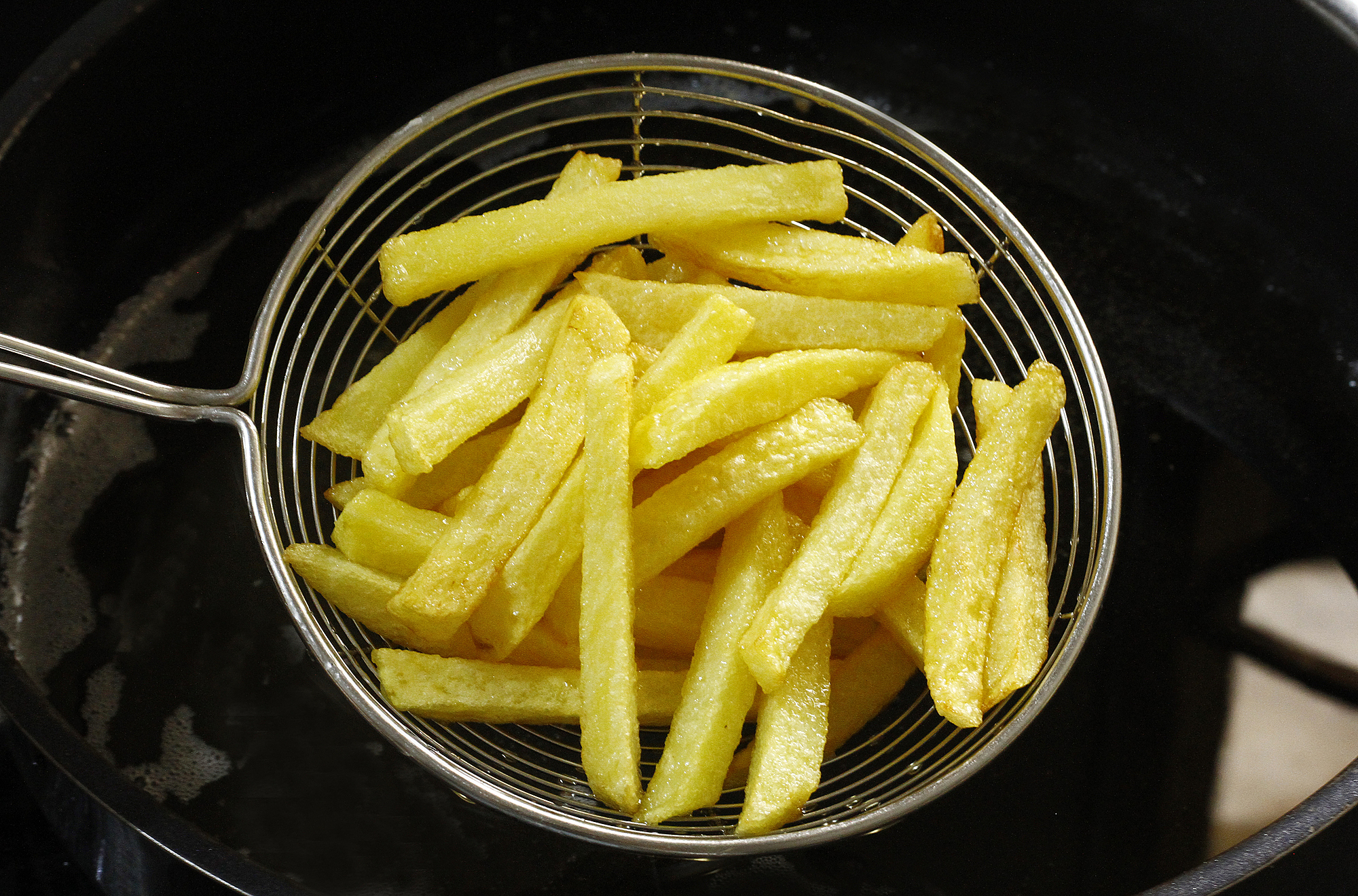 |
The first fry lightly cooks the potatoes. Bui Thuy |
The first fry lightly cooks the potatoes. Bui Thuy
The first fry, done at a lower temperature, primarily cooks the potato's core. This process allows the starch to absorb water and begin gelatinization. Moderate heat breaks down the pectin structure, softening the potato from within without burning the exterior. After this initial fry, the potatoes are cooked but have a loose texture and pale color.
After the first fry, restaurants typically cool the potatoes completely or deep-freeze them. This crucial cooling step is often overlooked in home kitchens. Low temperatures cause the amylose starch within the potatoes to contract and restructure into a firm network. Simultaneously, the cold, dry environment draws out excess surface moisture, creating a dry film.
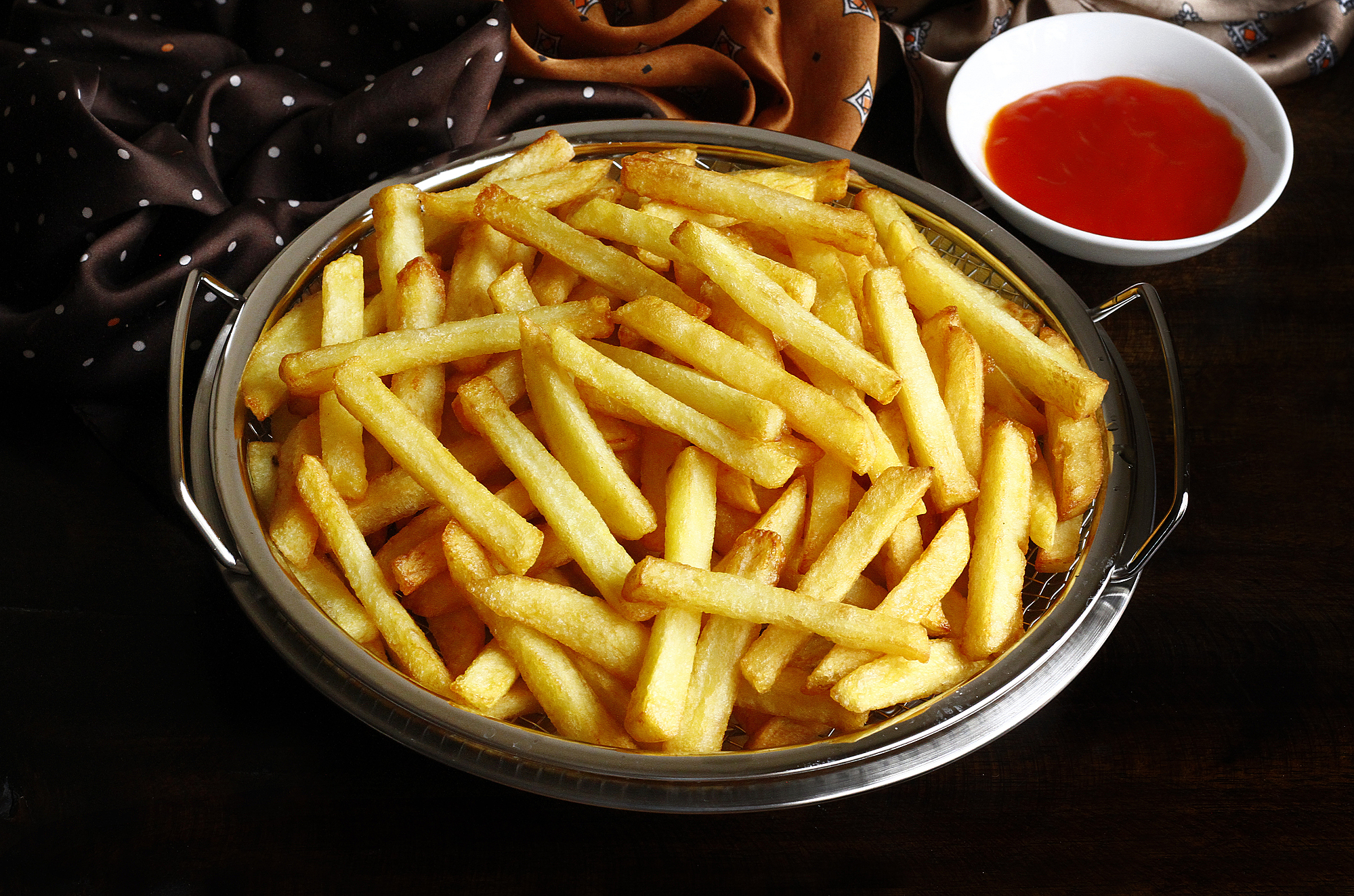 |
The second fry removes oil at high heat. Bui Thuy |
The second fry removes oil at high heat. Bui Thuy
When the chilled potatoes are dropped into hot, simmering oil for the second fry, the significant temperature difference causes surface water to rapidly vaporize. This creates tiny pores in the outer layer. The hot oil immediately penetrates these pores, drawing out moisture from the starch network.
This sudden dehydration at high temperatures transforms the starch into a brittle, "glass-like" state. Concurrently, the Maillard reaction occurs, giving the outer layer its golden brown color. This robust crust then acts as a barrier, locking moisture within the core and preventing it from seeping outward, thus ensuring the fries remain crispy for longer.