Many home cooks dread preparing onions due to the pungent, eye-watering sensation. However, understanding the scientific properties of this vegetable allows for easy control.
Onions, part of the Allium genus, absorb sulfur from the soil. When cut, onion cells break, releasing the enzyme alliinase. This enzyme immediately reacts with amino acids to produce a gas called syn-propanethial-S-oxide.
Upon evaporation, this gas contacts the moisture in your eyes, combining with water to form a weak sulfuric acid. This acid irritates, causing tear glands to produce tears to wash it away. Understanding this process is key to neutralizing the spread of the irritating gas through the following methods:
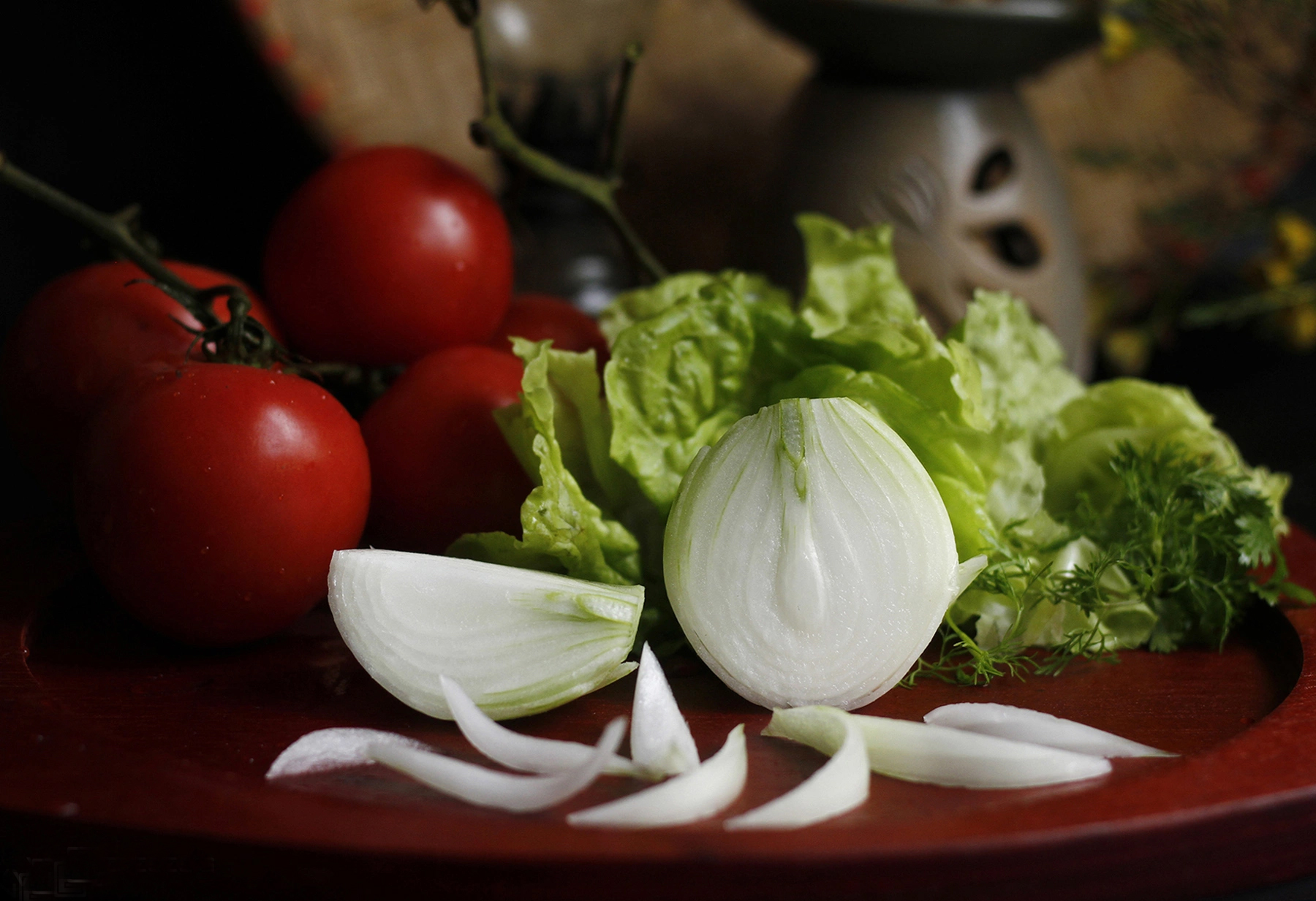 |
Illustration: Bui Thuy |
Chill the onion
One effective method is to place the onion in the freezer for about 15-20 minutes before cutting. Low temperatures significantly inhibit enzyme activity and reduce the evaporation rate of sulfur compounds. This slows down the chemical transformation from the start.
Use a sharp knife
A sharp knife is a crucial mechanical factor in reducing tears. A sharp blade cleanly severs tissue fibers, minimizing crushing and cell damage. Less cell damage means fewer enzymes released. Conversely, a dull knife will "crush" the onion surface, maximizing the release of the irritating gas.
Cut onions under running water
Many experienced chefs cut onions under a gentle stream of running water or in a bowl of clean water. Since the irritating compound is highly water-soluble, the liquid environment absorbs the gas as it escapes the cut surface, preventing it from reaching your eyes.
If cutting in water is not preferred, you can place a small fan to blow across your cutting board. The airflow will disperse the gas molecules away from your eyes.
Apply vinegar to the cutting board or knife
An acidic environment can reduce enzyme activity. Applying a small amount of white vinegar to your knife or cutting board before slicing changes the pH on the cut surface, partially preventing the alliinase enzyme from reacting. This simple trick offers surprising effectiveness.
Note: Older onions generally have higher sulfur concentrations than freshly harvested ones. For optimal results, combine two or three methods (such as chilling and using a sharp knife) to make your cooking experience more pleasant.
Keep the onion root intact:
The root end of an onion contains the highest concentration of sulfur compounds. A classic chef's trick is to cut off the top, peel, dice the onion, and leave the root end for last (or discard it whole).
Bui Thuy