Many home cooks believe that the longer bones are simmered, the sweeter the broth. However, from a food science perspective and traditional pho cooking experience, extending simmering time excessively does not yield the expected results.
Understanding the correct simmering time
Simmering broth is essentially a process of extracting flavor through heat. The natural sweetness and richness of pho broth come from collagen found in tendons, cartilage, marrow bones, and amino acids in the meat.
When simmered at a gentle boil (85-95 degrees Celsius), collagen transforms into gelatin, creating a smooth richness and a lingering sweetness. This conversion is most effective during the initial 10-12 hours. For large beef marrow bones, traditional pho establishments may simmer for up to 18-20 hours to fully extract the sweetness. This duration represents the optimal point. Beyond this period, the collagen has completely dissolved, and continued simmering does not significantly enhance sweetness or nutritional value.
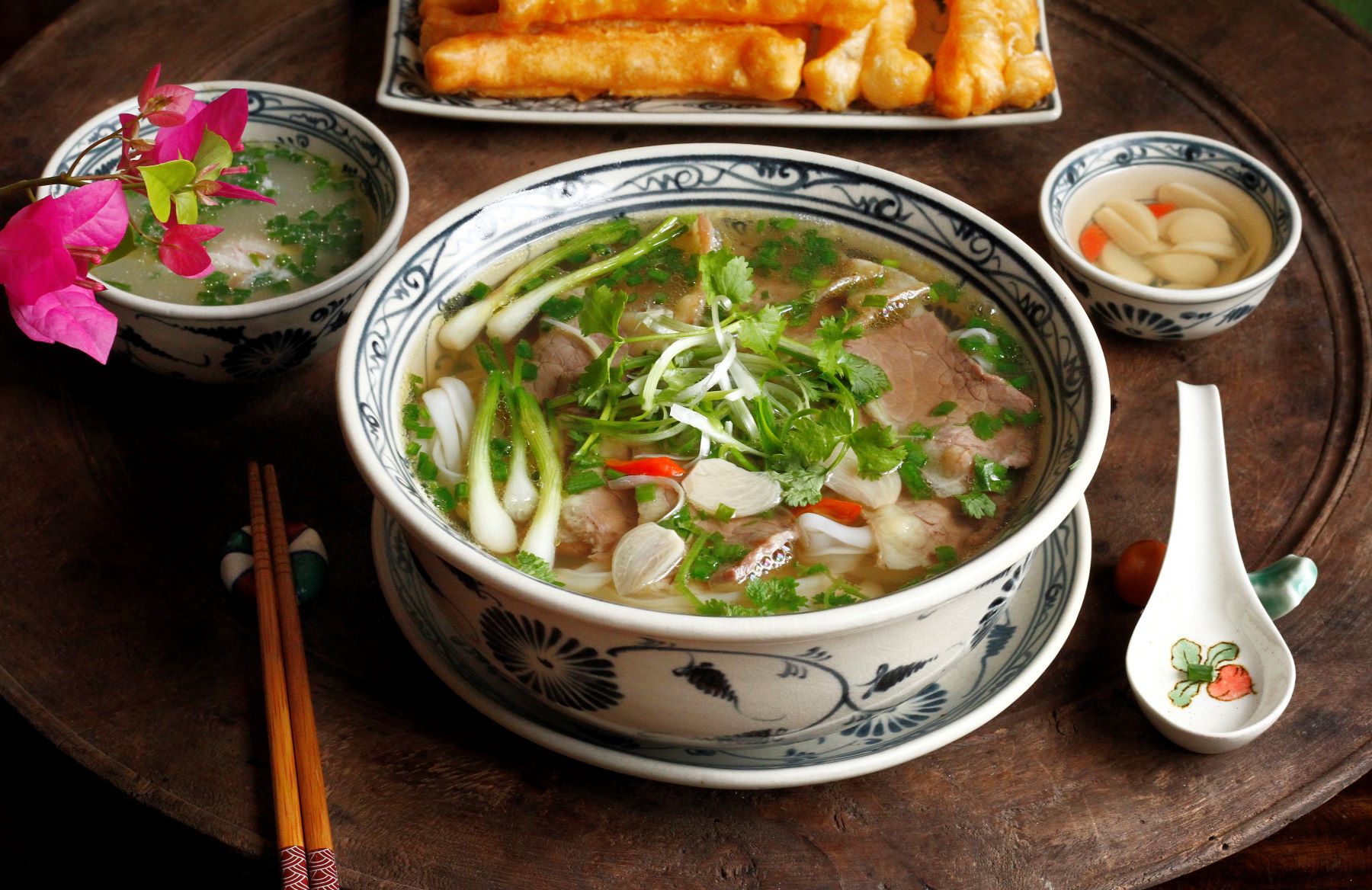 |
Traditional Hanoi beef pho. Illustration: Bui Thuy |
Consequences of simmering beyond 48 hours
Extending the simmering time to 24 hours, or even 48 hours, initiates detrimental chemical changes.
First, the broth loses its delicate clarity. Proteins and lipids in the bone marrow break down significantly when subjected to heat for too long. Oxidized amino acids produce certain organic compounds (such as aldehydes and ketones) and low levels of histamine. This causes the broth to transition from a fragrant aroma to a heavy, stewed scent, sometimes even a slight burnt or smoky smell, diminishing the essential lightness of pho.
Second, the broth's texture is compromised. Gelatin, the element responsible for smoothness, will continue to hydrolyze into smaller molecules if simmered excessively, causing the broth to lose its viscosity and become watery. Concurrently, fats become cloudy and difficult to separate, resulting in a less clear broth. At this stage, the liquid in the pot resembles a thick, rich European-style bone broth more than the refined pho broth.
Secrets to a perfectly flavored broth
Rather than competing with time, the secret to a delicious broth lies in proper preparation and precise heat control.
According to experienced chefs, beef bones should be soaked in salt water and blanched to eliminate impurities. To achieve an appealing amber color and a profound aroma, the bones should be roasted at 250 degrees Celsius for approximately 30 minutes, allowing the fat layer to lightly char before simmering.
Crucially, maintain a gentle simmer (small bubbles), keep the lid slightly ajar, and skim off foam regularly. Aromatic spices such as cinnamon, star anise, and black cardamom should be added only one to two hours before the broth is complete to preserve their fresh fragrance. A well-prepared beef pho broth achieves a balance: deep sweetness from the bones, a delicate aroma from the herbs, and a light, satisfying finish that does not feel heavy after consumption.
Bui Thuy