"Exercise is the main thing, but the high price of gas is also a significant motivator," said Boris Kagarlitskiy, an asset management specialist in Ohio, regarding his decision to change his commute.
For the first time in nearly four years, global crude oil prices surpassed 100 USD per barrel. This surge in fuel costs immediately impacted a daily routine for millions of workers: the morning commute.
In the U.S., fuel costs are heavily burdening office workers. A 2025 survey by Owl Labs revealed that commuting by personal oto costs office workers an average of 15 USD in gas and 9 USD in parking fees daily.
"Soaring commuting costs due to gas prices are akin to an indirect pay cut," stated Jarah Euston, Chief Executive Officer of the WorkWhile employment platform in San Francisco. She suggested that globally, companies offering remote work options, flexible hours, or carpool support gain a competitive edge in attracting talent.
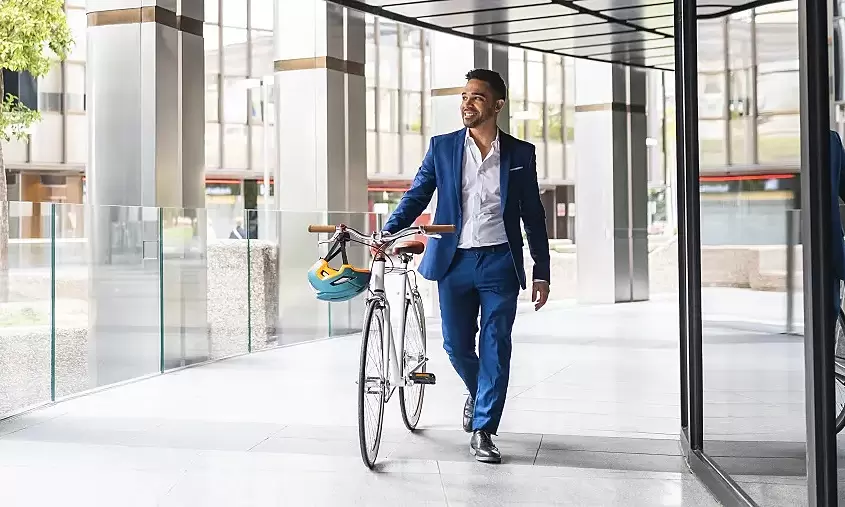 |
Illustrative photo: Seatle Times |
However, this shift is not uniform. Economist Aaron Sojourner at the W.E. Upjohn Institute for Employment Research noted that with a sluggish global labor market, employees have limited leverage to demand remote work options. "A more expensive commute is likely not enough to compel a worker to resign," he commented.
Nevertheless, if fuel prices remain high, employee retention will certainly challenge managers, especially in areas lacking public transportation. Recognizing this pressure, many companies have acted quickly to reassure staff. Josh Wahls, founder of the Insurance By Heroes brokerage firm, decided to maintain a 100% remote work policy. "Current gas prices only strengthen my resolve to never bring the team back to the office," he stated.
Similarly, at the Nashville Adventures travel company, after hearing employee complaints about commuting costs, Chief Executive Officer Paul Whitten immediately allowed the administrative department to work from home two days each week. "This was an easy decision to keep the team motivated," Whitten shared.
For those required to commute, the cost challenge demands trade-offs. Cycling saves Kagarlitskiy money, but doubles his travel time, not to mention the risk on rainy days. Meanwhile, Meir Sabbagh, a manager at a media company, still opts to drive his BMW four hours daily to Manhattan for the privacy it offers. "I can belt out Kpop songs in the car," he said.
Although rising gas prices made him consider taking the train, Sabbagh hesitated to rely on train schedules due to frequent overtime. Despite being allowed to work from home two days a week, Sabbagh still prefers the office environment. "Going to the station and watching the gas prices dance around is terrible, but I have to bear it," he said.
Bao Nhien (Source: BI)