


Melanie, 40, in Texas, is a single mother of two school-aged children. Her life after divorce was a busy succession of overlapping schedules. Fortunately, her ex-husband lived nearby, making it easy for them to coordinate drop-offs and pick-ups to minimize disruption to their children's schooling.
However, a significant difference between their two households was mealtime. Her ex-husband was quite relaxed, often letting the children eat fast food and watch television. Melanie, on the other hand, believed in the value of healthy, home-cooked meals rich in vegetables. On days her children stayed with their father, she often prepared meals in advance to ensure they received proper nutrition.
One evening, as Melanie brought over the food, her ex-husband unexpectedly invited her to stay. "He said it wasn't fair that I went to all the trouble of cooking but didn't get to sit down and eat with our children," she recounted.
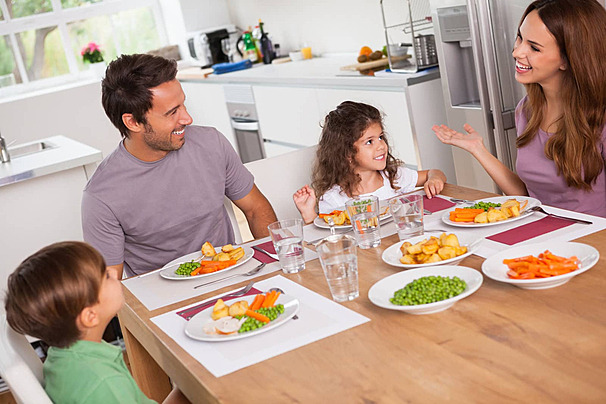 |
Illustration: *pngtree*
For the first time since their separation, they shared a table. Gone were the arguments from their marriage; the meal unfolded in a positive atmosphere. The two adults briefly discussed pick-up and drop-off schedules, allowing the children space to excitedly share stories from school.
From then on, dining together twice a week became a new routine. Melanie noticed their children were significantly happier and calmer. "Sometimes I wonder if things would have been different if we had bothered to sit together like this before," the 40-year-old woman reflected.
Melanie's story exemplifies the insight from Anne K. Fishel, a Harvard University professor: "The value of a meal lies not in the food, but in the emotional connection."
Research, including a report by the American Academy of Pediatrics (AAP), indicates that regular family meals help reduce the risk of depression, eating disorders, and delinquency in adolescence. However, this benefit only materializes when the dinner table is free of conflict.
In reality, not all couples find it easy to sit together. The biggest barriers often include awkwardness, fear of old conflicts resurfacing, or apprehension about "old flames rekindling."
To overcome these challenges, psychologists advise that both individuals establish "unspoken rules" from the outset. They should consider the dinner table a neutral zone. Here, parents act solely as co-parenting allies: discussing only the children's school and health, and absolutely avoiding digging into the past or prying into each other's private romantic lives. Maintaining clear boundaries helps ensure the meal remains civil and comfortable.
To make meals a source of emotional well-being for children, especially in divorced families, psychologist F. Diane Barth suggests:
- Turning off electronic devices: Dedicate time fully to conversation and connection.
- No lecturing: Avoid criticizing or scolding children at the dinner table.
- Flexibility: It doesn't have to be dinner every day. A sunday lunch or preparing snacks together can be enough for children to feel loved.
"In modern life, don't let meals become a daily pressure. Focus on the quality of the moments spent together," advises Barth.
Nhat Minh (According to Psychology Today)


