During winter meals or in cool weather for Vietnamese people, light boiled dishes often give way to braised, stewed, simmered, or crispy stir-fried dishes. Here are the reasons these foods become more appetizing as temperatures drop.
The body's need for warming fuel
When it is cold, the body expends more energy to maintain a stable body temperature. Peripheral blood vessels constrict, and the body activates heat-generating mechanisms, leading to quicker hunger and a craving for energy-rich foods.
Braised and stir-fried dishes typically use ingredients with both lean meat and fat, such as pork belly or braised fish in a clay pot, or employ oil and fat as a heat-conducting medium. Fat provides twice the energy of protein or carbohydrates, helping the body retain warmth longer. The feeling of warmth in the stomach after eating these dishes is the result of the body receiving enough fuel to burn and warm itself from within.
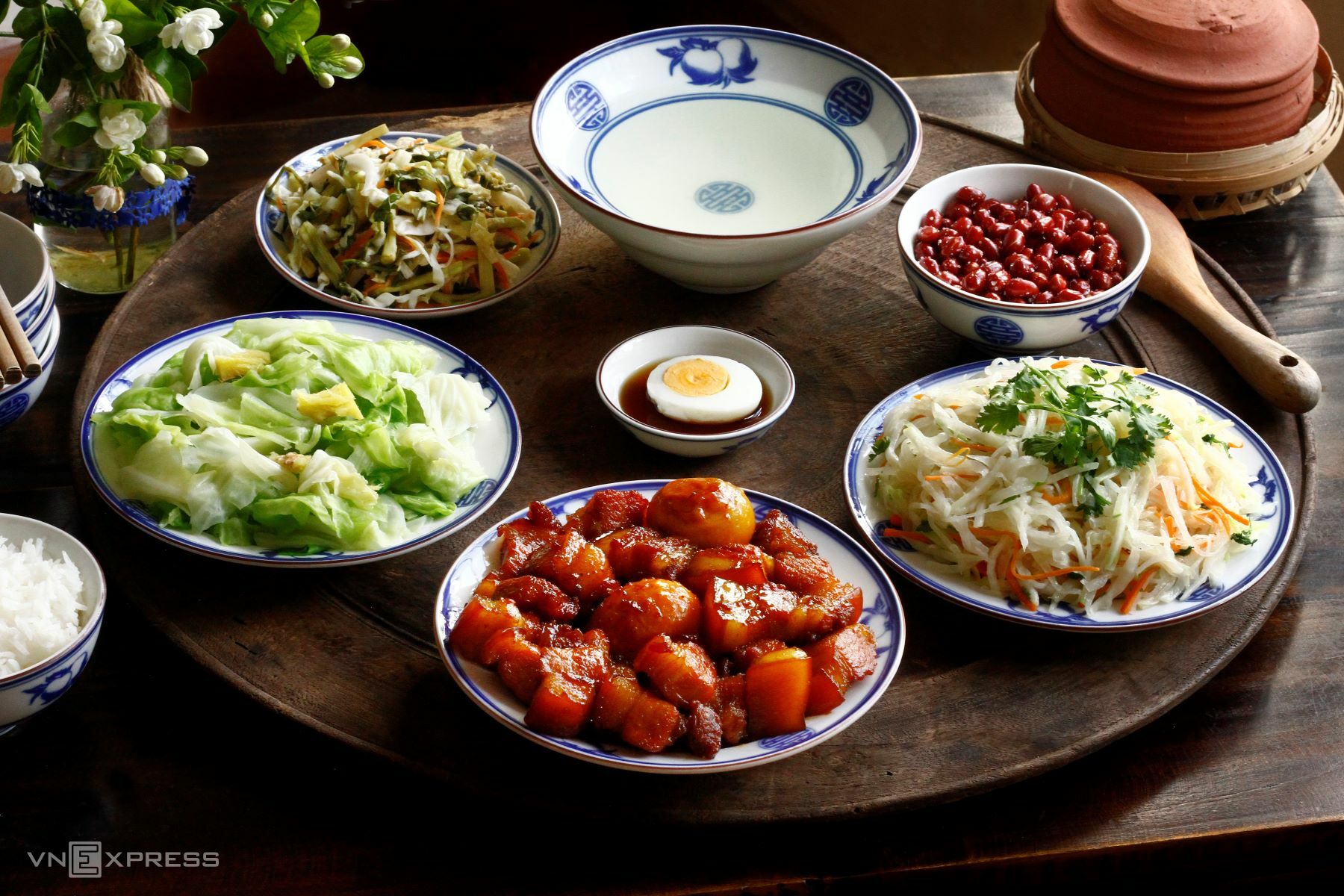 |
Braised dishes often appear in winter meals. *Photo: Bui Thuy* |
Chemical reactions create warming aromas
Unlike boiled dishes, braised or crispy stir-fried dishes undergo a high-heat cooking process. This provides ideal conditions for the Maillard reaction (browning reaction) to occur between amino acids and reducing sugars in the food.
This reaction not only creates a beautiful reddish-brown or amber color but also generates hundreds of complex flavor compounds. These include the aroma of seared meat, caramel, and smoke. The brain often associates these aromas with memories of hearths, warmth, and togetherness. On cold days, when the sense of smell becomes more acute to warm aromas, the appeal of a simmering pot of braised fish or sizzling stir-fried pork increases manifold.
Yin-yang balance in cuisine
From a cultural perspective, Vietnamese eating habits closely follow the philosophy of yin-yang balance. Cold winters, with drizzle and northerly winds, are considered Yin (cold). To achieve balance, people need to consume foods with Yang (warm) properties.
Braised and stir-fried dishes typically feature rich, fatty flavors and use many warming spices, such as: pepper, ginger, chili, onion, garlic. This combination helps neutralize the cold weather, stimulate digestion, and warm the body. That is why a hot bowl of white rice served with pepper-braised pork or ginger-braised fish always brings a comforting and "just right" feeling, far more so than cold dishes.
 |
Lemongrass chili stir-fried pork. *Photo: Bui Thuy* |
Convenience in daily life
In cold weather, food cools down quickly, easily becoming fishy or developing a layer of congealed fat, making it unappetizing, especially boiled or stir-fried dishes. In contrast, braised dishes have the advantage of retaining heat longer due to their fat layer and thick sauce consistency.
These dishes also keep well and even taste better when reheated, as spices have time to deeply penetrate the ingredients, and the meat becomes firmer. This characteristic perfectly suits winter lifestyles, when people are often reluctant to cook elaborate meals multiple times a day and prefer dishes that can be enjoyed over a longer period.
Bui Thuy