


Many home cooks wonder why their stir-fried beef turns out tough and dry, even after selecting quality cuts and marinating them elaborately. Here are common reasons and their solutions.
Misconceptions about marinating time
Common spices primarily flavor the surface of the meat and do not break down its internal muscle fibers. Marinating with salt or fish sauce too early can even draw moisture out of the meat through osmosis, resulting in a drier, tougher dish.
The key to tender beef lies in pre-cooking preparation, not extended marinating.
Incorrect slicing
Slicing meat incorrectly is a fundamental yet critical error. Beef contains long, tough muscle fibers. Slicing along the grain results in very chewy meat. However, slicing against the grain, perpendicular to the fibers, shortens them, making the meat significantly more tender and easier to chew.
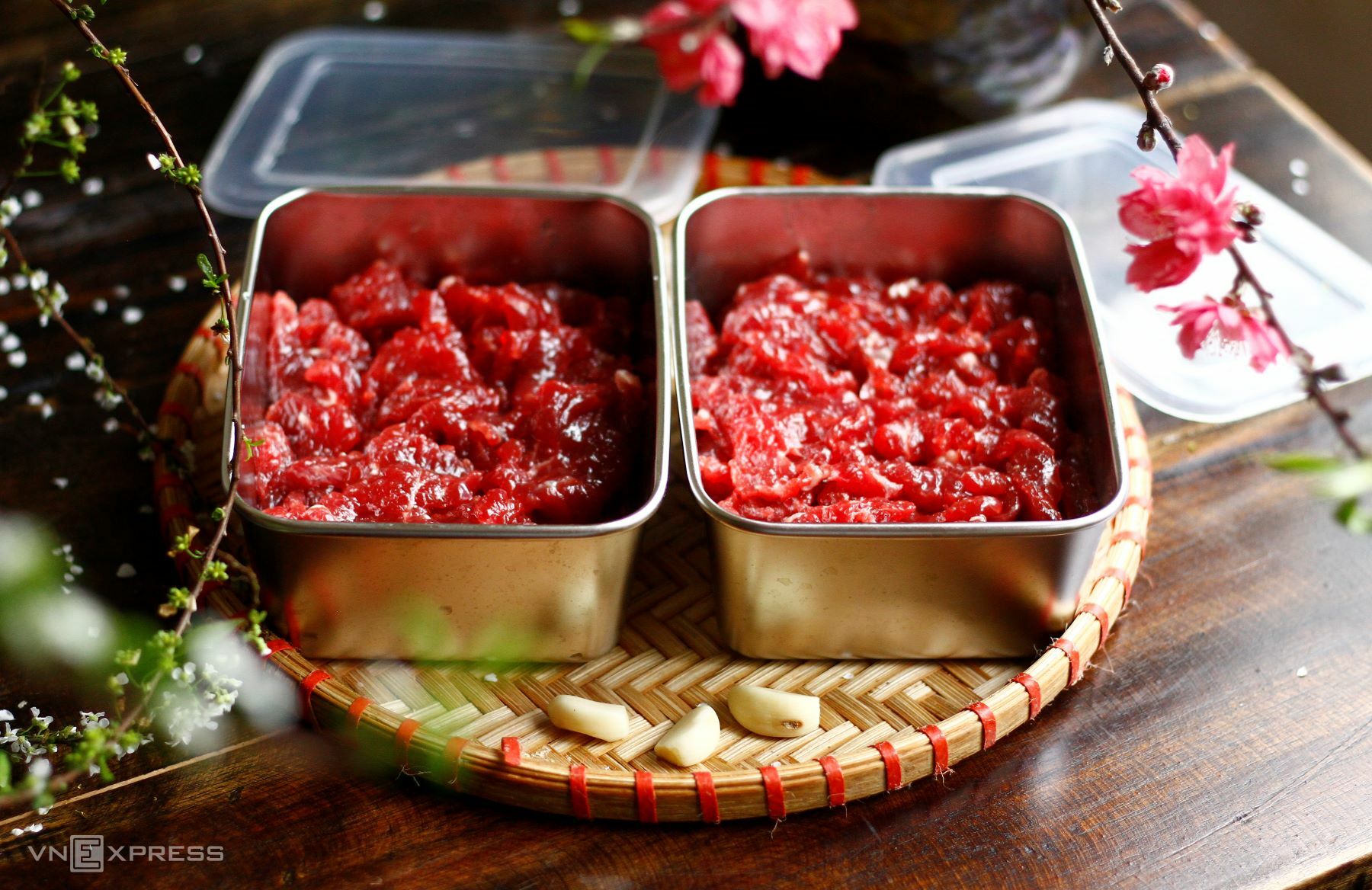 |
Photo: Bui Thuy
Lack of tenderizing or catalysts
For beef cuts other than tenderloin, mechanical tenderizing is essential. Gently pounding the meat with a specialized mallet or the blunt side of a knife breaks down some of the protein network, promoting tenderness.
Natural tenderizers such as ginger, red wine, or a small amount of pineapple juice can also be used. These ingredients contain enzymes that rapidly break down proteins. However, avoid marinating with pineapple for too long, as it can make the meat mushy and diminish its natural sweetness.
Mistakes in using heat
As the saying goes, "experience is the best teacher," and cooking technique accounts for 50% of a dish's success. For stir-fries, the guiding principle is: high heat, quick stir.
Low temperatures extend cooking time, causing the meat's proteins to continuously contract and expel moisture, resulting in toughness. High heat, conversely, quickly sears the surface, locking in juices and keeping the meat tender.
Chefs often recommend coating the beef with a thin layer of cooking oil before stir-frying. This oil layer helps retain moisture and reduces friction, preventing the meat from releasing its juices when exposed to heat.
Bui Thuy


