Less than a few weeks after her child returned to school, Bich Phuong, residing in Hiep Binh ward, TP HCM, had to take time off work, alternating with her husband, for many days to care for her child. The child began with sniffles, then a high fever, and after recovering from one cold, developed a cough and runny nose upon returning to class.
"Seeing my child tired, eating poorly, and losing weight makes me very anxious. The hardest part is that my husband and I constantly have to reschedule work and use our leave days to have someone home with our child," Phuong shared.
With frequent absences, Phuong worried about affecting the progress of joint projects and her year-end performance review at work. Many days, after caring for her sick, fussy child all day, she would seize the opportunity to work on her laptop late into the night, catching up to meet project deadlines. This prolonged disruption left her physically and mentally exhausted, constantly feeling stressed with unfinished work and a young child at home repeatedly falling ill.
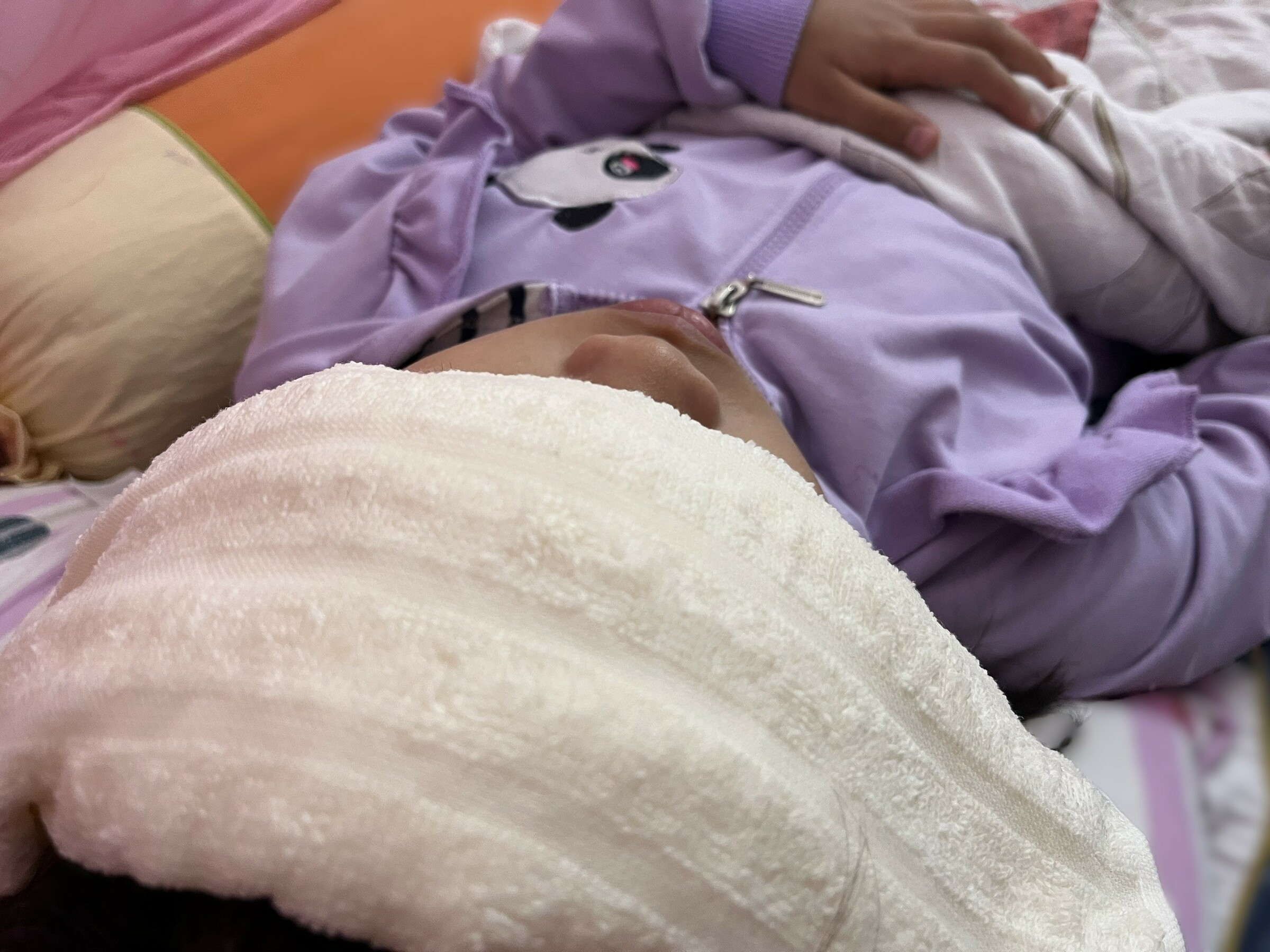 |
Children falling ill at the start of the school year force many families to alter their work schedules for childcare. Photo: Hai Dang |
Children falling ill at the start of the school year force many families to alter their work schedules for childcare. Photo: Hai Dang
Minh Khang, residing in Xuan Hoa ward, also reported that his third-grade son developed a fever shortly after starting school. During summer vacation, children typically have less contact with others and a more stable routine. Upon returning to crowded classrooms, sharing air-conditioned rooms for eating and sleeping, and touching many common surfaces, his son began to cough and develop a fever. Several classmates also had to miss school due to illness.
Without grandparents in the city for support, Khang and his wife resorted to working remotely, simultaneously attending online meetings on their laptops while watching their child, checking his temperature, and coaxing him to take medicine. This act of "being a parent and an employee" at the same time kept Khang feeling "on edge". Many online meetings with partners were interrupted by his child's crying, and he found it impossible to focus on data processing or important contracts while constantly glancing over to check on his son. Work efficiency declined, and tasks accumulated.
"I told myself it would only be a few more days until my child recovered; I just had to grit my teeth, and it would pass," Khang stated.
Dr. Nguyen Le Nga, Level I Specialist, Medical Manager at VNVC Vaccination System, believes this situation should not be simply attributed to "changing weather." At the start of the school year, children simultaneously change their sleep schedules, eating habits, and physical activity, increasing their frequency of movement and close contact. Unpredictable rain and sunshine, along with days of poor air quality, can irritate the respiratory tract, while crowded classrooms create conditions for viruses and bacteria to spread via droplets, secretions, or shared surfaces.
Data from the TP HCM Center for Disease Control and Prevention indicates that in week 38, from 14/9 to 20/9, the city recorded 1,283 cases of hand-foot-mouth disease, a 47% increase compared to the average of the previous four weeks. During the same period, there were 1,462 cases of dengue fever. These are two disease groups that require attention as children return to school during the rainy season.
Hand-foot-mouth disease spreads through secretions, feces, toys, and virus-contaminated surfaces, making it easily transmissible in preschools and primary schools. The illness typically causes fever, mouth ulcers, and blisters on the hands, feet, or buttocks. During the current surge, Children's Hospital 1 is treating over 50 cases, including 16 cases of grade 3 or higher, and six children requiring mechanical ventilation. Some severe cases linked to EV71 can lead to neurological, cardiovascular, and respiratory complications.
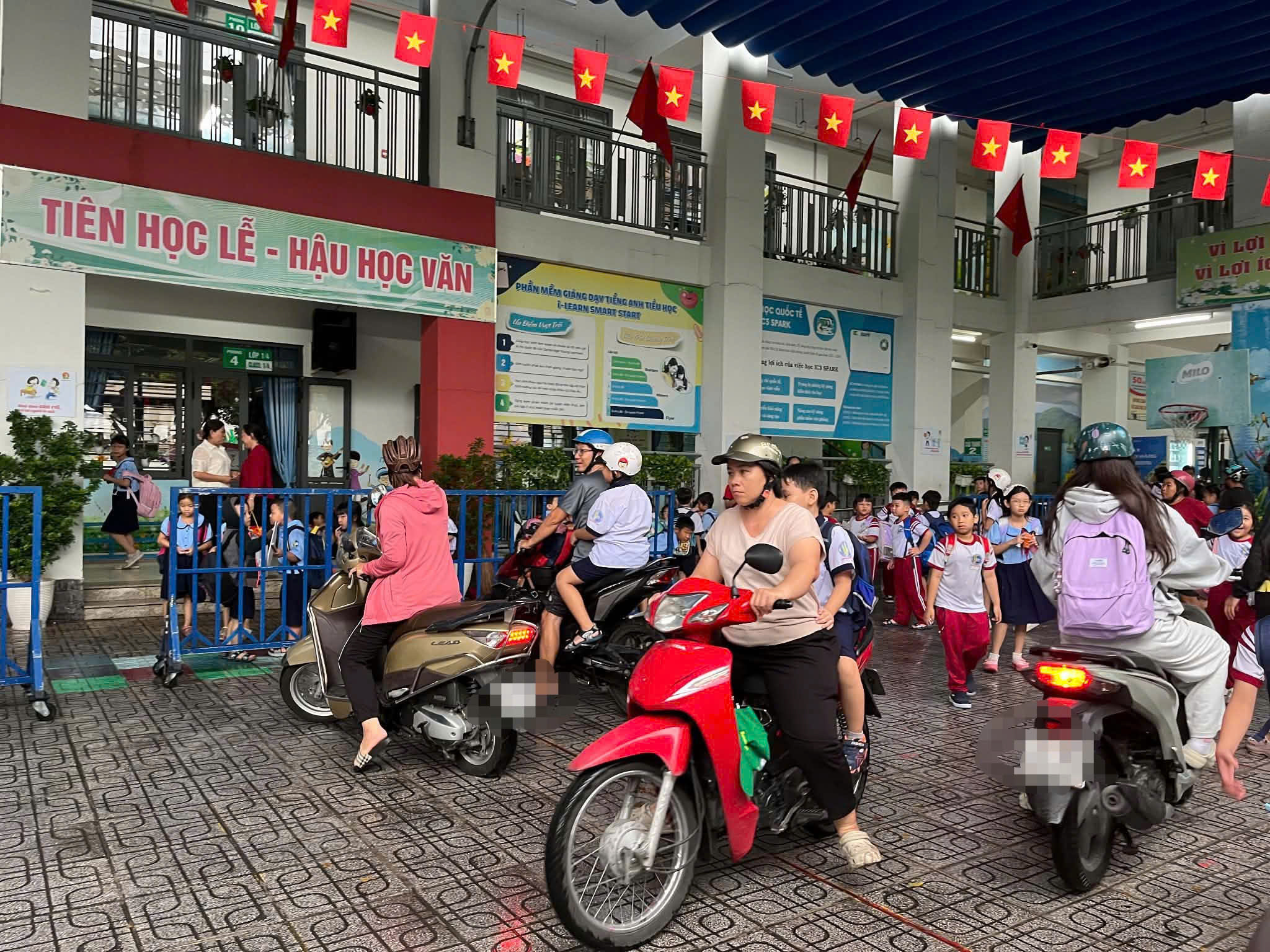 |
Parents pick up students at a primary school in TP HCM. Children falling ill at the start of the school year can force families to change work and care schedules. Photo: Vu Yen |
Parents pick up students at a primary school in TP HCM. Children falling ill at the start of the school year can force families to change work and care schedules. Photo: Vu Yen
Dengue fever, conversely, is transmitted by Aedes mosquitoes. Prolonged rain creates more water containers around homes and schools, aiding mosquito breeding. Children with dengue can experience high fever, headache, and body aches. The dangerous phase often occurs from the third to the seventh day and may coincide with a reduction in fever, so parents still need to monitor closely.
Respiratory illnesses such as influenza, measles, chickenpox, and meningococcal disease also spread easily when many children interact closely. Fine dust and dry or cold air do not cause these diseases, but they can irritate the lining of the airways, causing children to cough, feel uncomfortable, and easily be mistaken for an infection.
To reduce transmission, parents should keep children home from school when they have a fever or show symptoms suggestive of an infectious disease. Children need to be taught to wash their hands with soap before eating and after using the restroom, and not to share water bottles, towels, or eating utensils. Families should ensure children get enough sleep, eat a varied diet, drink sufficient water, and prepare masks, raincoats, or sun protection when commuting.
Schools need to regularly clean frequently touched surfaces, monitor students absent due to illness, and promptly report when multiple students in a class exhibit similar symptoms. For dengue fever, families and schools must cover water storage containers, change water in flower vases, remove discarded items that collect water, and protect against mosquito bites even during the day.
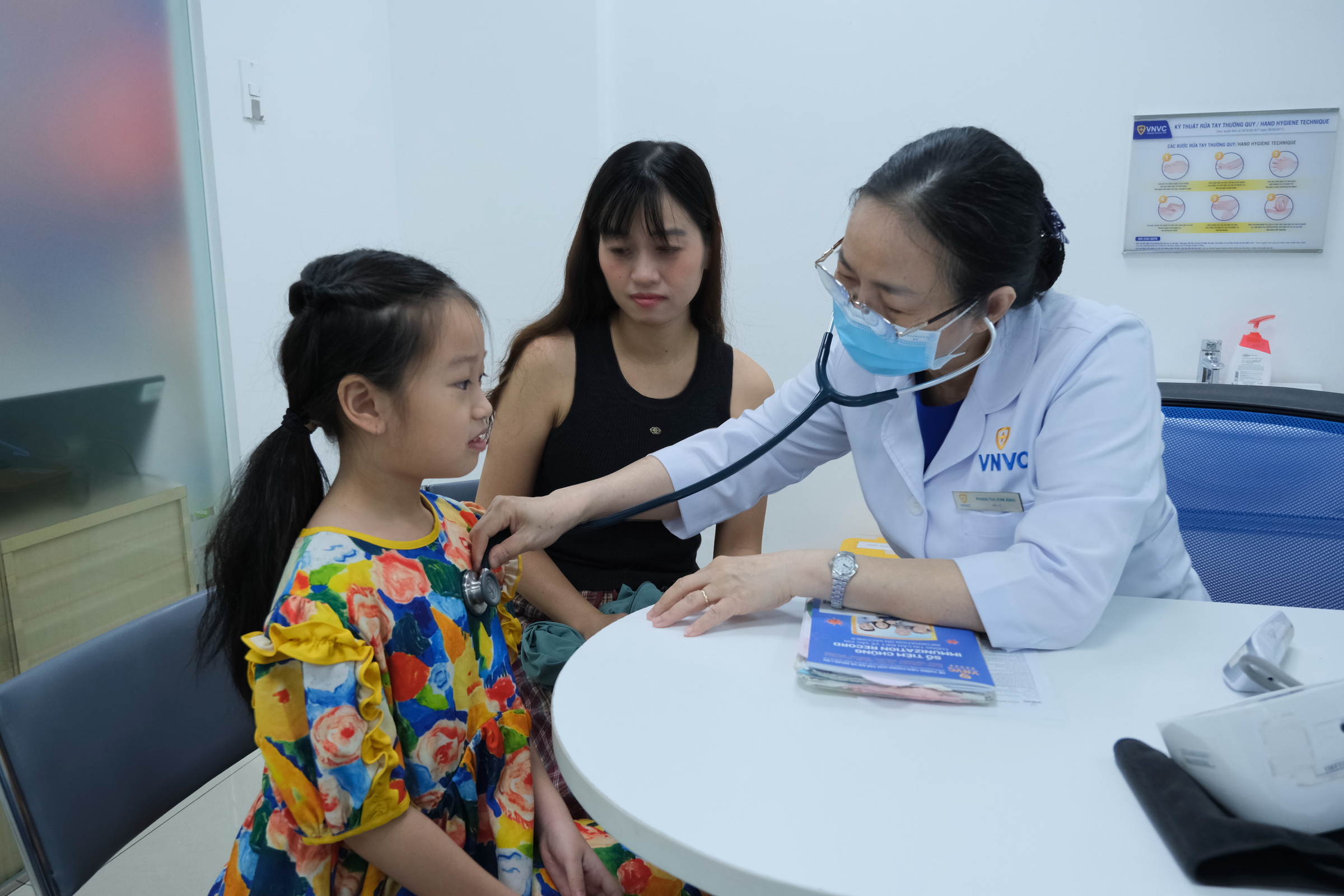 |
A doctor screens a child before advising on vaccination. Photo: Hoang Duong |
A doctor screens a child before advising on vaccination. Photo: Hoang Duong
Dr. Nga advises parents to bring their child's vaccination records or data to a medical facility for review. Children may need catch-up or booster shots depending on their age, vaccination history, health status, and exposure risk. For school-aged children, commonly checked vaccines include booster shots for diphtheria, pertussis, tetanus, polio, along with vaccines for influenza, measles-mumps-rubella, chickenpox, Japanese encephalitis, and dengue fever as appropriate.
For hand-foot-mouth disease, a vaccine against EV71 was licensed by the Ministry of Health in 3/2026, indicated for children from two months to under six years old. According to VNVC, the system is completing preparations for deployment once the vaccine is supplied in Vietnam. This vaccine only prevents EV71-related illness, so hygiene measures and source control still need to be maintained.
Parents must take children for medical examination if they have a high fever that is difficult to reduce, rapid breathing, lethargy, frequent vomiting, convulsions, abnormal startling, trembling limbs, or signs of dehydration. Children suspected of having dengue fever need early assessment if they experience abdominal pain, continuous vomiting, unusual bleeding, or become more tired after the fever subsides. Keeping children home from school and notifying the school also helps limit the spread of illness to classmates.
Kha Nhien