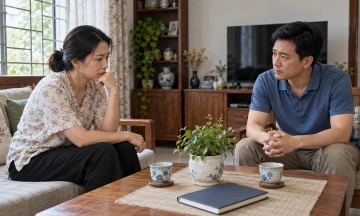
For months, Tiziano, 30, based in Paris, has debated confronting his girlfriend about her Instagram posts. Her feed frequently features photos of her arm-in-arm with other men, displaying intimate gestures, while his presence is notably absent.
"I feel sidelined", he stated. "But if I speak up, I fear being labeled as unreasonably jealous, given it's 'just social media'."
According to French psychologist Patrick Lemoine, who has researched fidelity extensively, defining betrayal in the digital age is complex. Historically, infidelity primarily involved physical contact; however, the concept now encompasses emotional interactions online, often termed "micro-cheating".
"The modern concept of fidelity is highly elastic, contingent on the implicit trust agreement between two individuals", Lemoine noted.
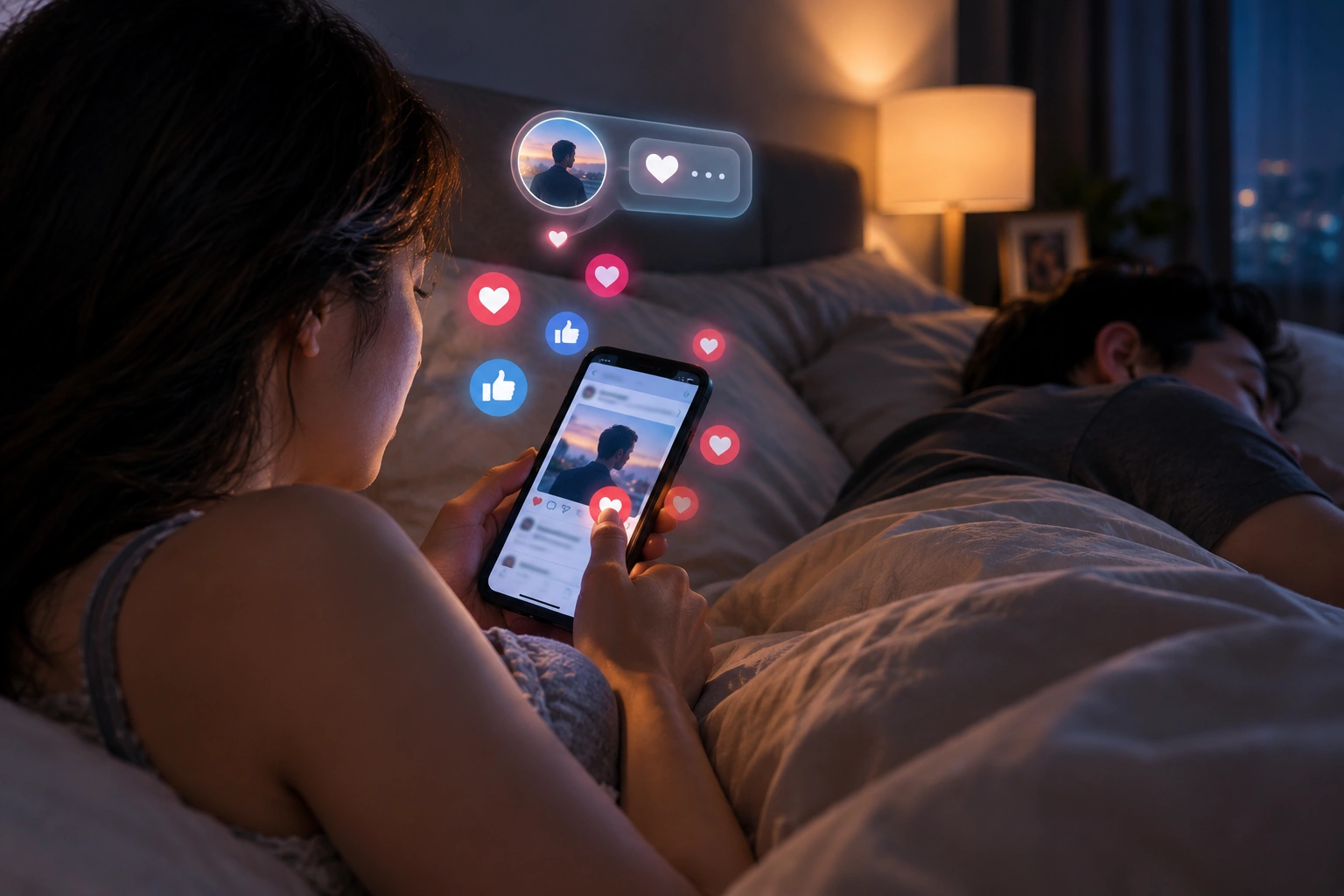 |
Illustration: AI |
A parallel life behind the screen
Despite occurring in a virtual space, these boundary-pushing interactions yield real-world consequences. Agnes, 20, a ceramic artist, ended her relationship because of flirtatious online messages. While not using the virtual nature of social media to deny responsibility, she maintained that she had not crossed a physical line.
"Maintaining distance through the screen allowed me to explore new feelings within a safe 'gray area', as I believed only physical encounters constituted infidelity", Agnes explained.
Her boyfriend, however, decided to end their relationship immediately upon discovering these conversations.
Similarly leading a "parallel life", Helena, 38, a sales professional, balances a stable family life with a secret romantic connection with a stranger via phone. She believes these virtual interactions fulfill personal desires without disrupting her marriage.
The rise of ambiguous online relationships has led many to "digital vigilance". Solveig, 41, repeatedly deceived, has become a vigilant monitor, regularly checking her partner's posts and browsing history. She admits she would feel more secure if her boyfriend stopped using social media, but fears he would then turn to artificial intelligence (AI) chatbots for interaction.
Solveig's anxieties reflect a tangible trend. A January survey by the French Institute of Public Opinion (IFOP) among AI chatbot users revealed that 46% found emotional and sexual interactions with machines more appealing than navigating the complexities of real-world relationships.
Analyzing this phenomenon, Charlotte Le Van, a sociologist at the University of Caen, suggests technology does not inherently increase infidelity rates. Instead, conflicts primarily arise from differing gender perceptions.
Le Van explains that men often compartmentalize sex and emotion, sometimes viewing the consumption of sensitive online content as harmless, believing it doesn't impact their love for their partner. Conversely, women frequently interpret such behavior as betrayal. Conversely, men can become jealous when their girlfriends post provocative photos to gain public attention, even if there's no intent to leave the relationship.
To safeguard relationships from online pitfalls, psychotherapist Cecilia Commo stresses that betrayal begins the moment private intimacy is shared with a third party, while the partner is led to believe they are unique.
"When social media facilitates anonymous connections and diminishes feelings of guilt, the only way to preserve a relationship is for couples to engage in frank dialogue, jointly establishing clear boundaries for online interactions", Commo advises.
By Bao Nhien (Le Monde)