On 22/2, the sixth day of Tet, at 11:07, an aircraft detected a drone on its right side at an altitude of approximately 518 m, about 4 minutes after departing the runway. Air traffic control allowed the flight to continue its journey. However, this incident caused seven flights to wait on the ground for 14 to 57 minutes, and two aircraft that had already started their engines had to temporarily halt takeoff.
Concurrently, 10 other flights approaching Da Nang had to alter their course, landing 30 to 45 minutes late. In total, 19 flights were affected on 22/2.
Earlier, on the morning of 17/2, the first day of Tet, at 9:16, authorities detected a drone flying above an aircraft at an altitude of approximately 1,158 m. The flight was cleared for a safe landing, but eight flights had to wait 20 to 30 minutes for takeoff, and 10 others were impacted during their approach to land.
That same afternoon, authorities again observed a drone to the left of an aircraft at an altitude of approximately 366 m. After pinpointing the device's location, the aircraft was cleared to land. However, seven flights were unable to take off, facing delays of 66 to 100 minutes; two aircraft that had already started their engines were forced to stop on the runway; and eight other flights had to hold before landing. In total, 35 flights were affected on 17/2.
Immediately upon drone detection, the duty team coordinated with relevant units, instructing approaching aircraft to enter holding patterns and temporarily suspending takeoff operations to ensure safety.
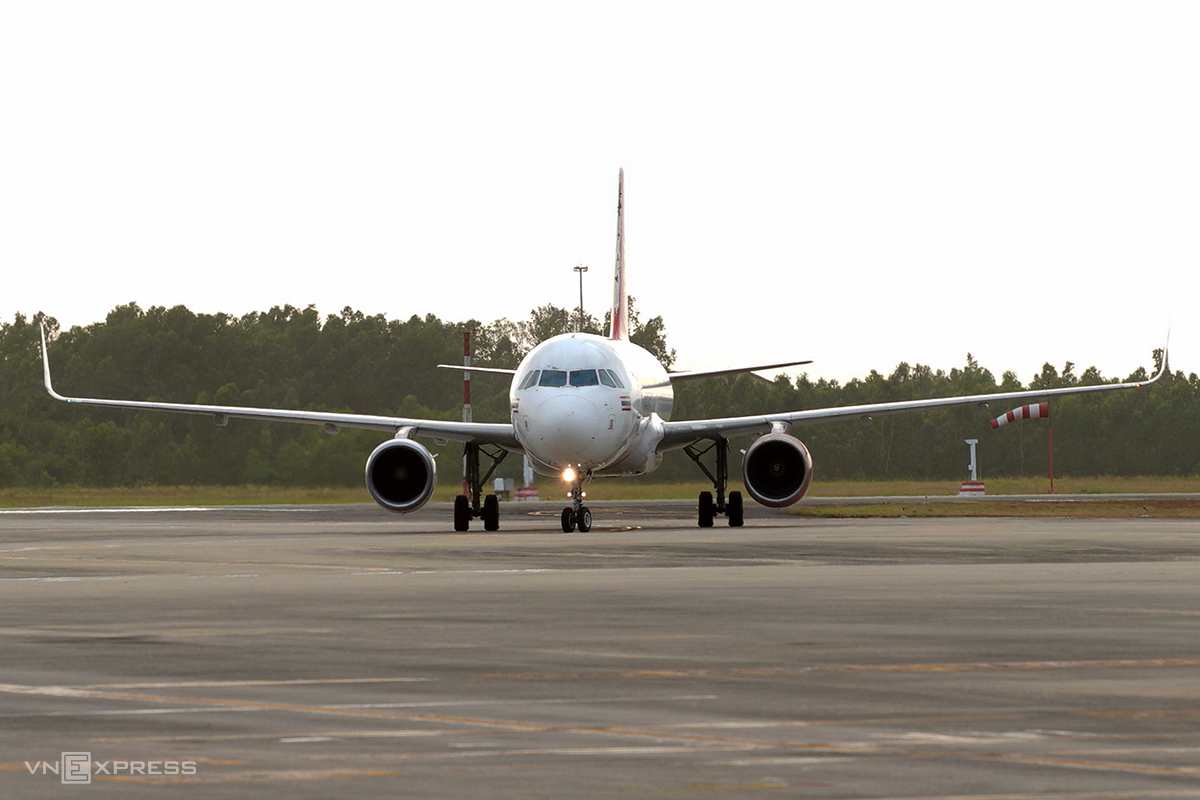 |
An aircraft lands at Da Nang International Airport, 4/2025. Photo: Nguyen Dong |
Da Nang International Airport serves as the largest international aviation gateway for the Central-Central Highlands region, handling an average of 310 to 340 takeoffs and landings daily during the Tet holiday. The intrusion of unauthorized flying objects into restricted airspace poses serious safety risks and can cause significant damage to airlines and passengers.
According to the People's Air Defense Law, operating unmanned aerial vehicles (UAVs), releasing balloons or kites, or using laser pointers or high-power light sources within airport airspace is strictly prohibited. Authorities advise individuals, organizations, and businesses to strictly comply with these regulations and avoid using drones in prohibited areas.
Nguyen Dong