On 22/5/2025, during a break in a peace and security instructor training course in France, she received a message from Vietnam's military attache at the United Nations headquarters: "You got it, congratulations."
The brief message arrived five years after she left the Military Technical Academy, where she was a French lecturer, to join the blue beret forces. She was selected for the Security and Defense Policy Expert position at the United Nations Liaison Office for Peace and Security in Brussels, Belgium. This marks the first time a Vietnamese officer has held this role.
The Brussels office serves as a coordination hub between the United Nations and the European Union on peacekeeping, crisis management, and international security matters. Her new work transcends training soldiers on the ground; it involves reading, analyzing, synthesizing, and assessing situations, as well as advising on resource coordination. Decisions made at this level can directly impact missions operating in the field.
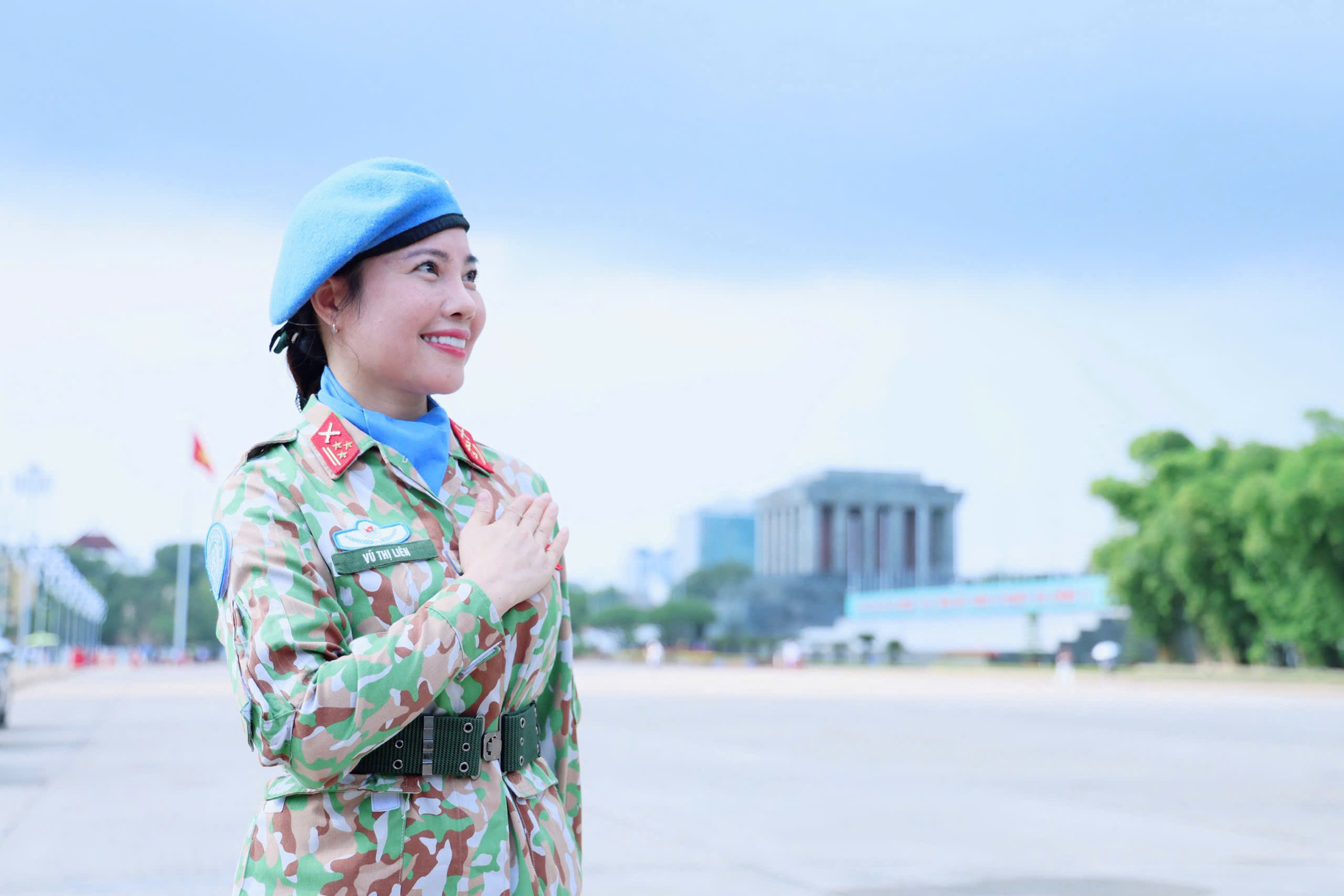 |
Lieutenant colonel Vu Thi Lien. Photo: Supplied |
The online interview took place earlier, at 15:30 in Hanoi, equivalent to 11:30 in Brussels. From a meeting room at the Vietnam Department of Peacekeeping Operations, she connected with three international judges. The discussion lasted 45 minutes, focusing on her field experience and ability to work independently.
The judges clarified that this was a new position, unprecedented for a Vietnamese officer. There was no existing data or mentor. Each expert would need to build their own working system.
When asked about the earliest possible time to take up the assignment, she did not provide a personal timeline. She responded that Vietnam is committed to contributing personnel to international peace and that she could deploy as soon as the United Nations requested.
A key factor that drew attention to her application was her two years of service in the Central African Republic with the European Union training mission.
From late 2022 to late 2024, she worked in a country categorized among the world's poorest and most unstable. Prolonged conflict, economic exhaustion, and severe deprivation characterized the lives of its people. Every workday demanded alertness and flexibility in a multinational, multicultural environment.
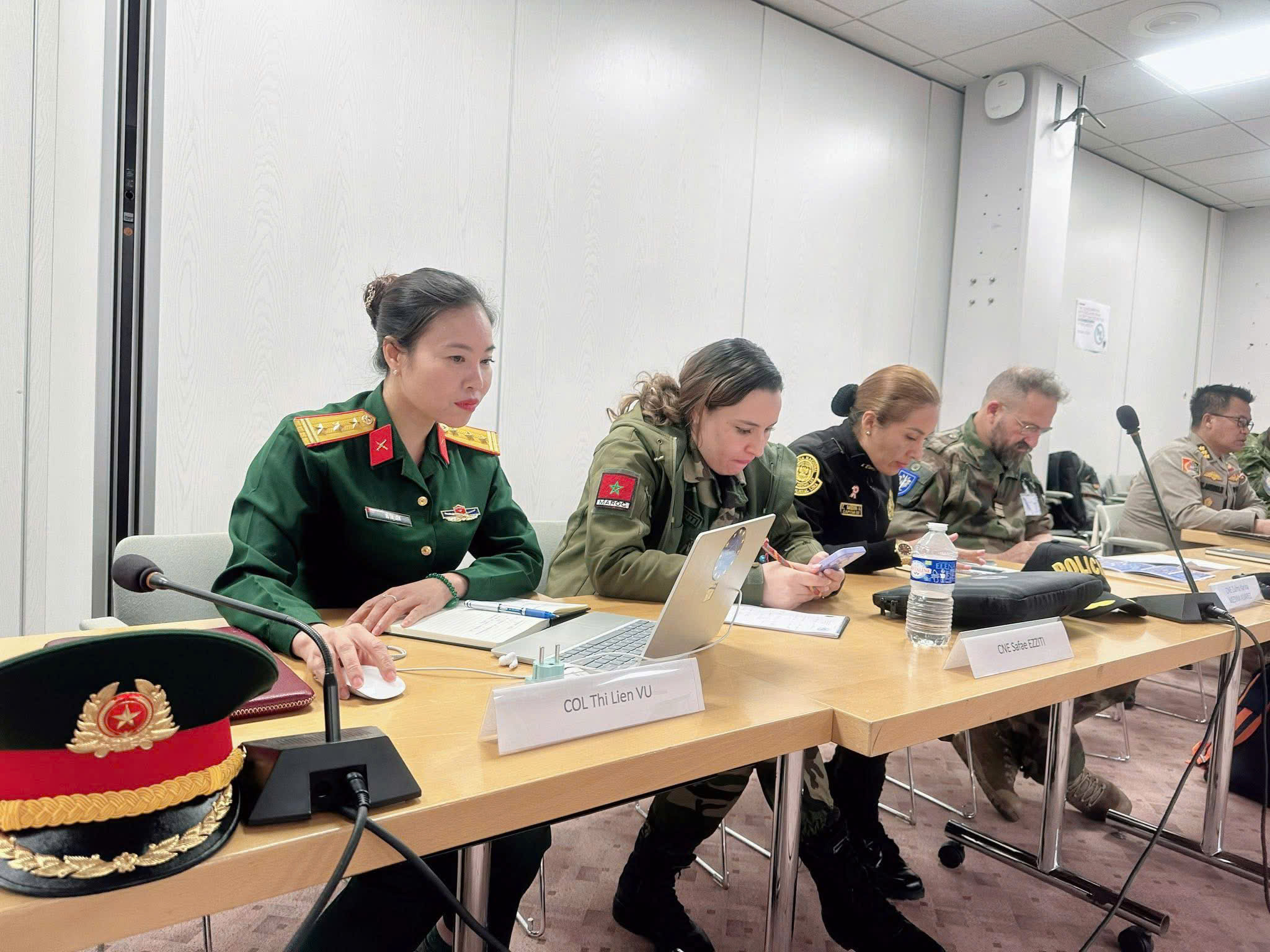 |
Lieutenant colonel Vu Thi Lien during a United Nations training for training officers. Photo: Supplied |
The mission used English, but the host army and local people primarily spoke French. As a Master of French, she communicated easily with the local population. However, her English had not been formally trained; she had to hone all her skills in a real-world environment.
Small language errors could distort information in a military training class, leaving no room for being "unaccustomed." Therefore, she utilized every meeting, every document, watched movies, and read newspapers in English to practice her reflexes.
The training center where she worked was adjacent to a poor residential area. Children aged 4-10 often stood outside the gate, watching international officers come and go. Many had no shoes, their bare feet scarred by rocks and harsh weather.
Every day, children aged 4-10 stood outside the gate of the training center, watching international officers enter and exit. They called out "maman" to her.
In French, "maman" means "mother"—but for these children, the word was more than just a form of address. Many were orphaned by conflict and disease, growing up amidst deprivation. A woman in military uniform, who often stopped to talk and shared a few cakes with them after class, was enough to become a familiar anchor in their day.
Her two years in Central Africa helped her better understand how the European Union's security and defense tools operate in a conflict environment. More importantly, she saw the gap between policy-level decisions and the concrete lives of the people.
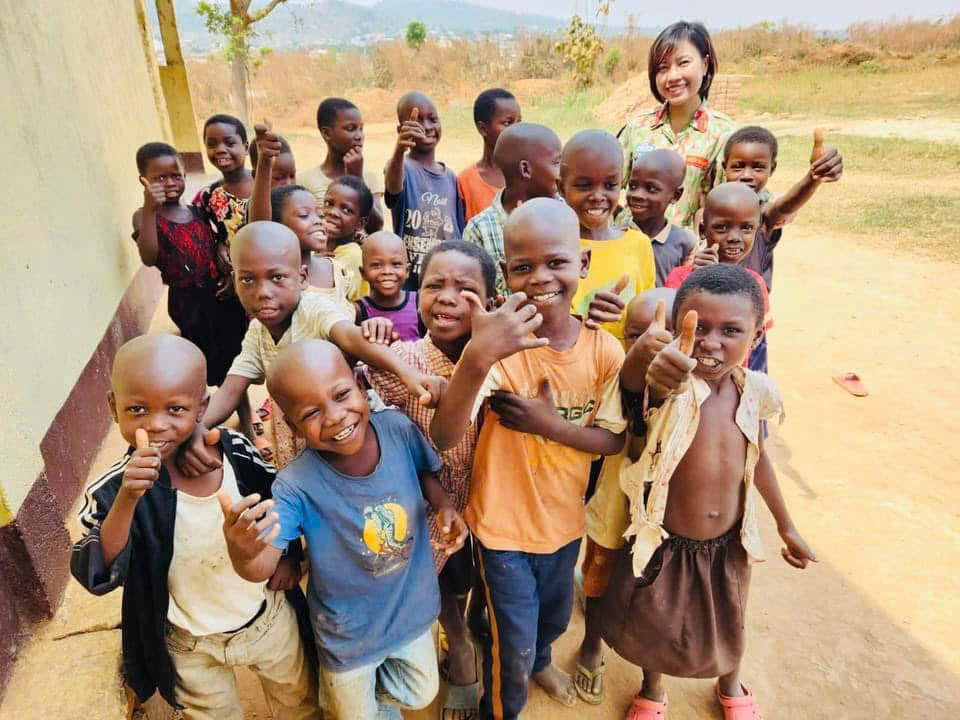 |
Lieutenant colonel Vu Thi Lien takes a photo with children in Central Africa. Photo: Supplied |
In Brussels, her work shifted to a different level. Instead of direct training, she participates in analysis and coordination, where recommendations can influence how peacekeeping forces are deployed in the future.
For lieutenant colonel Vu Thi Lien, the journey from Central Africa to Brussels is not just a change in workplace. It represents a transition from witnessing the consequences of policy to contributing to policy formation. This journey is not a sudden leap, but the result of many years of accumulation in an international environment, from conflict zones to global security analysis.
Son Ha
United Nations peacekeeping | lieutenant colonel Vu Thi Lien | blue beret officer