According to the National Center for Hydro-Meteorological Forecasting, on 25/5, the Northern Delta and Central region were the two areas with the highest temperatures nationwide, with eight provinces and cities recording temperatures above 40 degrees Celsius. This temperature was measured in a standard meteorological shelter placed two meters above ground. The actual perceived outdoor temperature is typically 2-4 degrees Celsius higher, especially in urban areas with many heat-absorbing surfaces like concrete and asphalt.
In Hanoi, four of the five monitoring stations recorded temperatures of 40 degrees Celsius or higher. The Lang station reached 40,7 degrees Celsius, the highest nationwide, while the lowest at Ba Vi station was 39,8 degrees Celsius.
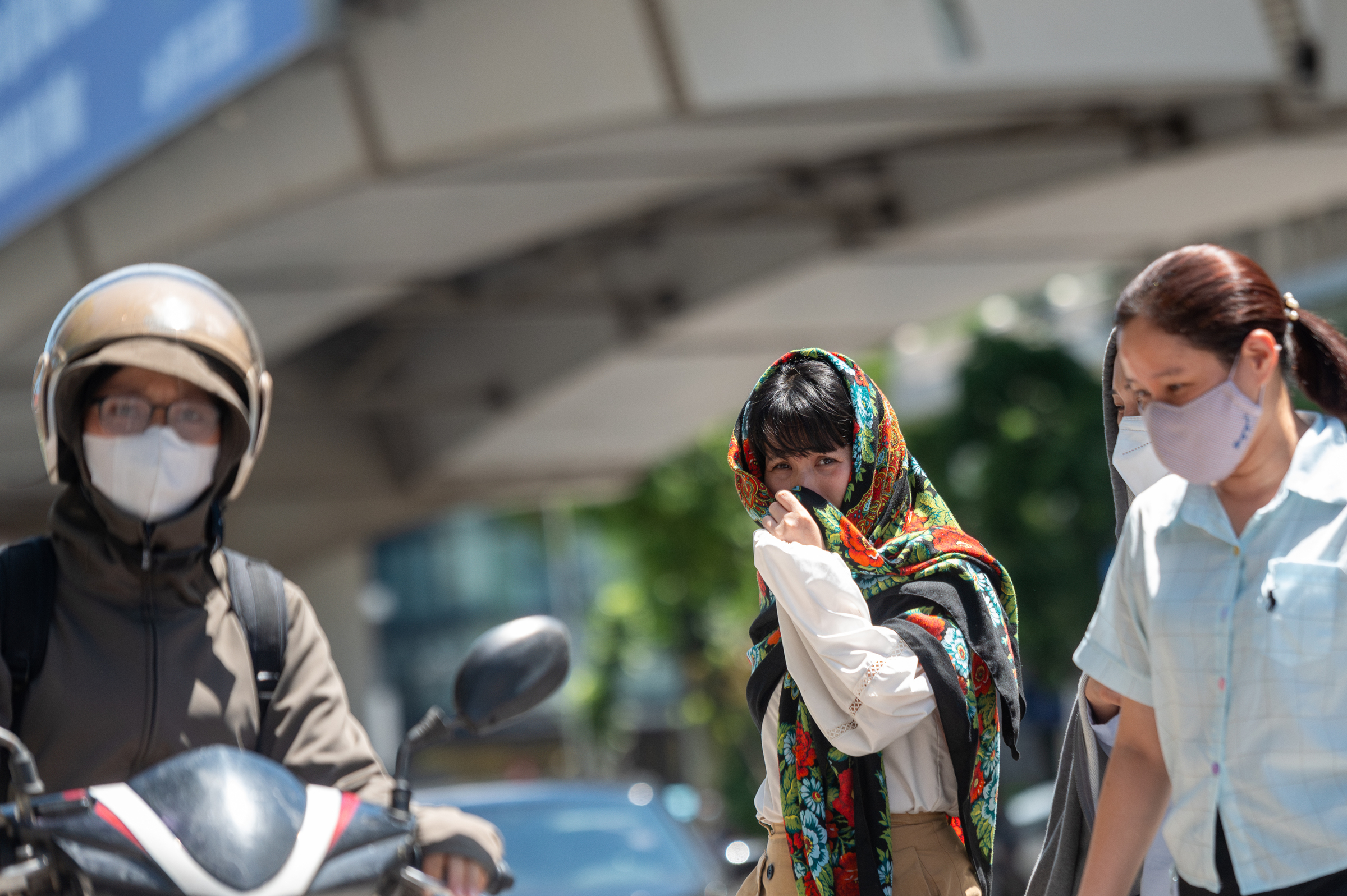 |
Heatwave in Hanoi at midday on 25/5. Photo: The Bang |
Besides Hanoi, several other Northern localities also recorded temperatures exceeding 40 degrees Celsius, such as Vinh Yen, Phu Tho province, and Bac Ninh. Many other localities ranged from 38-39 degrees Celsius, including Lao Cai, Tuyen Quang, Thai Nguyen, Cao Bang, Lang Son, Hai Phong, Hung Yen, and Ninh Binh.
In the Central region, numerous measurement points surpassed 40 degrees Celsius, including Hoi Xuan, Tinh Gia in Thanh Hoa; Con Cuong, Do Luong in Nghe An; Huong Khe in Ha Tinh; and Ba Don in Quang Binh. The area south of Hai Van Pass also experienced widespread heat, with common temperatures above 38 degrees Celsius in Da Nang and Quang Ngai.
The Department of Forestry and Forest Protection, Ministry of Agriculture and Environment, warned that the entire country has over 1.600 forest fire risk points, with about 700 points at level 5 - an extremely dangerous level.
Localities with many level 5 forest fire risk points include Hanoi, Bac Ninh, Khanh Hoa, Phu Tho, Gia Lai, Quang Tri, Thai Nguyen, Hai Phong, Lang Son, Lai Chau, Dien Bien, and Da Nang.
According to forecasts, the intense and severe heatwave will continue for at least the next 48 hours. The meteorological agency warned that prolonged high temperatures combined with low air humidity will increase the risk of explosions and fires in residential areas due to a sharp increase in electricity demand.
Prolonged hot weather can also cause dehydration, exhaustion, heatstroke, and severely affect health if people are exposed outdoors for extended periods.
>>See detailed 7-day temperature forecast here.
Gia Chinh