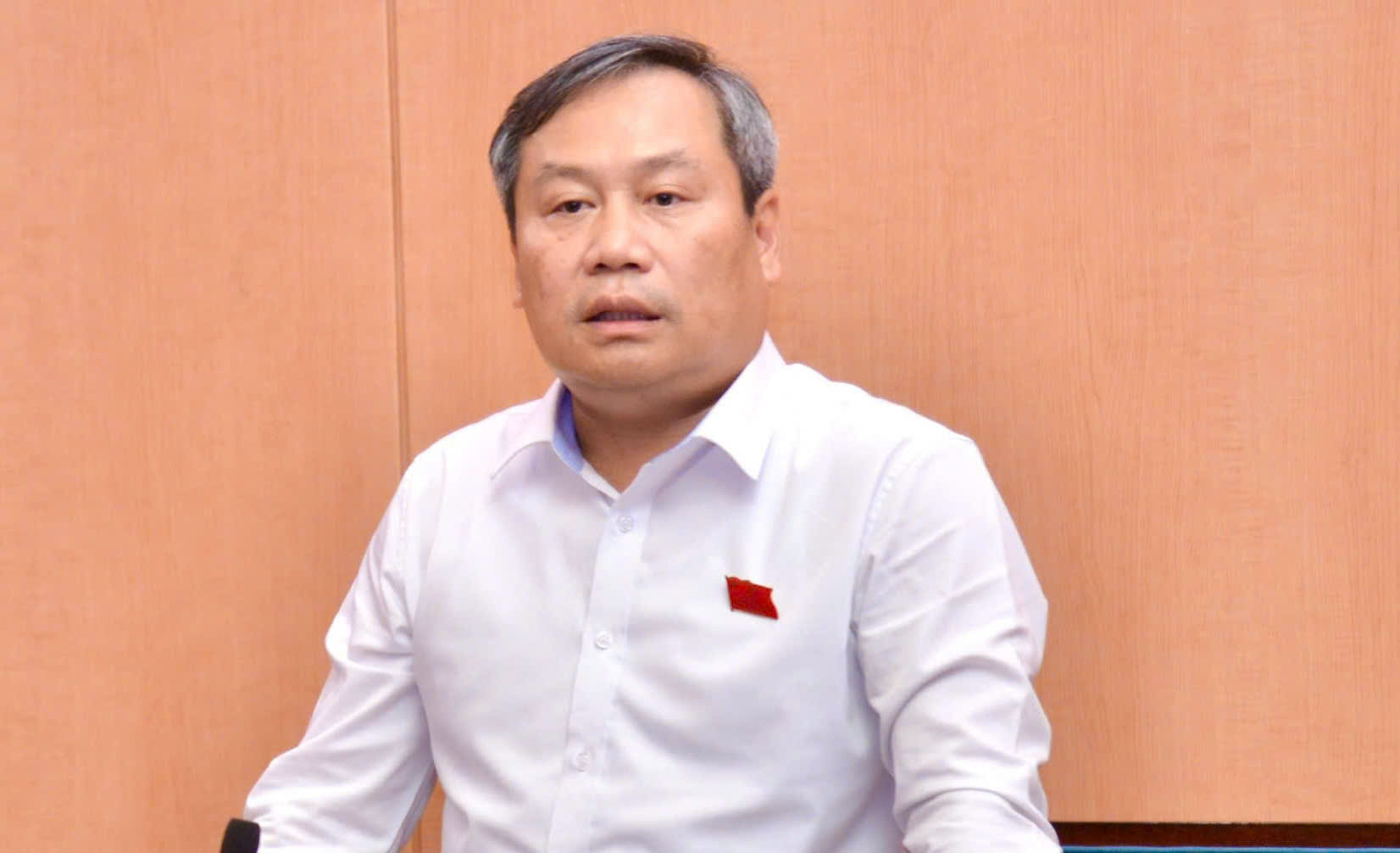
On the afternoon of 25/5, Prime Minister Le Minh Hung held a meeting with the Hanoi People's Committee and various ministries and agencies to discuss rental housing development in the capital.
The Prime Minister noted that Hanoi is experiencing the fastest urbanization rate in the country, yet its housing market suffers from a severe imbalance between supply and demand. The supply primarily focuses on commercial housing for sale, while the segment for long-term rental housing, affordable for many residents, remains significantly lacking.
The head of government called for a fundamental shift in approach: from primarily developing commercial housing to simultaneously developing both commercial and rental housing. Rental housing is identified as a strategic, long-term segment intended to serve the majority of the population.
 |
The Prime Minister highlighted that the Hanoi Capital Master Plan outlines the development of multi-purpose urban areas, and the Capital Law grants Hanoi the authority to pilot new mechanisms and policies. Therefore, Hanoi must lead in implementing the rental housing model to refine these mechanisms, serving as a basis for replication in major cities and key economic regions.
The Hanoi authorities must promptly review all land use plans, urban and rural master plans, and underutilized public land and housing assets to develop rental housing options. A report on these findings is due in June.
The city also needs to assess demand, investment and construction mechanisms, and implement large-scale rental housing models. These models must ensure quality and meet the actual needs of those living and working in Hanoi, including cadres, civil servants, and public employees from central agencies. Hanoi has been tasked with launching several projects by June 2026.
Prime Minister Le Minh Hung emphasized that developing affordable commercial housing and rental housing is a major policy of the Party and State. He cited directives from General Secretary and State President To Lam, prioritizing rental housing development, especially the rental apartment model, as a strategic direction to transform the housing market in the coming period.
As per the Prime Minister's directive, rental housing development must integrate with urban planning, industrial zones, public transport, the labor market, and population management. Priority should be given to transit-oriented development (TOD) models, key economic corridors, and industrial zones with synchronized infrastructure.
 |
Prime Minister Le Minh Hung chaired a meeting with the Hanoi People's Committee and various ministries and agencies on rental housing development in the capital. Photo: VGP/Nhat Bac |
The head of government also called for mobilizing diverse resources, unlocking private capital and long-term funds from investment funds and credit institutions. Measures are needed to address abandoned or underutilized public housing assets. Policies must be strictly controlled to prevent speculation and profiteering.
The Ministry of Construction is tasked with proactively proposing a comprehensive mechanism for rental housing development. This includes researching policies for rental periods of 15-20 years or longer and considering regulations that require commercial housing projects to allocate a certain percentage for rental development.
The Prime Minister further directed ministries and agencies to propose standardized investment, land, planning, and construction procedures under a "one-stop, one-point, one-standard process" mechanism, assigning specific responsibilities to each agency.
The Ministry of Construction, in coordination with the Ministry of Public Security and the Hanoi People's Committee, will lead the effort to issue technical standards for rental housing, particularly fire safety standards for small and medium-sized rental housing. This task is to be completed by July.
Son Ha