On 21/4, Vice Prime Minister Pham Thi Thanh Tra signed a decision approving the task of establishing a plan for the preservation, restoration, and rehabilitation of the Ha Long Bay Special National Landscape Relic. The plan encompasses an area of approximately 676,36 km2, covering the entire core and buffer zones of the Ha Long Bay - Cat Ba Archipelago World Heritage site within Quang Ninh province.
Specifically, protection zone I occupies about 434 km2, while protection zone II covers approximately 242,36 km2. The study area extends across both land and sea, involving eight communes, wards, and special zones: Tuan Chau, Ha Tu, Bai Chay, Hong Gai, Ha Long, Ha An, Quang Hanh, and the Van Don special zone.
The plan prioritizes preserving Ha Long Bay's pristine landscape, geological, geomorphological values, and unique ecosystem. It also promotes rational exploitation for sustainable tourism. A key requirement is to determine the environmental carrying capacity. This will inform proposals to limit the number and types of tourist boats operating in the bay.
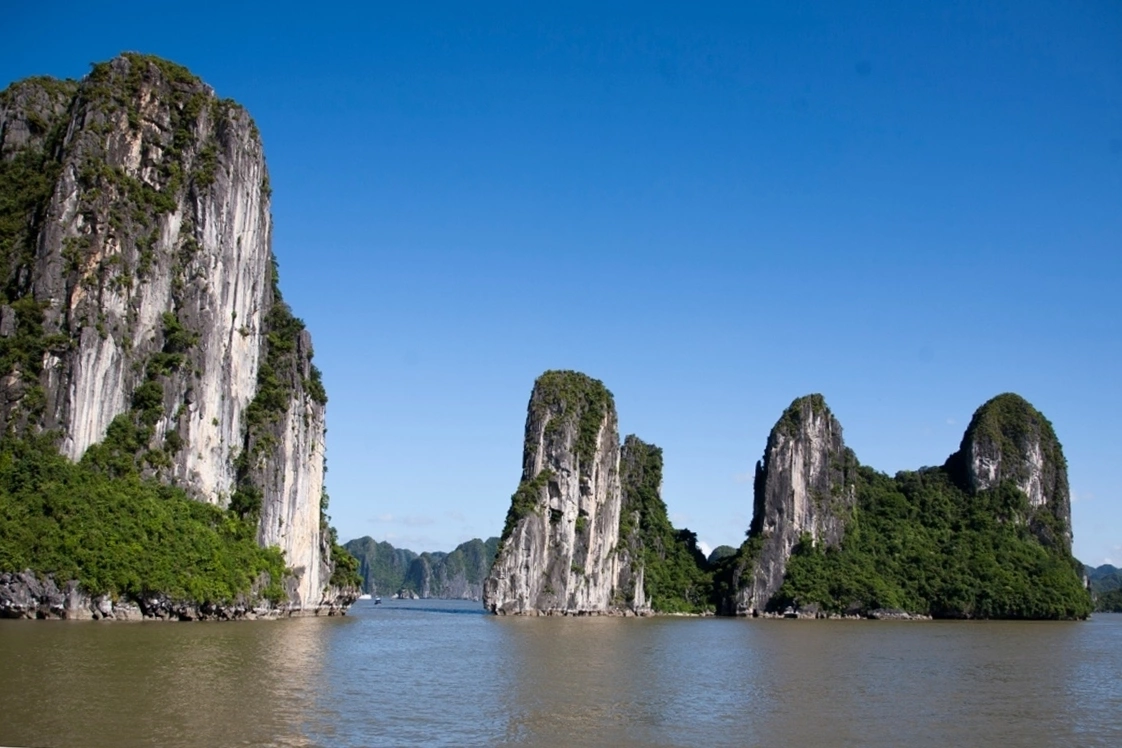 |
Ha Long Bay, a World Natural Heritage site. Photo: Le Tan. |
The plan will also designate restricted development zones. These zones will protect unique landscapes and reduce pressure from mass tourism. Additionally, Ha Long Bay is slated for connection with nearby heritage sites, such as the Yen Tu - Vinh Nghiem - Con Son complex, Kiep Bac, and Bai Tu Long Bay, to form an inter-regional tourism network.
The planning period will not exceed 24 months, with a vision extending to 2050. The Quang Ninh Provincial People's Committee is responsible for its implementation, coordinating with the Ministry of Culture, Sports and Tourism and other relevant ministries and agencies.
Ha Long Bay spans over 1,500 km2 and features nearly 2,000 large and small islands. It was recognized as a World Natural Heritage site in 1994 and a second time in 2000. Currently, the bay forms an integral part of the Ha Long Bay - Cat Ba Archipelago World Natural Heritage Complex. Millions of visitors annually visit the area, creating increasing environmental and landscape pressure.
Le Tan