On the afternoon of 5/6, General Secretary and President To Lam met with 85 exemplary elderly individuals nationwide. These individuals were recognized for their patriotic emulation movements during the 2021-2026 period, coinciding with the 85th anniversary of Vietnam Elderly Day.
Speaking at the meeting, the Party and State leader noted Vietnam's rapid population aging. This trend, a positive outcome of development, improved healthcare, and enhanced quality of life, presents new demands on social security, healthcare, long-term care systems, labor organization, families, communities, and development governance.
To Lam emphasized that inadequate preparation for population aging could create significant pressure. Conversely, with a clear vision, this demographic shift offers an opportunity to leverage the valuable experience, knowledge, prestige, and social capital of the elderly.
"Therefore, we need to decisively shift our mindset from merely providing care to fostering the active role of the elderly; from viewing the elderly primarily as policy beneficiaries to recognizing them as active participants in development," General Secretary and President To Lam stated.
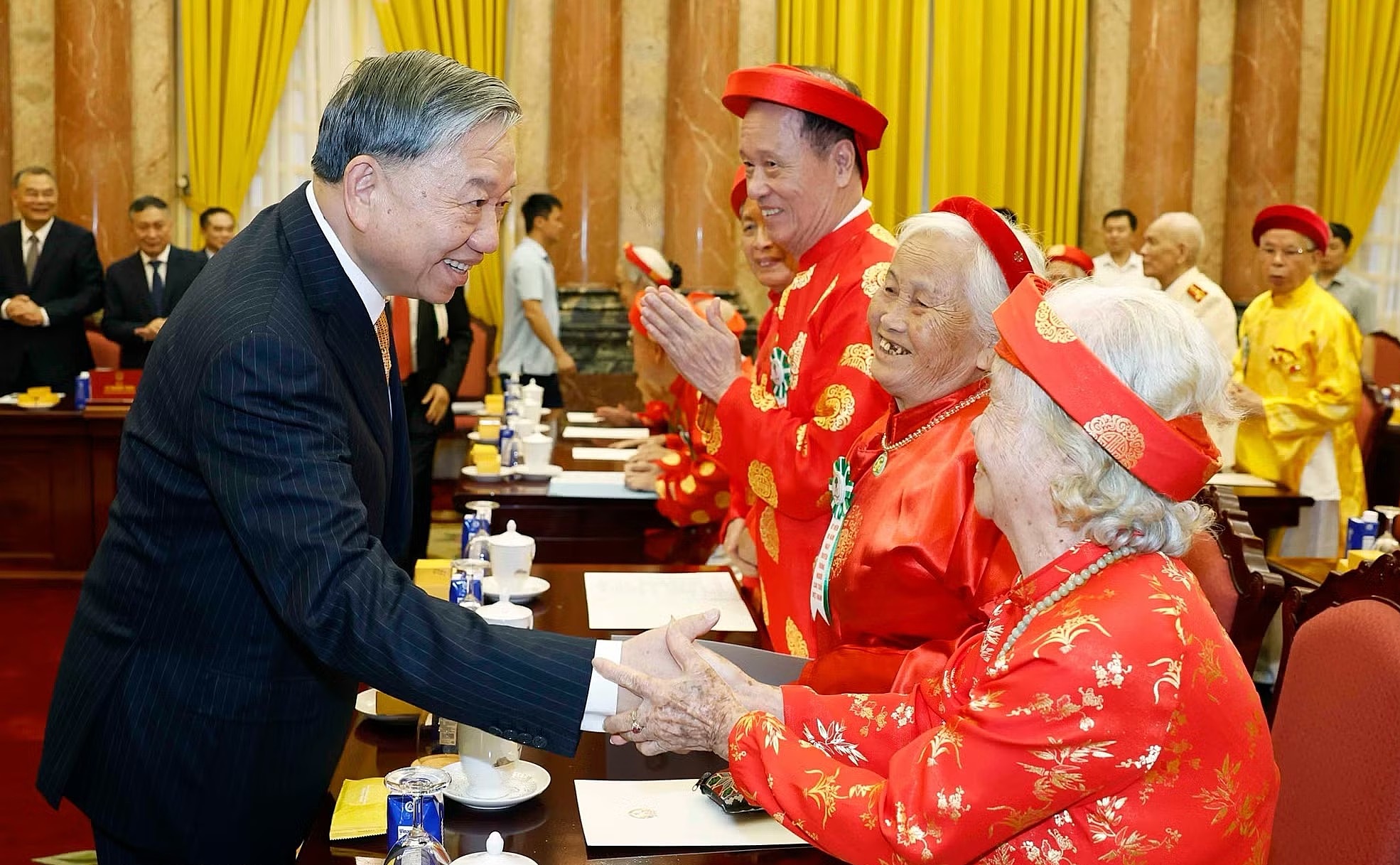 |
General Secretary and President To Lam met with 85 exemplary elderly individuals nationwide on the afternoon of 5/6. Photo: TTXVN
He urged all levels, sectors, and localities to continue improving institutions and policies concerning the elderly. These should be comprehensive, humane, modern, and adaptive to population aging. Policies must better safeguard the legitimate rights and interests of the elderly while enabling them to continue contributing their wisdom, experience, and prestige to society.
Additionally, agencies must enhance the quality of healthcare, social welfare, and services for the elderly. The goal is not merely to extend lifespans but to improve the quality of life, ensuring the elderly live healthy, safe lives with better material and spiritual well-being.
To Lam underscored the importance of providing greater attention to elderly individuals facing difficult circumstances, those living alone, or residing in remote areas and ethnic minority communities. The aim is to ensure no elderly person lacks care or is left behind in the development process.
The role of the elderly in Party building, strengthening the political system, and consolidating the social foundation at the grassroots level must also be strongly promoted. According to General Secretary and President To Lam, the elderly, with their extensive experience, prestige, and social influence, should be enabled to contribute feedback to Party building, government administration, traditional education, grassroots reconciliation, maintaining security and order, fostering cultural life, and reinforcing national unity.
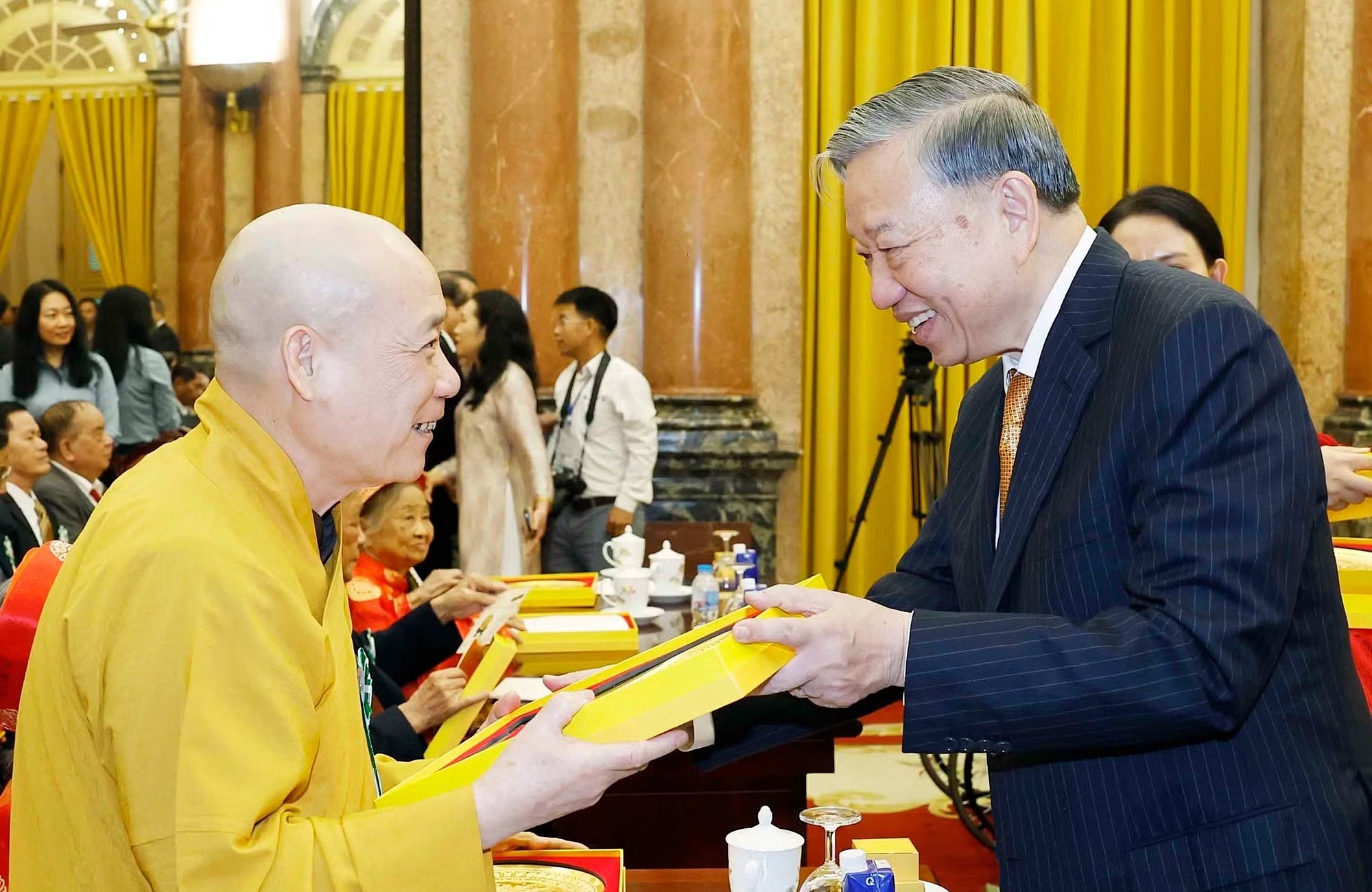 |
General Secretary and President To Lam presented gifts to the delegates. Photo: TTXVN
Explaining the special role of the elderly, General Secretary and President To Lam highlighted that a nation's strength lies not only in economic potential, population size, or scientific and technological advancement. It also resides in cultural depth, family traditions, community values, intergenerational inheritance, and how society cherishes and cares for its predecessors.
He noted that the elderly are not merely individuals of advanced age. They are those who have traversed many life stages, experienced, contributed, and witnessed the transformations of their families, hometowns, and country. Each elder represents a living memory of the nation, embodying experience, ethics, character, and serving as a bridge between the past, present, and future.
Within the family, the elderly are the roots of family traditions and the spiritual anchor for their descendants. In clans, they preserve traditions, impart moral principles, and connect generations. In the community, the elderly possess prestige, a respected voice, and the ability to unite and reconcile, strengthening neighborly bonds.
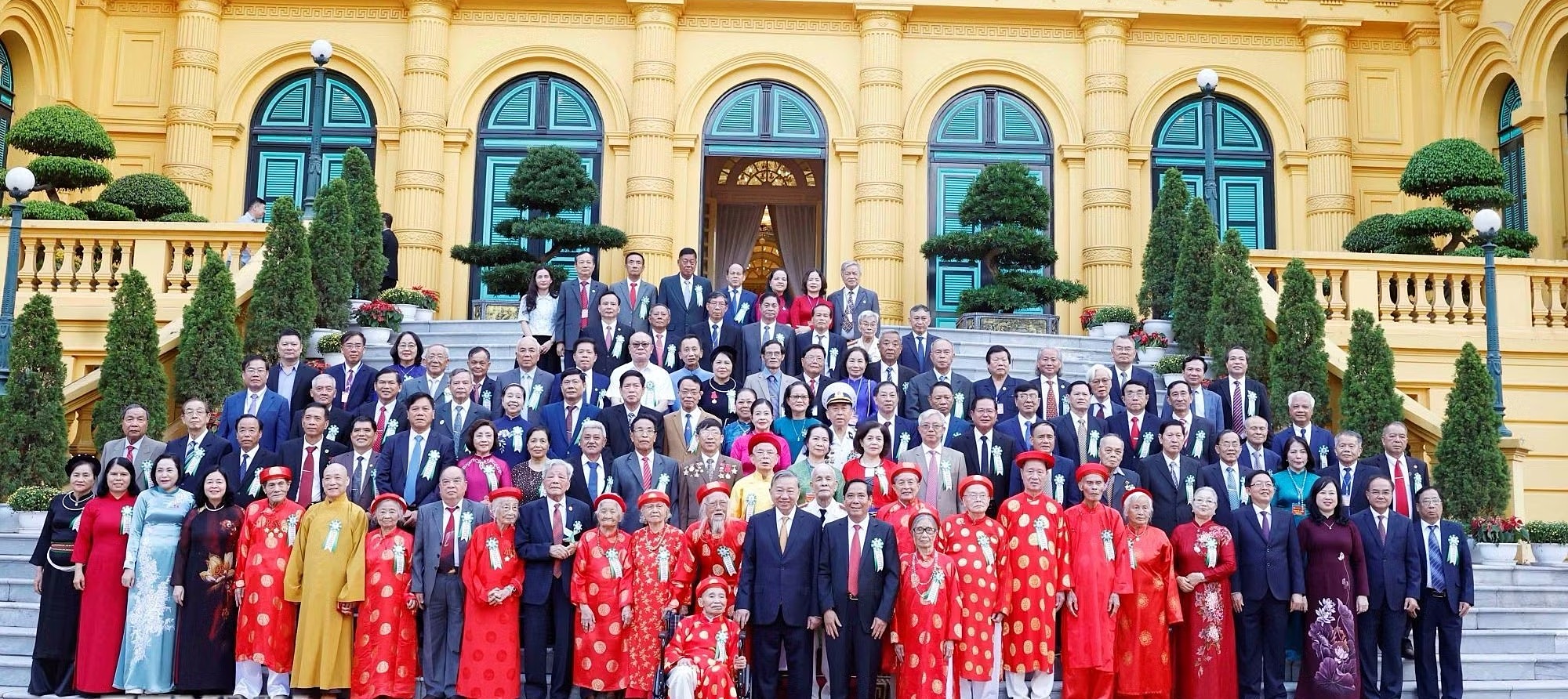 |
General Secretary and President To Lam and the elderly delegates. Photo: TTXVN
General Secretary and President To Lam emphasized that the tradition of "kinh lao trong tho" (respecting and honoring the elderly) is not merely a custom but a cultural standard. It represents not only affection but also responsibility, extending beyond the family to serve as a humane principle in organizing social life.
From the Dien Hong Conference, the voices of the elders became a symbol of national will to defend the country, national consensus, and the strength of the entire people. During wartime, many elderly individuals directly participated in the revolution, protected bases, harbored cadres, encouraged their children and grandchildren to join the fight, and contributed resources to the front lines. In peacetime, generations of elderly people continue to work, produce, build their hometowns, participate in social work, maintain unity, educate on traditions, preserve culture, promote learning and talent, and build new rural and civilized urban areas.
"A developed country is not measured solely by economic scale, growth rate, or modern infrastructure," General Secretary and President To Lam said. "It is also measured by the quality of life of its people, by the stability of families, by human kindness within the community, and by whether the elderly live happily, are cared for, respected, and can continue to contribute."
Vu Tuan