Northern and Central Vietnam experienced a severe heatwave from 22 to 27 May, driven by a western hot low pressure area combined with strong foehn winds. The heat peaked from 24 May, with temperatures in Hanoi, the Northern Delta, midlands, and the region from Thanh Hoa to Hue soaring to 38-40 degrees Celsius. Many areas exceeded 40 degrees Celsius, classifying the conditions as exceptionally severe.
According to the National Center for Hydro-Meteorological Forecasting, numerous meteorological stations reported their highest May temperatures on record. In Quang Ninh, the Uong Bi station reached 38 degrees Celsius on 25 May, surpassing its previous May record of 37,5 degrees Celsius set on 16/5/2013. The Hiep Hoa station in Bac Ninh recorded 39,7 degrees Celsius, exceeding its old record of 39 degrees Celsius from 19/5/2019. Bac Giang station hit 39,4 degrees Celsius, higher than its 39,1 degrees Celsius record on 21/5/2020.
Bac Ninh station reached 40,5 degrees Celsius and Hai Duong station recorded 39,6 degrees Celsius, both equaling their highest May values ever recorded.
 |
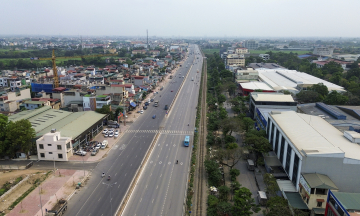
Heatwave in Hanoi on 25 May. *Photo: Tung Dinh* |
Hanoi was the epicenter of this heatwave, with daily maximum temperatures consistently fluctuating between 39-40 degrees Celsius. The Lang station, located in the capital’s center, recorded 41,1 degrees Celsius on 26 May. This temperature was just shy of its 2019 record of 41,3 degrees Celsius and approached the station’s all-time annual high of 41,8 degrees Celsius set on 4/6/2017.
The meteorological agency noted that beyond the hot low pressure area and foehn winds, Hanoi also experienced the urban heat island effect. The inner city’s high density of concrete, asphalt roads, tall buildings, traffic, and heat emissions from daily activities and services contribute to significant heat accumulation during the day and slow release at night.
The severe and exceptionally severe heat was expected to continue through the afternoon of 27 May across the Northern Delta, Phu Tho, and provinces from Thanh Hoa to Hue. Temperatures were generally forecast to range from 38-40 degrees Celsius, with some locations exceeding 40 degrees Celsius. The lowest daily humidity was predicted to be only 40-45%. Other areas in Northern Vietnam and the South Central Coast were to experience severe heat, with some exceptionally severe, reaching 37-39 degrees Celsius, and localized areas over 40 degrees Celsius.
From 28 May, a weak cool air mass from mainland China was projected to move southward, weakening the western hot low pressure area. This shift would narrow the scope of the heatwave in Northern Vietnam, concentrating it in the midlands and delta regions with common temperatures of 35-37 degrees Celsius, and some areas above 37 degrees Celsius.
Central Vietnam, particularly from Thanh Hoa to Hue, was expected to continue experiencing severe heat, with temperatures generally between 37-39 degrees Celsius, and some places exceeding 39 degrees Celsius. The meteorological agency forecasted the widespread heatwave to end in Northern Vietnam from 29 May, with intensity gradually decreasing in Central Vietnam.
The prolonged heatwave combined with low humidity increases the risk of fires in residential areas due to heightened electricity demand. It also poses a potential threat of forest fires. Such extreme weather can lead to dehydration, exhaustion, and other health issues for individuals working or engaging in outdoor activities for extended periods.
For more details on the 7-day temperature forecast, click here.
Gia Chinh