On the afternoon of 23/9, the National Assembly Standing Committee provided feedback on the draft Law on Administrative Sanctions (amended), which is expected to be submitted to the National Assembly in October.
Lieutenant General Pham The Tung, Deputy Minister of Public Security, stated that current maximum fines, set in 2012, need review to align with socio-economic conditions, living standards, and the average income of citizens. Adjustments also aim to enhance deterrence, ensuring fines are proportionate to the nature and consequences of violations, as well as illegally obtained profits, particularly in fields such as environment, food safety, minerals, and fire prevention.
According to Mr. Tung, regulations on enforcing sanction decisions remain inadequate, leading to many decisions not being effectively implemented. Existing enforcement measures also do not meet practical requirements.
Consequently, the draft proposes raising the maximum administrative fine from mot billion VND to 1.5 billion VND for individuals, and from hai billion VND to ba billion VND for organizations. Some sectors in special economic zones or cities may face higher fines, not exceeding twice the general rate for the same offense.
Fines that do not require a written record are also proposed to increase from 500,000 VND to mot million VND for individuals, and from mot million VND to hai million VND for organizations.
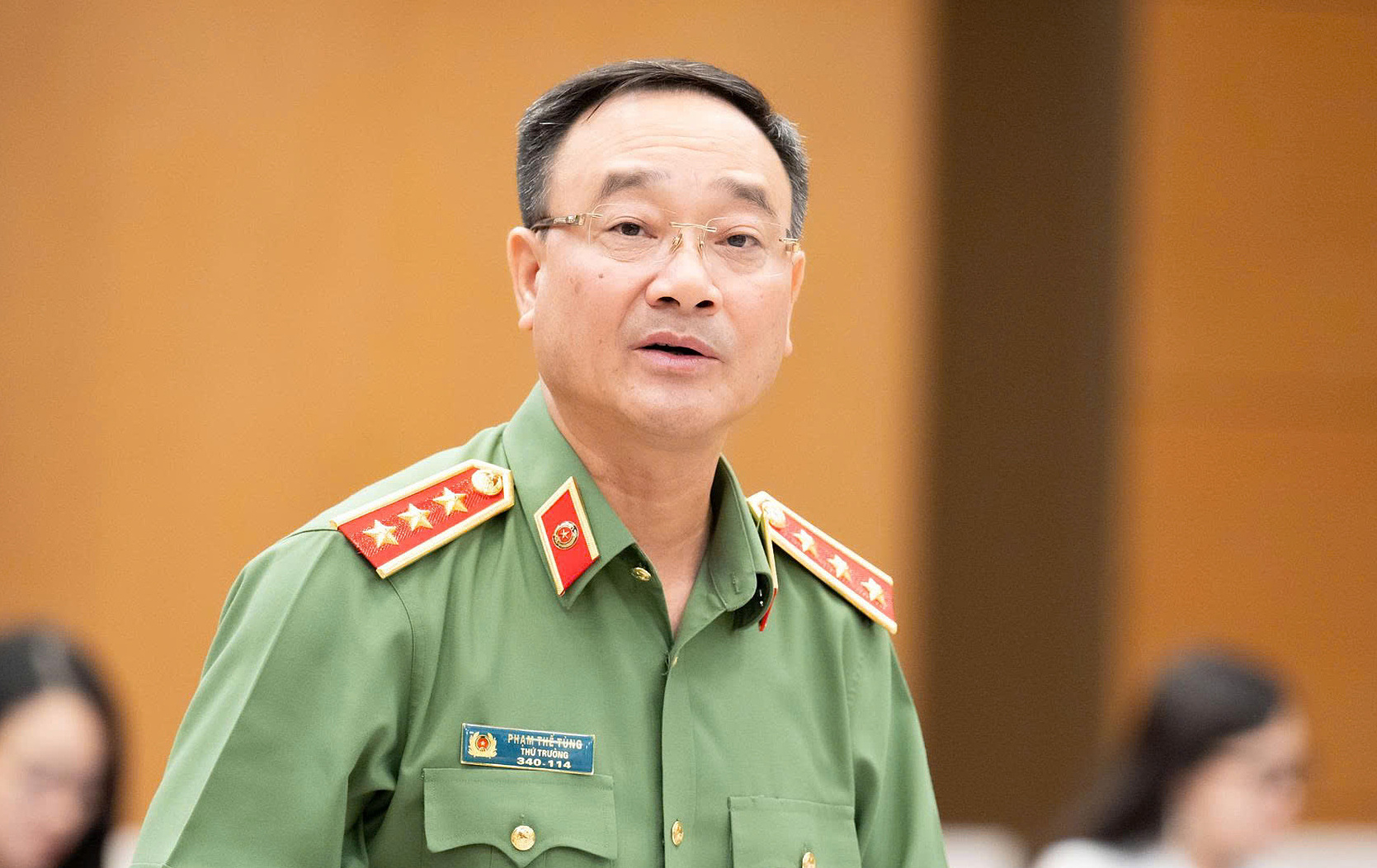 |
Lieutenant General Pham The Tung, Deputy Minister of Public Security, presents the draft Law on Administrative Sanctions (amended) to the National Assembly Standing Committee. Photo: National Assembly Portal
Upon reviewing the draft law, the Standing Committee of the Law and Justice Committee expressed concern that excessively high fines might not suit the financial capacity of most individuals and businesses, thus hindering effectiveness. The committee suggested that alongside increasing monetary penalties, the government should consider more fundamental solutions such as mandatory remediation, revoking operating licenses, or suspending activities. International experience should also be studied to enhance deterrence and raise awareness of legal compliance while limiting excessively high fines.
The current draft does not specify maximum fines for each sector, instead tasking the government with detailing them. The Standing Committee of the Law and Justice Committee proposed retaining the current regulation, which stipulates the maximum fine limits for each sector directly in the law.
National Assembly Chairman Tran Thanh Man also emphasized that the law must clearly define maximum fine levels, subsequently delegating the government to provide detailed guidance. He noted that violations in traffic, land, construction, environment, public order, food safety, and fire prevention are frequent and cause public concern. "Amending the law must increase deterrence while balancing state management effectiveness with the protection of human rights and business rights; it must also fully assess the impact on affected groups," he stated.
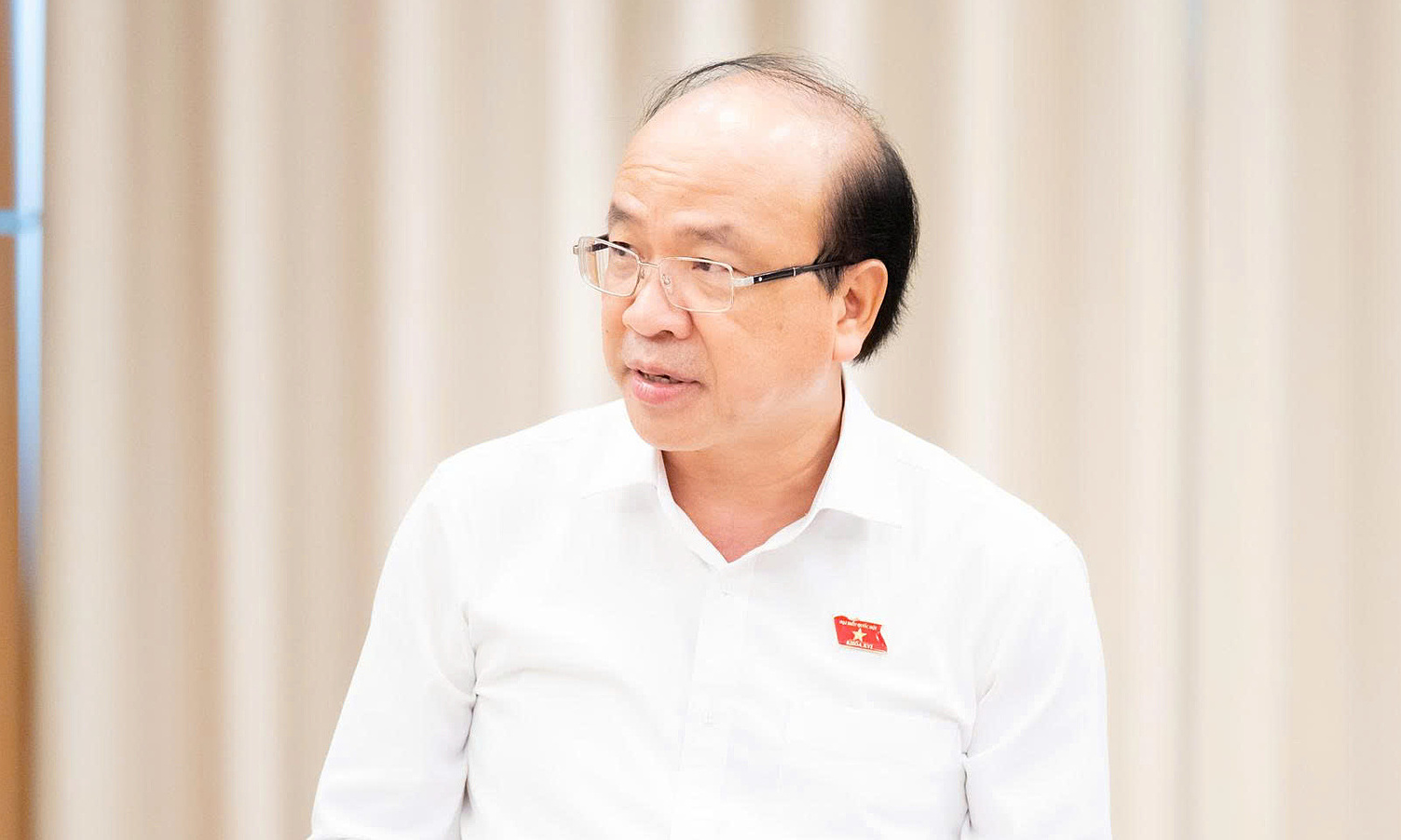 |
Chairman of the Law and Justice Committee Phan Chi Hieu delivers his remarks at the session. Photo: National Assembly Portal
The government also proposed allowing the suspension of internet, telecommunications, or digital infrastructure services, or blocking access for organizations and individuals who fail to comply with decisions to revoke professional licenses or certificates, or suspend operations.
Chairwoman of the Committee for People's Petitions and Supervision Le Thi Nga generally supported the addition of enforcement measures such as suspending electricity, water, and internet services. However, she urged for strict regulations on the conditions and procedures for their application, emphasizing that such measures must ensure the enforcement of sanction decisions while also protecting the fundamental rights of citizens.
Son Ha