 |
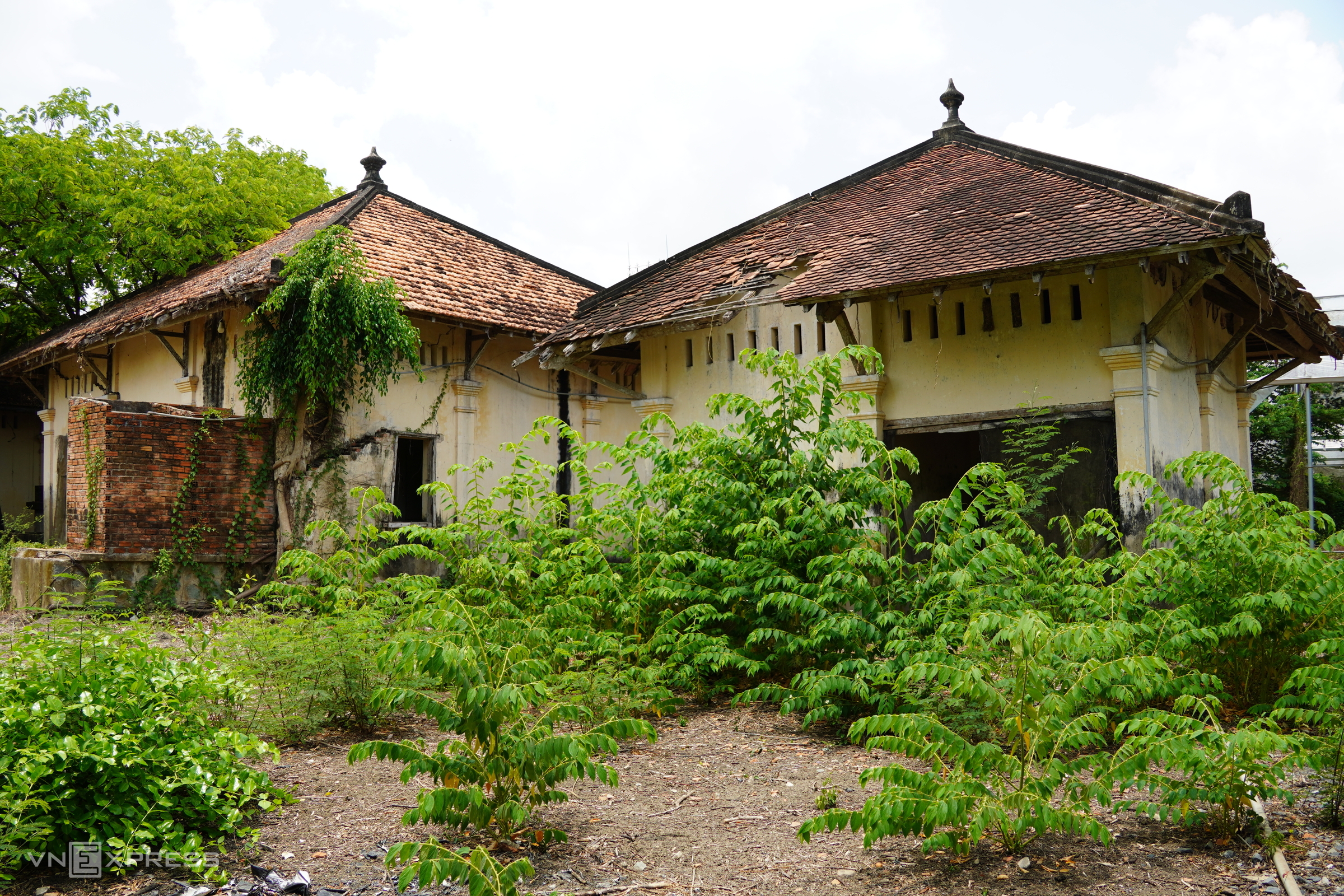
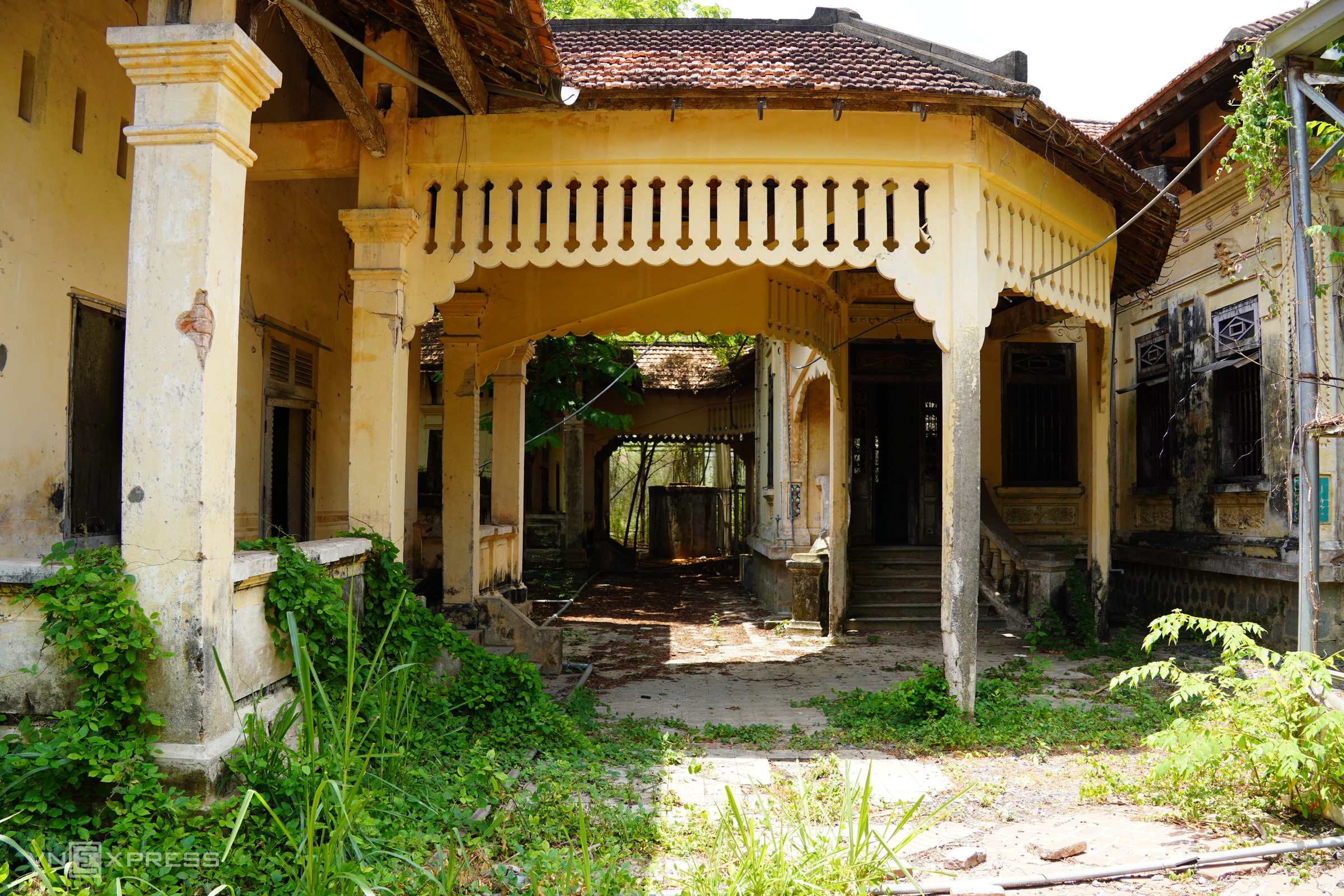
Beyond the main residence, the auxiliary buildings, including the kitchen, rice storage, and garage, show the most severe signs of decay, with cracked walls and overgrown vegetation. |
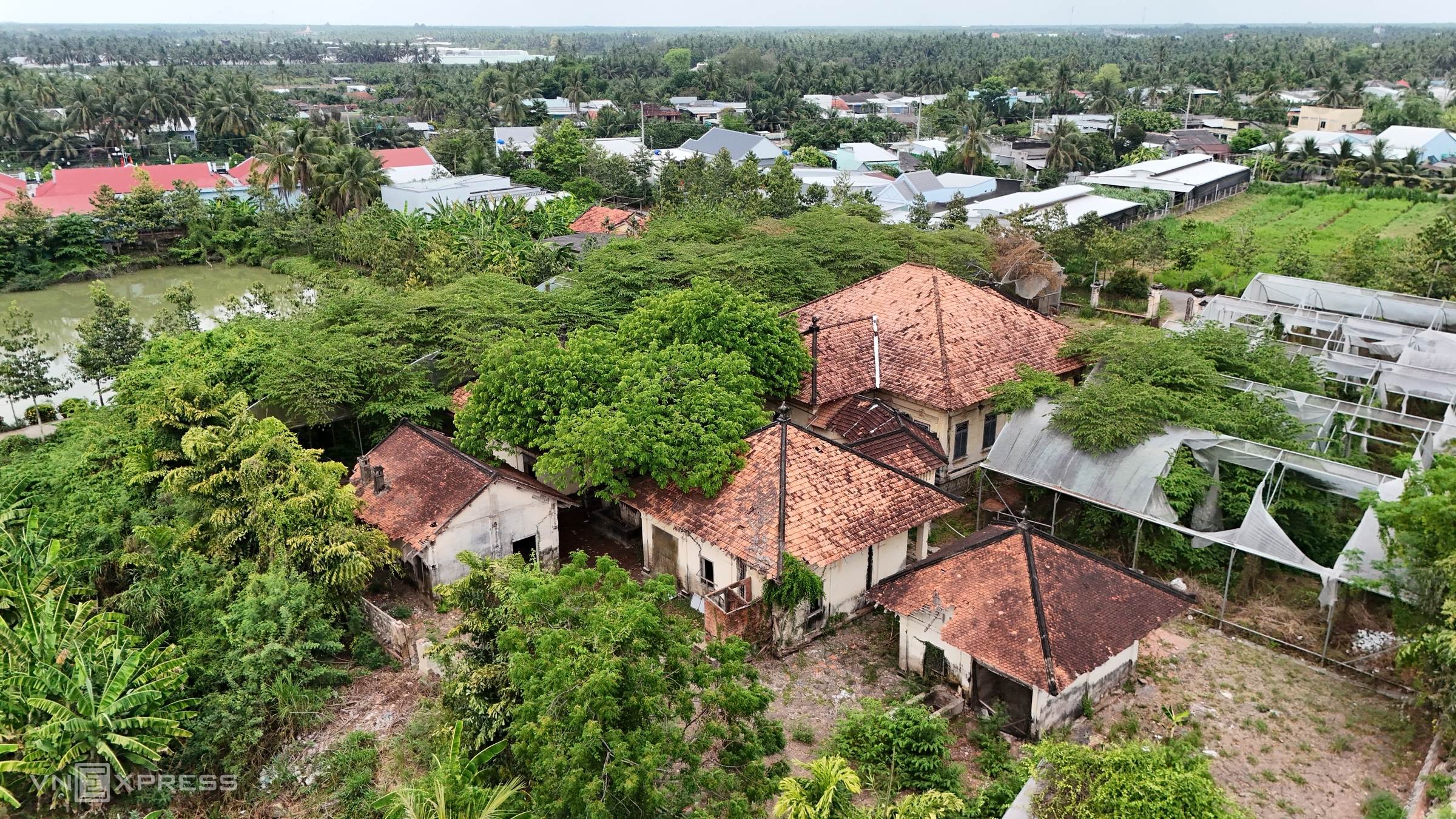
The century-old villa, once the residence of district chief Le Ngoc Chieu, now stands in ruins in Dong Thap. This historical structure, also known as Chieu's House or Binh Phan Ancient House, has fallen into severe disrepair after decades of neglect. Located on over 7,000 square meters of land in Binh Tho Trung hamlet, Binh Phan commune (formerly Cho Gao district, Tien Giang), it was once home to one of old My Tho's wealthiest individuals, though few records of the district chief exist today.
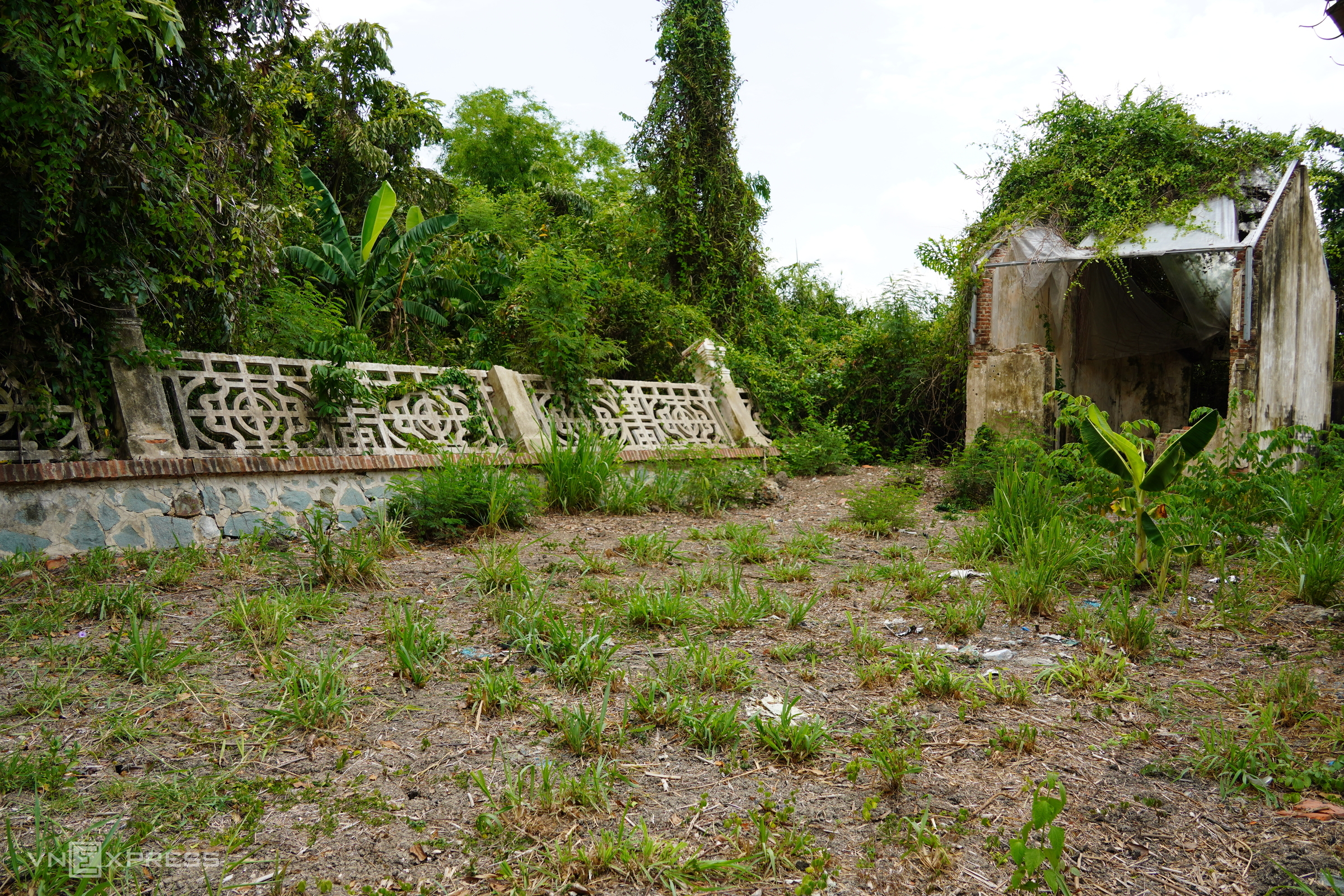
Following Le Ngoc Chieu's death in 1964, the villa remained unmaintained. In 1975, the Cho Gao government took control of the property, later transferring its management to the Binh Phan Commune People's Committee (CPC), which is now the My Tinh An CPC in Dong Thap. Three years ago, the Binh Phan CPC submitted a request to the province to recognize the villa as a heritage site, but approval is still pending. This prolonged lack of preservation and care has left the villa's grounds heavily overgrown with weeds, and the empty land within its perimeter, once used by residents for makeshift greenhouses to grow vegetables and fruits, now lies dilapidated.
The villa's architecture reflects a French colonial style, with the main house featuring a wooden louvered front door adorned with ceramic tiles, a common design in French-influenced villas. A relief sculpture on the main villa's wall proudly displays its construction year: 1929. However, elements like the side door, railings, and entrance steps, once featuring elaborate patterns and geometric shapes, are now badly deteriorated. Inside the main hall, the multi-colored marble floor remains largely intact, yet sections of the walls show peeling paint and graffiti. Some of the decorative relief patterns are broken and damaged. The house was designed in the Art Deco style, characterized by its dominant geometric forms.
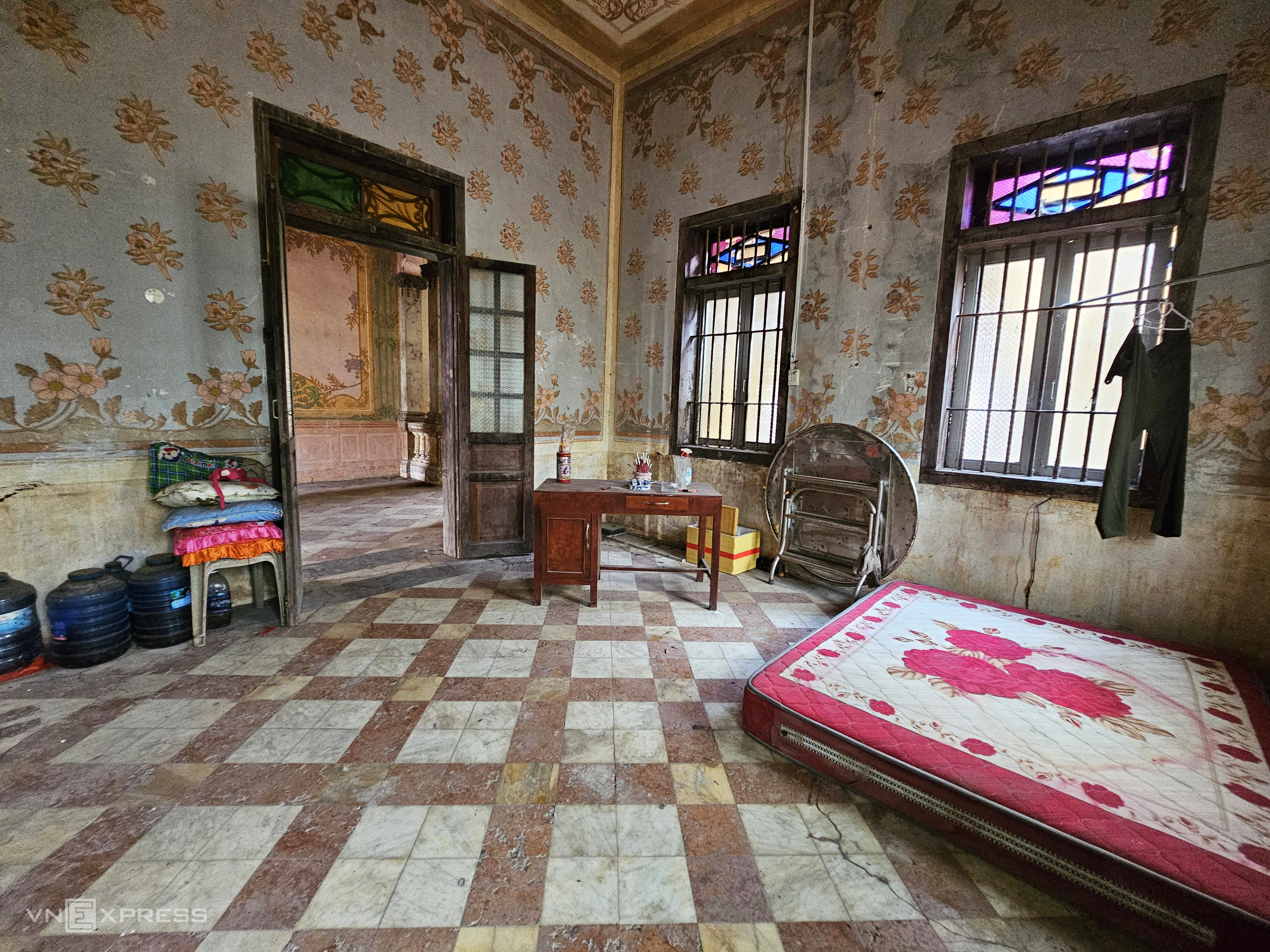 |
The main house originally comprised a corridor, a central hall, and two bedrooms. Most of the house's walls were adorned with decorative vine and leaf patterns, while the ceilings featured floral motifs. One of the bedrooms is currently used as living quarters by workers who cultivate vegetables and fruits in the area.
 |
 |
The dining area is now dilapidated, with rotten walls and termite-eaten rafters. Only the brick stoves and chimney remain as traces of its former function, amidst a tangle of climbing vines. The two-room rice storage building, once labeled for rice and husk, no longer has doors. Many wall sections are covered in green moss, bricks are peeling, and the ceilings are extensively rotted and punctured.
Sections of the once sturdy perimeter fence behind the villa have collapsed.
 |
An aerial view reveals the sprawling ancient villa complex, covering over 7,000 square meters. Nearby, the metal frames of residents' former greenhouses, used for growing vegetables and fruits, are now tattered and await removal.
Hoang Nam