Stepping into Thuy Duong village (formerly Thuy Nguyen district), the sweet scent from simmering pots of banh chung spreads through the air. Steam carries the sweetness of sticky rice, the light fragrance of banana leaves, and the spicy warmth of pepper.
At a table laden with banana and dong leaves, sticky rice, and pork, Vu Thi Thuy, 69, swiftly arranges leaves, adds rice, and folds the edges. In mere seconds, a perfectly square banh chung takes shape.
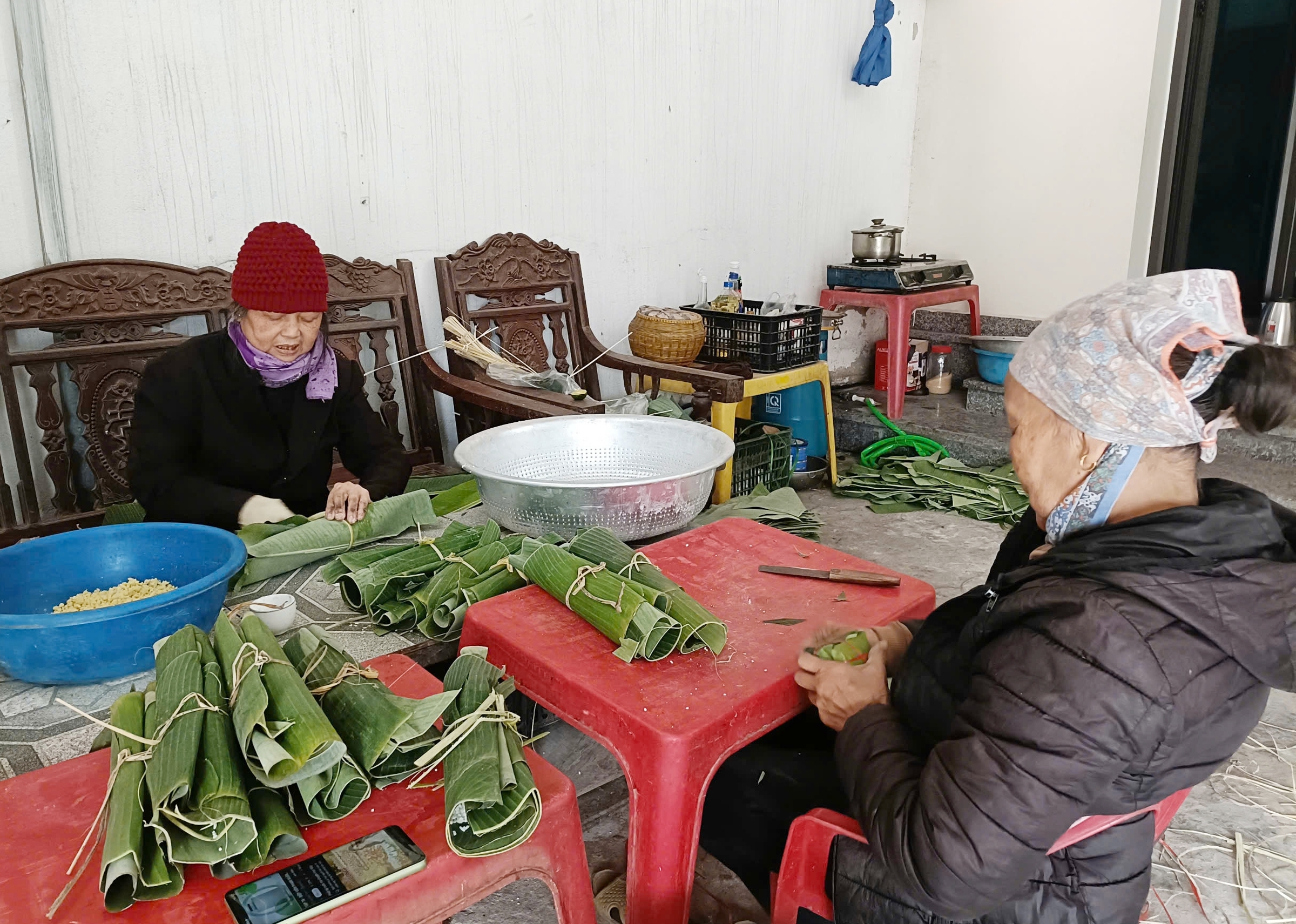 |
Vu Thi Thuy, 69, swiftly arranges leaves, adds rice, and folds the edges to shape the banh chung. Photo: Le Tan |
While villagers typically use Thai Binh sticky rice on regular days, for Tet, Dai Thang's "nep cai hoa vang" sticky rice is chosen for its superior chewiness. The pork filling, a mix of lean and fatty meat, is seasoned with salt and plenty of pepper. Tet banh chung are boiled for 12 hours, five hours longer than usual, ensuring the rice is tender and doesn't become hard.
To enhance the aroma and maintain the natural green color, artisans line the inside with wild banana leaves and wrap the outside with dong leaves for firmness. "Working every day, my hands instinctively form the shape. Each banh chung is perfectly molded, with precise angles even without a ruler," Thuy shared.
Known as a famous banh chung wrapping village in Hai Phong, Thuy Duong currently has five large-scale facilities, each selling 300-400 banh chung daily, alongside hundreds of smaller producers. To ensure hygiene and reduce labor, traditional wood-fired stoves have been replaced with electric pots. The largest pot at Mr. La’s facility can cook 400 pieces in one batch.
However, some principles remain unchanged: tap water is never used to boil the cakes. Thuy Duong residents only use the village's famously clear, sweet well water or rainwater. According to elders, this well water is the secret behind Thuy Duong banh chung's unique flavor, making them tender and chewy for longer.
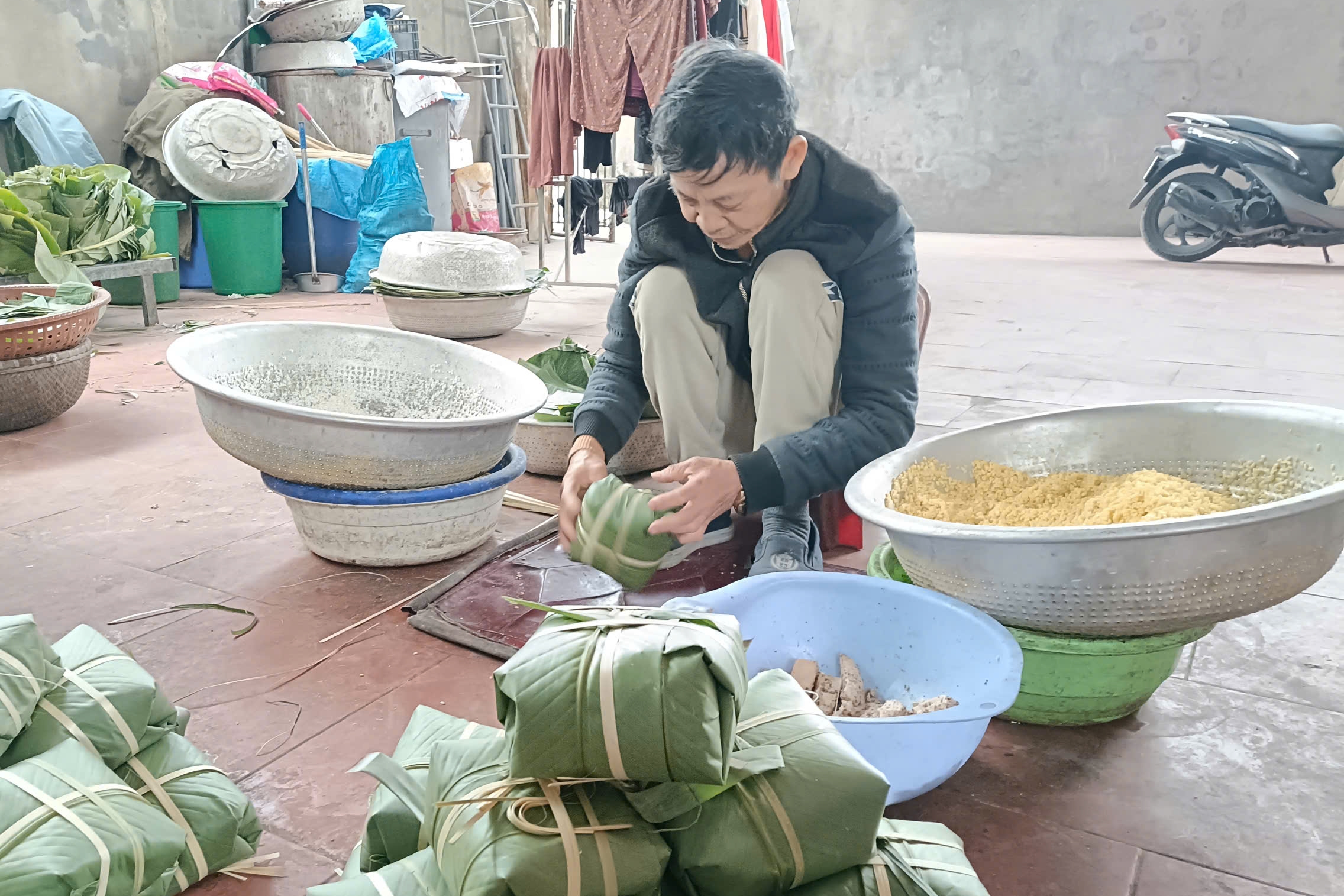 |
Thuy Duong village artisans wrap banh chung by hand, without using molds. Photo: Le Tan |
From 2h, traders' vehicles fill the narrow alleys. Hot banh chung are lifted from the pots, packed into boxes, and transported across provinces and even abroad. This Tet, the village expects to sell tens of thousands of banh chung, with prices ranging from 70,000-100,000 VND per piece.
Nguyen Van Diep, a specialist from the Thuy Nguyen Ward Culture Department, noted that in previous years, everyone in the village, young and old, participated in wrapping banh chung. Today, it is mainly the elderly and middle-aged. The local authorities support consumption connections and organize traditional banh chung wrapping demonstrations. This educates the younger generation about their homeland's values and transforms the craft village into an experiential destination for tourists, Diep explained.
Le Tan