The Copenhagen Group, an international network operating under the Council of Europe's Macolin Convention, defines its alert levels not as proof of match-fixing but as indicators of unusual activity. These signs include fluctuations in betting odds, social media rumors, or information requiring further verification. The alert system uses four levels: green (normal), yellow (mild alert), orange (high alert), and red (most serious). At the 2026 World Cup, no incidents reached orange or red levels. However, with the tournament attracting approximately 240 billion USD in wagers, double the amount seen at the 2022 Qatar World Cup, ensuring transparency has become more complex.
The most notable incident involved US forward Folarin Balogun, who received a red card during the round of 16 match against Bosnia and Herzegovina. Customarily, this would lead to a suspension for the subsequent round of eight match against Belgium. Unexpectedly, the FIFA Disciplinary Committee postponed his ban just one day before the game, allowing the forward to play.
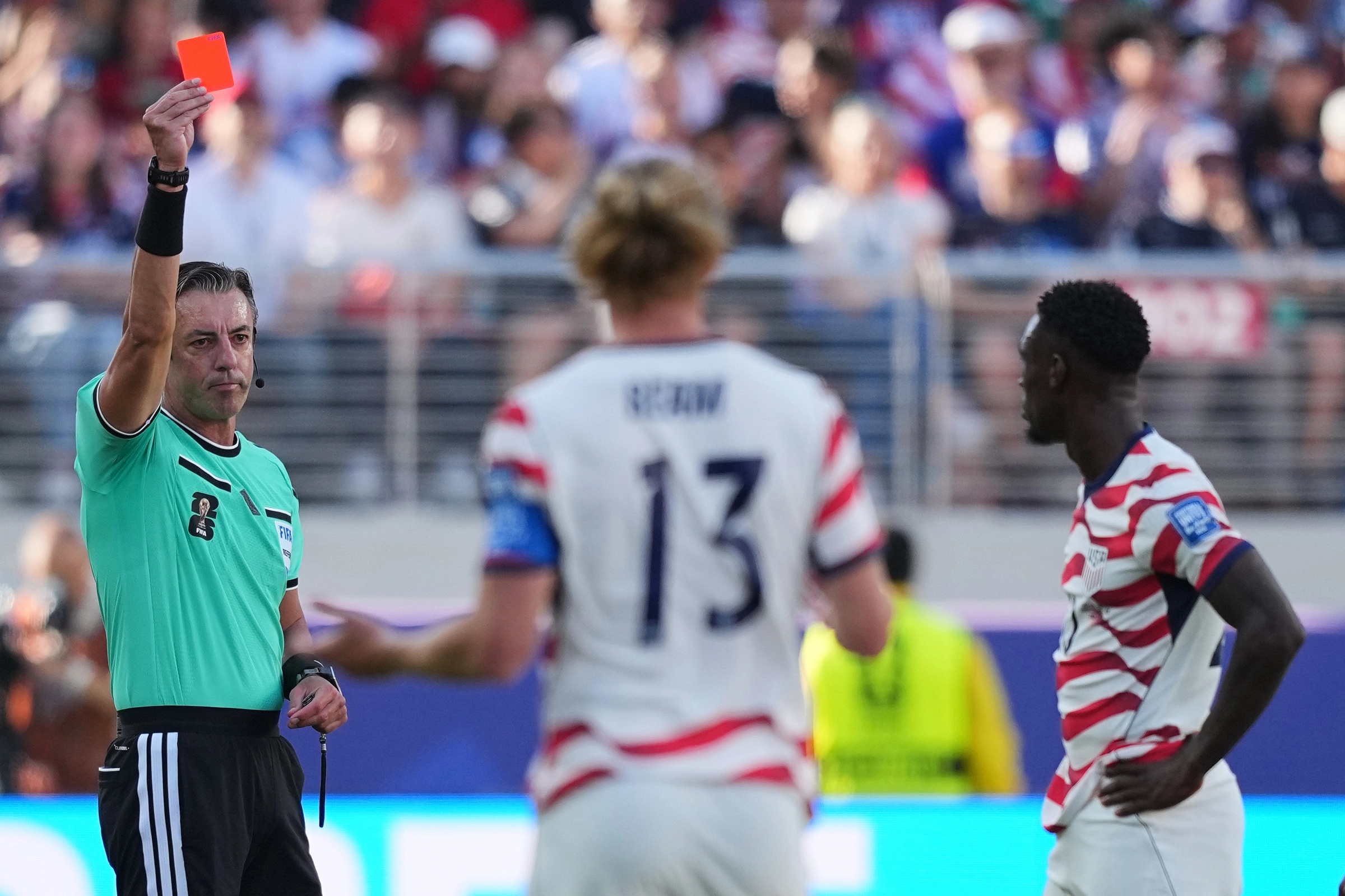 |
Brazilian referee Raphael Claus (left) shows a direct red card to US forward Folarin Balogun during the US's 2-0 victory over Bosnia and Herzegovina in the 2026 World Cup round of 16 at San Francisco Bay Area, US on 1/7. Photo: AP |
The Copenhagen Group raised concerns because Polymarket, a cryptocurrency prediction platform, immediately opened a betting market asking, "Will Balogun play against Belgium?". This was the only instance among 15 players who received red cards at the World Cup where such a prediction market appeared. Balogun was also the only player to have his suspension cleared. The Copenhagen Group has since requested a written explanation from FIFA regarding the entire handling of the case.
Another yellow alert was issued during the opening match between Mexico and South Africa. Midfielder Themba Zwane received a red card in the 84th minute as South Africa lost 0-2. While no conclusion of illegal activity was made, the monitoring system flagged the event due to unusual betting signals. Specific details remain undisclosed as the full report is yet to be released.
A significant case involved the 0-0 group stage draw between Spain and Cape Verde. Polymarket recorded approximately 4,8 million USD wagered on Spain failing to win the match, covering both a draw or a loss. The final score aligned with the outcome favored by this large betting volume, as Spain was held to a goalless draw. The substantial amount of money placed on an unfavorable result for a championship contender triggered an alert for the match, despite no evidence of manipulation.
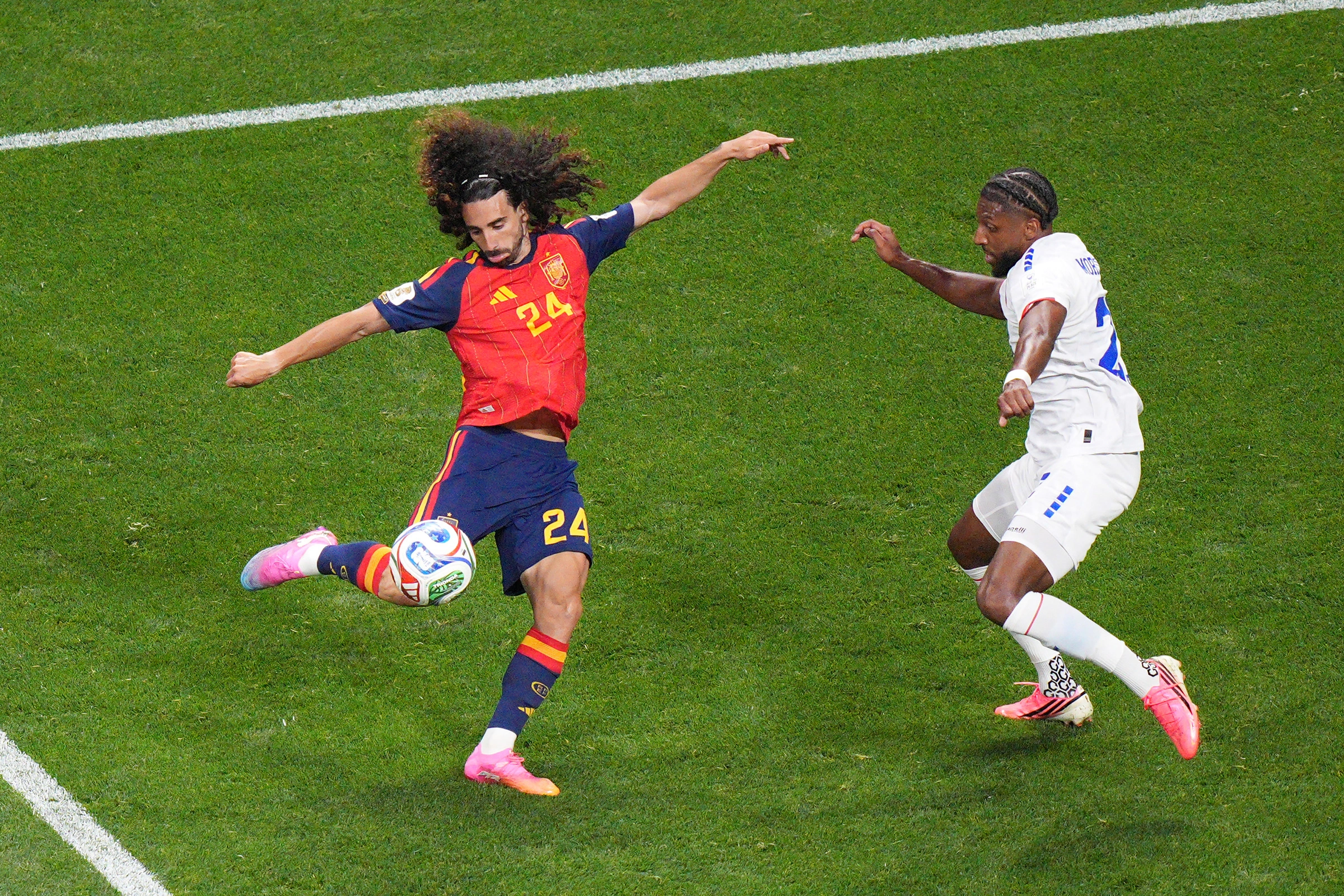 |
Marc Cucurella of Spain shoots, as Steven Moreira of Cape Verde closely guards him during a 2026 World Cup Group H match at Atlanta, Georgia, US on 15/6. Photo: AP |
Another Spain match also came under scrutiny. In their 4-0 victory over Saudi Arabia, the video assistant referee (VAR) took about three and a half minutes to review a situation before disallowing Ferran Torres's goal. This unusually long review time was included in the risk assessment report concerning the tournament's integrity.
Beyond individual incidents, the Copenhagen Group increased surveillance on 15 of the 104 matches played. Most of these occurred during the final round of group stage games, a period known for varying team motivations, from needing a win to advance to only requiring a draw. This phase is considered the most sensitive in major tournaments, prompting close monitoring of any unusual fluctuations in betting markets.
Additionally, 12 major controversies were assessed from a betting risk perspective. This does not imply match-fixing, but indicates that these incidents were significant enough for anti-manipulation experts to evaluate the potential for conflicts of interest or leaked insider information.
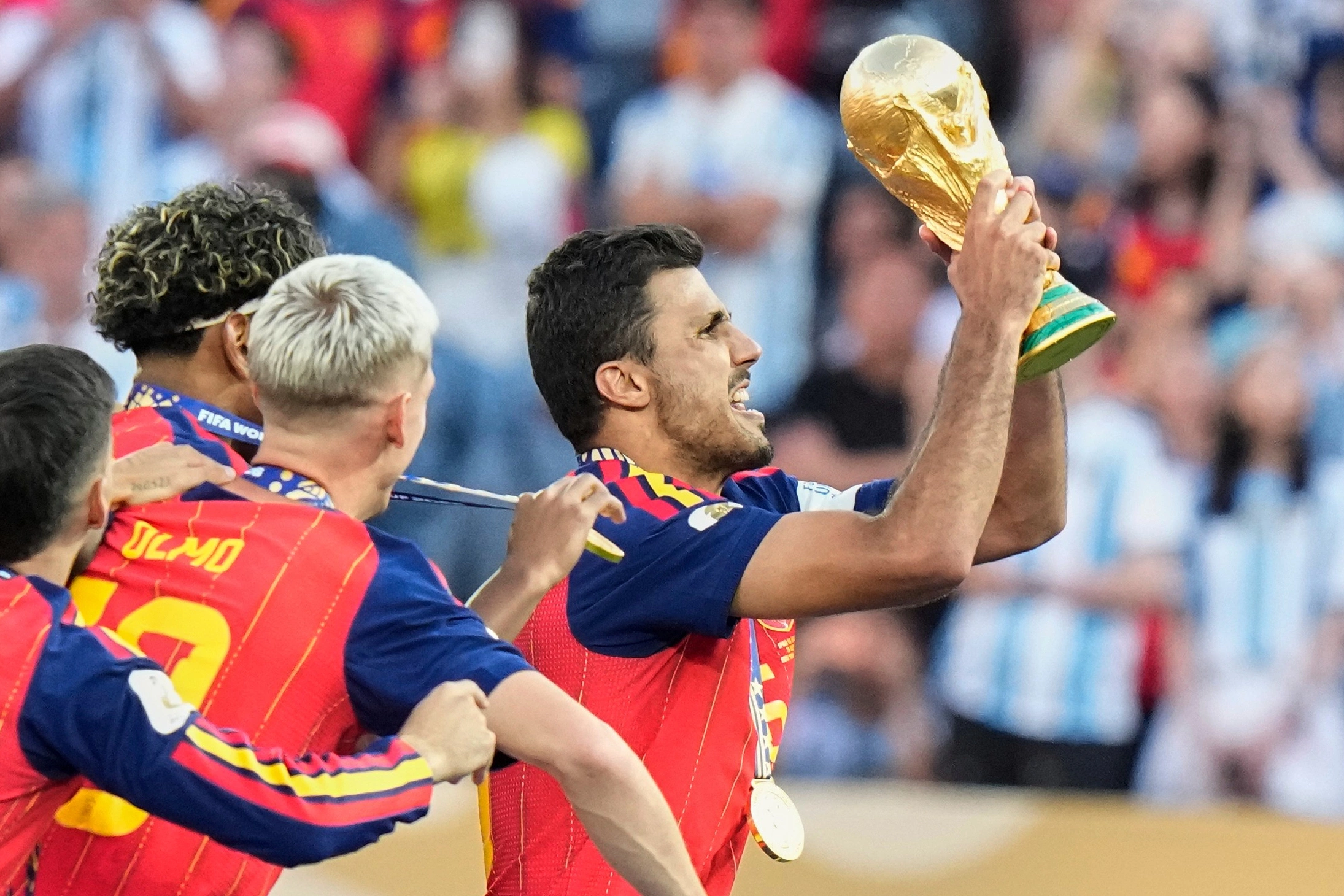 |
Midfielder Rodri (right) lifts the gold trophy after Spain defeated Argentina 1-0 in the 2026 World Cup final at MetLife, New Jersey, US on 19/7. Photo: AP |
A major difference in the 2026 World Cup compared to previous tournaments was the surge in prediction market platforms like Polymarket and Kalshi. Unlike traditional bookmakers, these platforms enable users to place wagers on a wide array of events, including very specific scenarios such as whether a particular player will participate in a match. These platforms present unprecedented challenges due to anonymous transactions, difficult-to-trace payment methods, and operations across diverse legal environments in different countries.
Christian Kalb, an expert with years of experience consulting on betting management, suggests that unusual signals are not sufficient to conclude manipulation. Many fluctuations arise from risk hedging activities by betting companies. For example, if too many people bet on a favored team to win, a smaller bookmaker might take the opposite position in the market as a form of "insurance," minimizing losses if the popular prediction proves true. Such transactions can create significant fluctuations that appear unusual but are not related to match-fixing.
The differing conclusions between FIFA and the Copenhagen Group highlight two distinct approaches. FIFA asserts that it found no signs of manipulation in any 2026 World Cup matches. In contrast, the Group considers yellow alerts merely as signals that require monitoring, not as conclusive evidence of fraud.
By Hoang An