 |
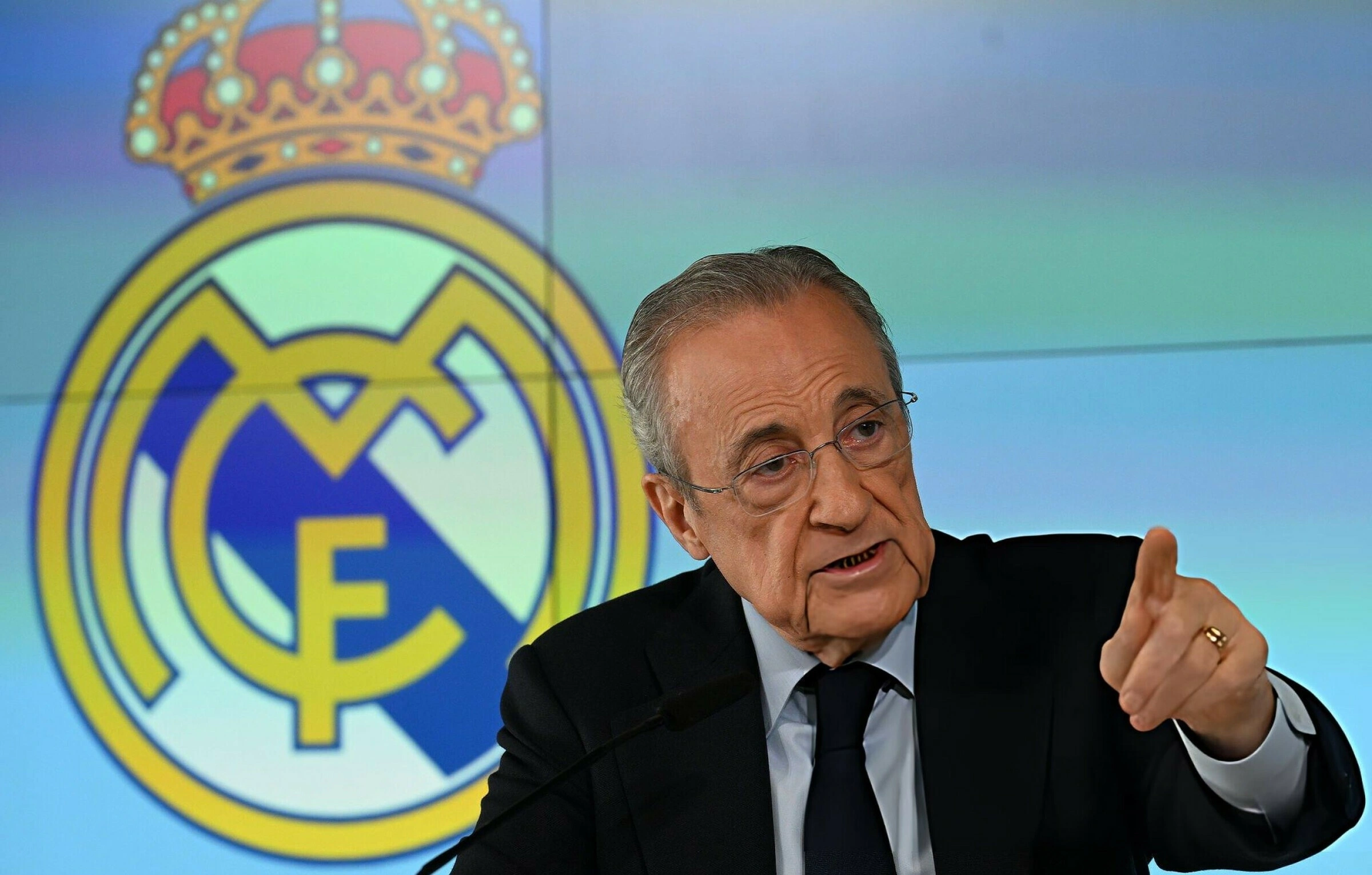
President Perez at the press conference in Ciudad Real Madrid, Valdebebas, Madrid, Spain on 12/5. Photo: Reuters |
It was not Real's 0-2 loss to Barca, which saw their rivals secure the La Liga title, nor the team's elimination from the Champions League, or even the serious locker room rift after the clash between Federico Valverde and Aurelien Tchouameni. The most talked-about topic in Spain now is a man in his 70s.
Perez held an emergency, unusual press conference, allowing a question-and-answer session—something unprecedented in over one decade. The peculiarity continued as he sat before the microphone and began with the statement: "I will not resign".
This declaration immediately shattered all speculation about Perez potentially stepping down. However, it also initiated a different drama. The Real president announced that elections would be held, affirming that he and the current board would run, while challenging critics to confront him directly. The atmosphere intensified as Perez dared those who wished to remove him from Real to use "guns and bullets"—a phrase laden with more political than footballing connotations.
The overall picture for Real at this time is rather bleak. The team has just endured a disappointing, trophy-less season, plagued by instability from professional failures to rumors about the coach's future and internal divisions. In this context, Perez emerged not to admit fault in the usual manner, but to identify the enemy: the media. Perez claimed there were orchestrated campaigns and organized groups aiming to defame him and harm Real.
Perez suggested that poor results were excessively exploited for personal attacks, ranging from rumors of his fatigue and absence to falsehoods about his health. Perez emphasized that he continues to run Real and his businesses, simultaneously denying reports that he lacks energy.
However, what made the press conference impactful was not the election announcement, but its tone. Perez openly targeted certain newspapers and journalists, aggressively questioning where they obtained their information and why they wrote about him in such harsh terms. Perez also highlighted his achievements during his tenure: 66 titles in football and basketball, including seven football Champions League titles and three basketball Euro League cups. This served as both a self-defense and a reminder that under Perez's two terms, Real experienced one of the most glorious periods in the club's history.
For neutral observers, this press conference had a self-congratulatory tone, where Perez painted himself as the hardest worker, the club's savior, and the one who always knows what is best for Real and its members. Praise does not weaken one's position, but self-praise does. When a leader must erect a statue of themselves in public, the positive regard the public once held for that individual diminishes in value.
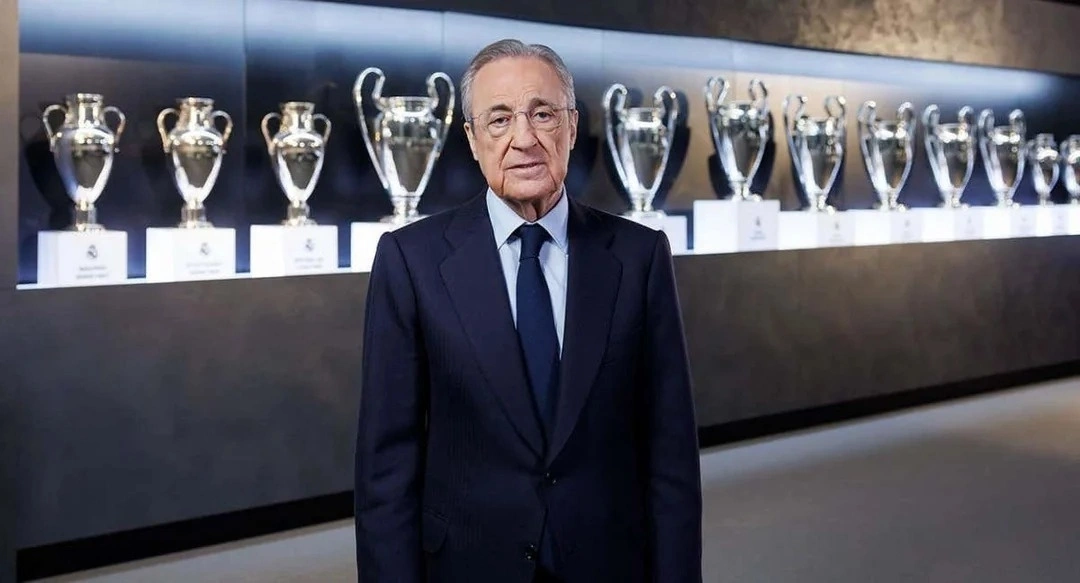 |
During Perez's two periods of leadership, 2000-2006 and 2009 to present, Real won 66 titles, including 37 in football and 29 in basketball. The most notable among these are seven European football championships (Champions League) and three European basketball championships (Euro League). Photo: Reuters |
The situation was never simply about Perez being angry with the media. Former referee Iturralde Gonzalez assessed on the "El Larguero" program that the press conference was a tactical move. According to him, Perez won the narrative battle. Instead of allowing public discourse to focus on Real's specific issues—from failures in designing and operating parking facilities around Bernabeu, problems related to concert organization, to two years of allegedly unclear football—all attention shifted to the confrontation between Perez and the press.
Iturralde viewed this as a "basic game with strong political overtones": when faced with a major problem, create another issue to divert attention from what is truly important. After the unusual press conference, people would no longer discuss Real's internal turmoil, but rather Perez's attack on the media, his mention of the Negreira case, and his accusation of a campaign against him.
From this perspective, the press conference was not a spontaneous moment or a media mishap. It was Perez's way of shifting the playing field from football, where Real was losing, to the stage of power, where he remains in control of the rhythm of play.
The Negreira case was also highlighted by Perez at the opportune moment. He called it "the biggest scandal in football history", stating that Real was preparing a report of over 500 pages to send to UEFA, and questioned why referees involved in that period were still officiating in La Liga. Perez also mentioned that Real had produced a detailed video about the 18 points he believed the team was unjustly deprived of this season. When a trophy-less season required an explanation, the story of referees and Barca became a familiar excuse, but this time it was escalated with more intensity.
Paradoxically, the sports segment of the press conference did not occupy much time. Perez avoided deep discussion about the coach or players, though he was still asked about the possibility of Jose Mourinho returning. He stated that Real had not reached a critical negotiation stage, and the current focus was on returning the club to its members, as he phrased it. However, for a team that had just experienced a crisis-ridden season, the president talking more about the media than professional matters led people to wonder: does Real need a football plan, or a public relations counter-offensive?
Even the Valverde and Tchouameni altercation was handled by Perez in this manner. He admitted that the two players were fined, reportedly around 590,000 US dollars each according to Cadena SER, but downplayed the incident's nature by stating that player clashes were nothing new in his 26 years at the club. What bothered Perez more was the information leak. To him, that was the serious issue because it allowed the incident to be interpreted as chaos.
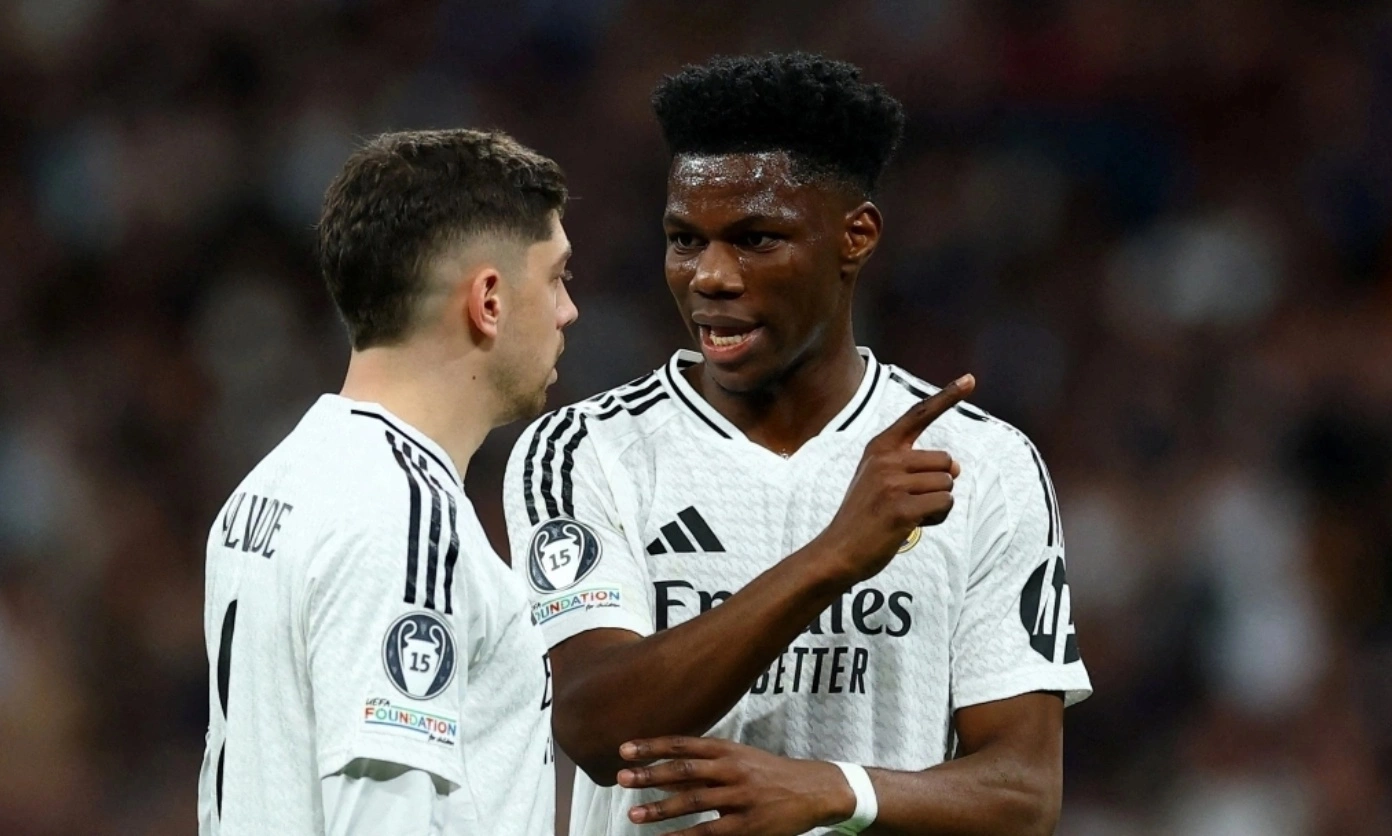 |
Valverde (left) and Tchouameni during Real's match against Man City at Bernabeu stadium, Madrid, Spain, in the second leg of the Champions League play-off round on the evening of 19/2/2025. Photo: Reuters |
Perez's conduct concerned many Spanish experts. During the press conference, Perez acted more like a politician than ever: admitting no fault, attributing everything to conspiracy theories, verbally attacking the media, using institutional weight to vent personal frustration, and turning critics into antagonists. It seems Perez's desire to cling to power has made him lose his restraint.
Elections, in theory, are a way for Real members to verify support for the president, and occupying that position is not simple. Candidates for Real president must meet a range of conditions, including at least 20 years as a member, Spanish nationality, no disciplinary record, no professional ties to other clubs, and most importantly, significant wealth, demonstrated by bank credibility with a guarantee equal to 15% of the club's budget. Currently, with Real's fund of approximately 1,5 billion US dollars, a candidate needs to hold a balance of approximately 221 million US dollars.
Therefore, the question "who is strong enough to challenge Perez" is not easily answered. Former referee Iturralde suggested that almost no one is, because potential candidates lack sufficient time to secure bank guarantees and prepare their dossiers. If there were a strong enough wave against Perez, everyone would likely know that name by now. In other words, the election is more likely to be a re-affirmation of Perez's power than a genuine contest.
That is why this press conference created such a lasting impression. Not because Perez said he would stay. Real is already too familiar with the image of a resolute, dominant, and unyielding Florentino Perez. What was new was that he had to appear to say it, had to reiterate his merits, had to attack those who doubted him, and had to transform a failed season into a battle to protect his reputation.
Many comments on social media called Perez a "media tactical genius" because he made everyone talk about exactly what he wanted. However, some also suggested that this is the first sign of decline, when a great leader begins to remind the world how great they are. Interestingly, these two viewpoints are not contradictory. Perez could simultaneously win on the media front, but also reveal that he no longer has the same level of control as before.
Ultimately, this press conference resembled the current Real: still powerful, still glittering with past glory, but also full of turmoil behind the locker room doors.
Perez wanted to steer the narrative in his favor, and he succeeded. Yet, when the most powerful man at Bernabeu has to appear to extinguish a fire with a politically charged speech, perhaps the blaze within Real is not as small as he wished to portray.
Vy Anh compiled