While working at English club Coventry City, Doctor Claire-Marie Roberts once received a call from a stranger asking if she knew the oxygen percentage in the atmosphere. As performance director, tasked with optimizing player potential, she was accustomed to pitches promising miraculous breakthroughs. At times, she received up to 50 LinkedIn messages weekly advertising devices, supplements, or technologies touted as miraculous.
 |
Doctor Claire-Marie Roberts during an interview with the English newspaper Guardian on 22/9. Photo: Guardian |
"It's only 21%," the caller said. "That's basic chemistry," she thought. Then came the sales pitch: "So we've compressed oxygen into cans, and we thought the club would want to try it." "Okay... canned oxygen," Roberts laughed, recalling the conversation with the English newspaper Guardian. She ultimately declined the offer to purchase "canned oxygen" for Coventry players.
Roberts has dedicated decades to elite sports performance and professional football. She spent nine years in the Premier League and two years at Coventry, where she played a key role in the team's promotion by winning the Championship. Last summer, she transitioned to the McLaren Formula one racing team, serving as director of human performance.
Roberts is dismayed by how pseudoscience is deceiving and exploiting professional football. This ranges from coaches and fitness specialists misled by "miracle cure" vendors to wealthy players desperately seeking shortcuts.
"The gap between science and practice is widening in my experience," Roberts shared. "The situation is getting worse. Behind these products are flashy marketing ploys, nothing short of illicit profiteering. They target a group vulnerable to promises like: 'How can I push my limits further? How can I shorten preparation and recovery times?' Starting with this mindset is far from ideal."
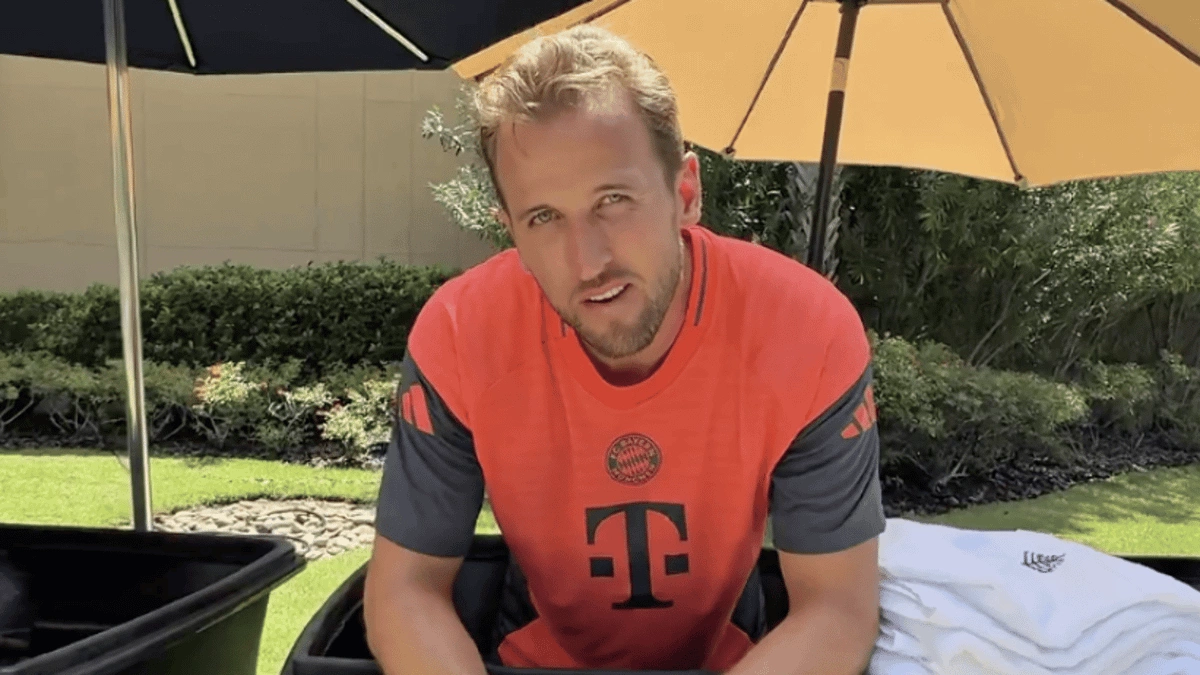 |
Harry Kane stands in an ice bath after the Bayern Munich – Auckland City match at the FIFA Club World Cup last summer. Photo: Bayern Munich |
Roberts points out that many popular methods in elite football today have little scientific basis. One such method is cryotherapy chambers, devices found in almost every expensive training center. When a chamber is unavailable, ice baths serve as an alternative. Players favor this method so much that Harry Kane went viral with a photo of himself in an ice-filled tub after a Bayern Munich match at the FIFA Club World Cup last summer.
"Most top clubs have cryotherapy chambers, but most cannot explain why they use them," Roberts analyzed. "There is simply no clear scientific evidence, apart from a very small study suggesting it might help prevent dementia. The evidence for cryotherapy remains very vague."
She even suggests this method could be counterproductive for recovery. "Some recent studies indicate that cryotherapy can reduce muscle adaptation," the expert, born in 1977, added. "When do you use it and for what purpose? If it's for recovery, then sleep and nutrition are the two best therapies. No whole-body cryotherapy chamber can salvage recovery if those two foundational elements are not ensured."
Players also constantly seek shortcuts in nutrition. Dietary supplements are a multi-billion USD industry extending its reach into football. However, Roberts asserts that apart from vitamin D (which has verified scientific evidence showing deficiency among people in the Northern Hemisphere due to lack of sunlight) and vitamin C (often deficient in diets), supplement use should only be considered when the body truly lacks these substances.
"Many people casually take supplements without truly understanding their effects," Roberts stated. "Supplement use must be based on actual needs. For example, if you don't eat fish, but fish oil is important for your body, then you need to supplement. Everything must stem from need. An athlete's performance and recovery depend on sleep quality, and the quality and quantity of nutrition. No single supplement can compensate for an unhealthy diet, though many mistakenly believe it can. We are overlooking the most basic elements, while deluding ourselves that there's a shortcut or quick 'tricks' to solve every problem."
 |
Players and coaching staff of Coventry City celebrate winning the Championship on 4/5 in Coventry, England. Photo: Reuters |
Roberts says she applied evidence-based scientific methods when assisting Frank Lampard's coaching staff, while warning that many clubs blindly follow trends from elite circles despite their flaws.
"People are passively accepting this information," she said. "Just because the England national team, Man City, or Chelsea – places with abundant resources and no shortage of anything – adopt these methods, it leads to a distortion in belief and understanding of scientific basis or real evidence. They strongly influence behavior, but in the wrong direction."
As a former swimmer who missed the Olympic Atlanta 1996 due to injury, Roberts observed: "Football is more susceptible to manipulation than any sport I have witnessed. Perhaps this is because the stakes in this sport are too high, stemming from its importance and inherent risks."
Kinesiology tape, or "K-tape", is another trend that makes Roberts shake her head. Cristiano Ronaldo, Gareth Bale, and David Beckham have all been seen using these strips on their bodies.
"There's no evidence that K-tape prevents injuries or improves performance," Roberts said. "It only provides a slight sensation of body position and movement, giving you the feeling that someone has just applied pressure to the taped area. But in every professional environment I've worked in, nobody uses this type of tape. It's expensive but useless."
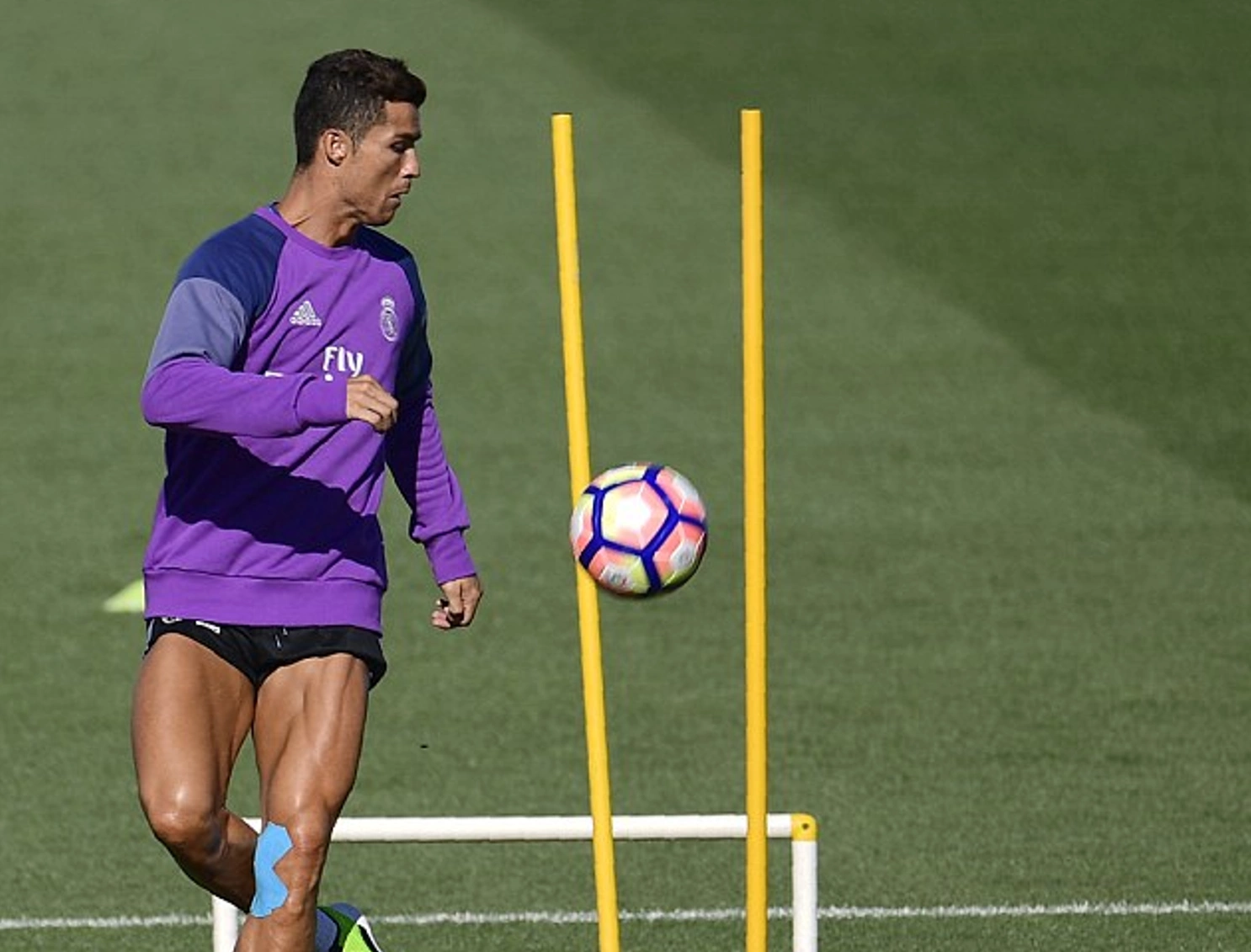 |
Cristiano Ronaldo uses K-tape on his left leg during a training session at the Valdebebas training center, Madrid, Spain in 2016. Photo: AFP |
"If an athlete dislocates a shoulder, you must immobilize it with a completely different strapping technique. This provides external support to protect the joint to a certain extent and reminds the person they have an injury. This is a risk mitigation method. While not perfect, it's better than nothing. K-tape, however, is essentially psychological therapy, a form of placebo," Roberts emphasized.
Many coaches with decades of experience cling to outdated methods simply out of habit, or chase new trends after hearing about a "breakthrough" product from non-scientific sources. Roberts believes that until football centers its decisions on science and hires qualified experts to vet promotional messages, this situation will only worsen.
"We think we can jump to results without putting in the effort for the most basic things, like diet, sleep, and training quality. Overall, football has an anti-intellectual mindset, and this has persisted for a long time. A few clubs do very well, but the majority do not. The sport is clearly going against science. And there's a reason for that: a lack of a sufficiently large workforce who can apply critical thinking to practical situations," Roberts declared.
Hoang Thong (according to Guardian)