 |
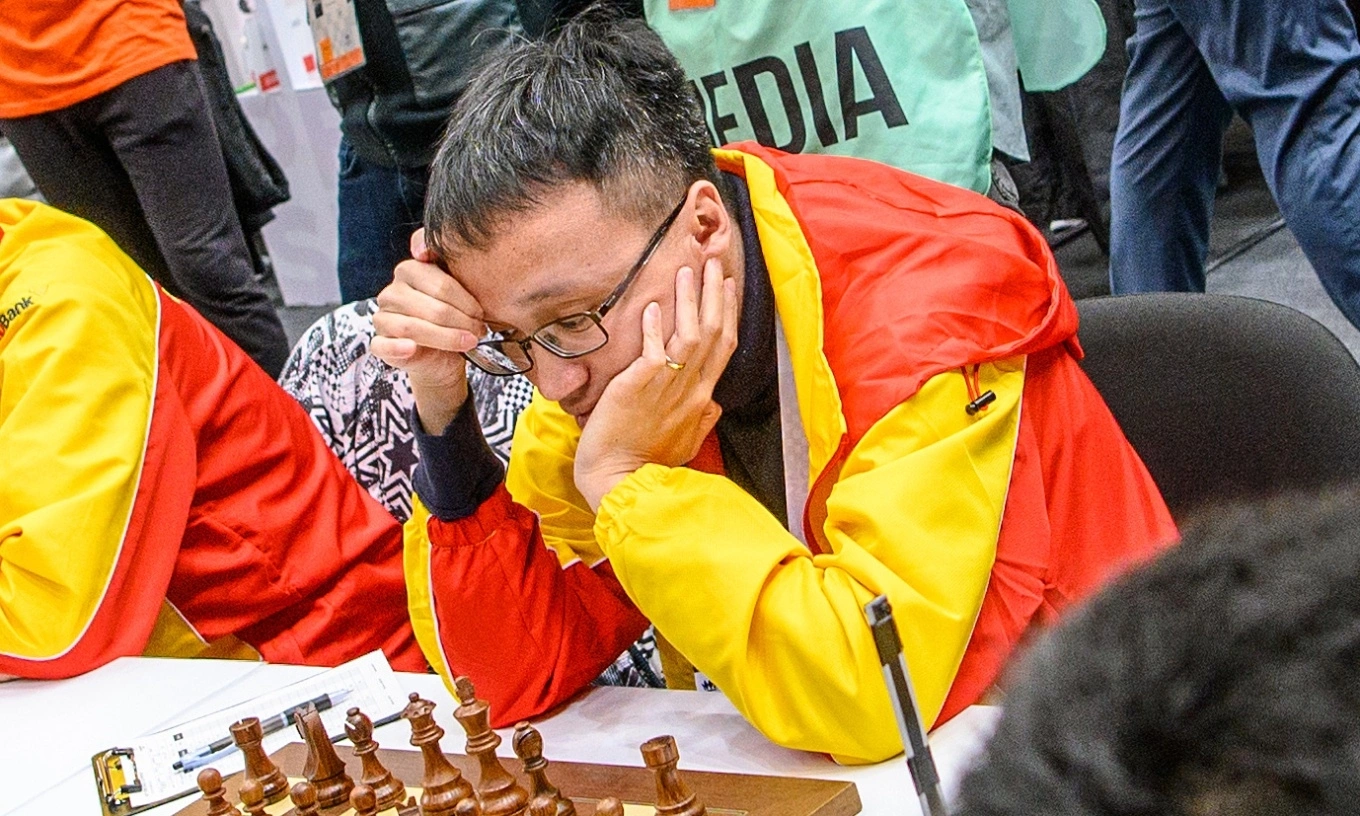
Grandmaster Nguyen Ngoc Truong Son at the 2024 Chess Olympiad in Budapest, Hungary. Photo: FIDE
According to Truong Son, Vietnamese chess is increasingly falling behind other strong Asian nations. About 10 years ago, in 2016, the Vietnamese men's team ranked third and the women's team fourth on the International Chess Federation (FIDE) Elo rating list, indicating a strong ability to compete for medals against powerhouses like Trung Quoc and India. However, the situation has changed, with both teams now ranking around sixth or potentially lower, as many Asian countries have significantly invested in and developed the sport.
Truong Son noted differences in how strong international teams operate compared to Vietnam during Chess Olympiads. Most teams primarily base their player rankings on Elo ratings, while also making tactical adjustments to board assignments based on individual player strengths and weaknesses. Although the Vietnamese team has generally followed this approach, some tournament placements have not been optimal due to unclear selection criteria or inconsistent arrangements.
Truong Son believes the biggest issues facing Vietnamese chess are a lack of funding and an unclear operational mechanism. He emphasizes that while limited funding can be managed with an efficient system, even substantial funds would be wasted if the operational mechanism is poor. This systemic issue is more critical for sustainable development.
The current management approach makes it difficult for athletes to commit long-term to the national team. For many years, most national team players have had to independently seek tournaments, cover their own expenses, and manage their training and competition preparations. Furthermore, the selection process lacks stable and clear criteria, leaving players uncertain that their opportunities are based solely on professional merit. Despite players' efforts to adapt and contribute, maintaining long-term trust and motivation in such an environment is challenging.
A fair selection process, according to Truong Son, requires transparent criteria. While Elo ratings provide the clearest benchmark, additional factors such as national championships or youth performance could be considered. He suggests that referring to the practices of other national teams could provide a more comprehensive perspective for developing an effective selection process.
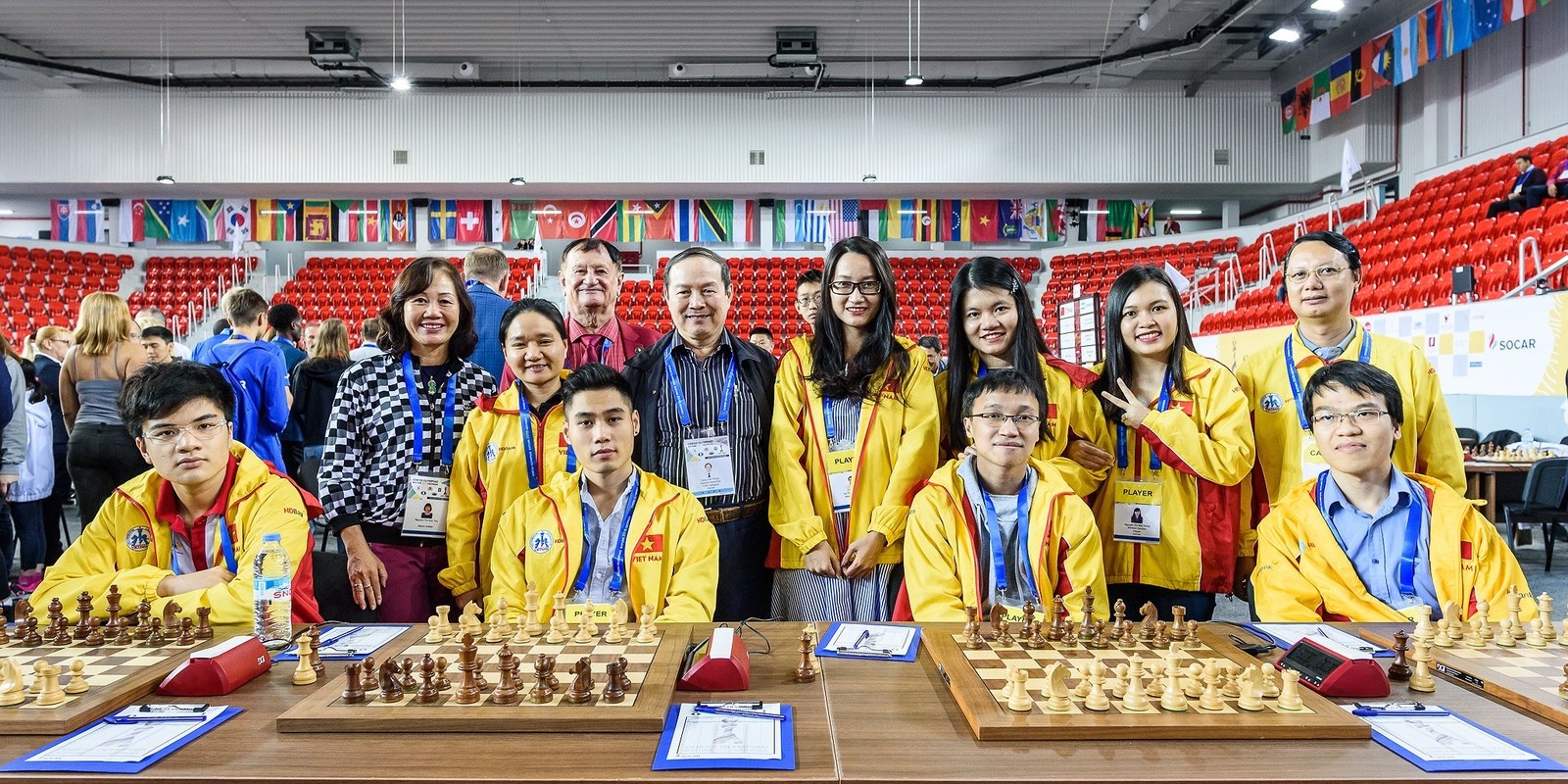 |
The Vietnamese chess team at the 2018 Olympiad in Batumi, Gruzia. Photo: FIDE
Players have previously offered feedback to the chess department or federation, primarily on technical matters, but these suggestions rarely lead to significant changes. When it comes to non-technical issues like operational mechanisms or policies, players often do not know how to effectively voice their opinions or through which channels.
Truong Son attributes the persistence of these shortcomings to players' limited involvement in the change process. He explained that athletes can often only report problems but cannot actively participate in reforming operational methods, leading to the prolonged existence of many issues without resolution.
Financial constraints frequently force Truong Son to withdraw from tournaments he wishes to attend. The cost for an average quality tournament typically ranges from 2,000 to 3,000 USD, and he cannot always secure the necessary funds to participate.
Reflecting on his career, Truong Son takes pride in maintaining an Elo rating above 2,600 for many years and winning two gold medals on board two at the Olympiad. He acknowledges that an Elo rating of 2,600 or higher might not be considered exceptionally high globally, but sustaining this level within the competitive environment of Southeast Asia and Asia presents its own challenges. Regarding regrets, he sometimes wonders if he could have performed better at certain points. However, upon reflection, he realizes he always gave his best, so he no longer harbors feelings of regret.
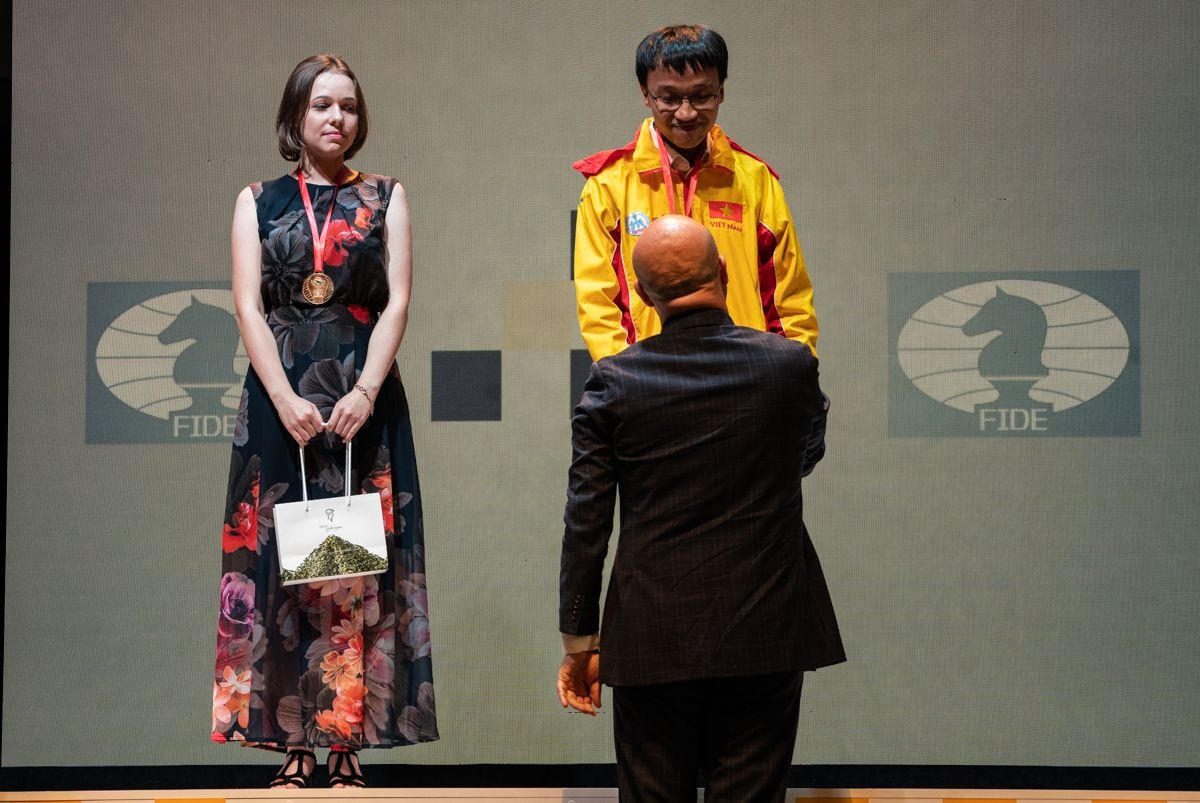 |
Nguyen Ngoc Truong Son receiving his board two gold medal at the 2018 Olympiad in Batumi, Gruzia. Photo: Chess
If a major sponsor were to invest in Vietnamese chess, Truong Son believes the priority should be supporting top players and promising young athletes with frequent international competition opportunities. This forms a crucial foundation for maintaining and improving performance. Effective utilization of sponsorship also requires a clear, long-term strategic plan from management. Recent successes in countries like India and Uzbekistan demonstrate the effectiveness of targeted investment in players with international potential, providing them with regular competitive exposure.
The greatest risk to Vietnamese chess, according to Truong Son, is the generational gap. The national team faces immediate challenges at this year's Olympiad due to the absence of many key players. In the long term, veteran athletes will retire due to age and life commitments. While the Vietnamese chess movement is strong, training lacks a clear, systematic approach. This means that any successes achieved are primarily due to individual effort rather than a scientific training and development process.
| Nguyen Ngoc Truong Son was born on 23/2/1990 in Rach Gia, Kien Giang (now part of An Giang). He became the youngest Grandmaster in Vietnamese history at 14 years and 10 months old. Truong Son is also the only Vietnamese player to win two gold medals on board two at the Olympiad. On 23/5, Truong Son confirmed his retirement from standard chess for the Vietnamese national team after more than 20 years, though he remains open to participating in rapid and blitz chess events. The 36-year-old player cited age, limited international competition opportunities, and ongoing issues with management and funding as reasons he could no longer maintain his desired performance level. Truong Son views the nearly complete overhaul of the men's team before the Olympiad as a rare occurrence at the national team level, suggesting that the current youth development process is not professionally sound. He also mentioned the controversy surrounding the women's team, where several strong players were excluded due to late registration through a rushed process, despite having secured their own funding to participate. According to Truong Son, over the past 10 years, many national team players have had to cover most of their international competition expenses, and handle their own professional and logistical preparations, while the selection mechanism has lacked transparency and stability. The 36-year-old Grandmaster called for the establishment of a transparent selection process, a clear sponsorship strategy, and a long-term training plan to prevent a generational breakdown in Vietnamese chess. |
Xuan Binh