Lionel Messi, at age 39, defied expectations in the World Cup 2026 semifinals against England, orchestrating Argentina's 2-1 comeback win. Despite concerns about his speed and stamina against England's physical style of play, Messi's intelligence and tactical acumen allowed him to act as a "coach on the field," dismantling England's strategy and leading his team to victory.
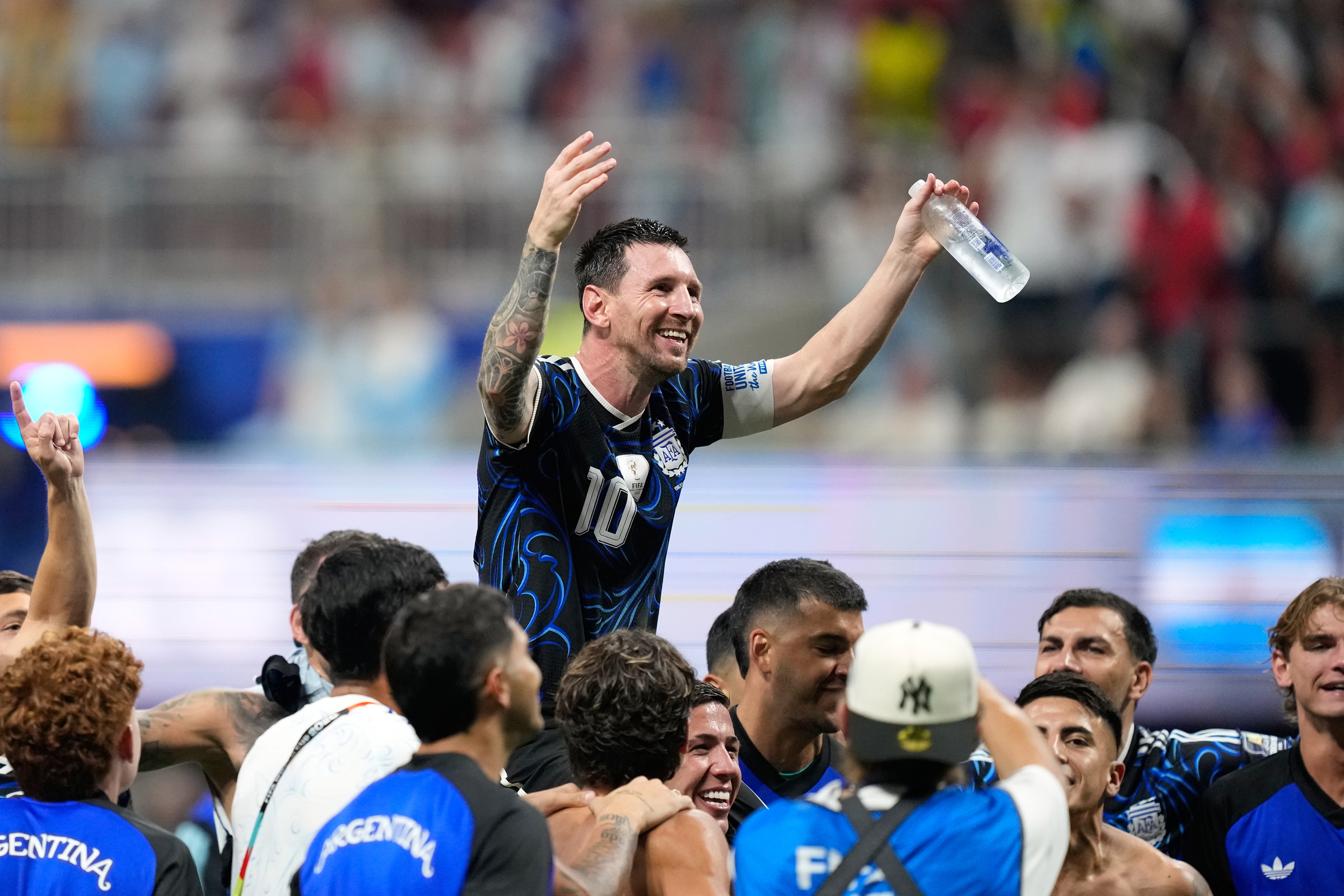 |
Messi and his Argentina teammates celebrate their 2-1 victory over England in the World Cup 2026 semifinal in Atlanta, USA on 15/7. Photo: AP
While his physical attributes may have diminished, Messi compensated with his exceptional football intelligence. As England's players tired and coach Thomas Tuchel's in-game adjustments proved ineffective, the Argentina captain took control, dictating the tempo and identifying spaces to exploit.
England started strong but could not sustain pressure
From the outset, England employed a high-press strategy. Anthony Gordon and Morgan Rogers targeted center-backs Cristian Romero and Lisandro Martinez, forcing goalkeeper Emiliano Martinez to struggle with wide passes. In central midfield, Jude Bellingham played deeper than usual to mark Enzo Fernandez. Declan Rice covered Alexis Mac Allister, while Elliot Anderson was tasked with shadowing Messi.
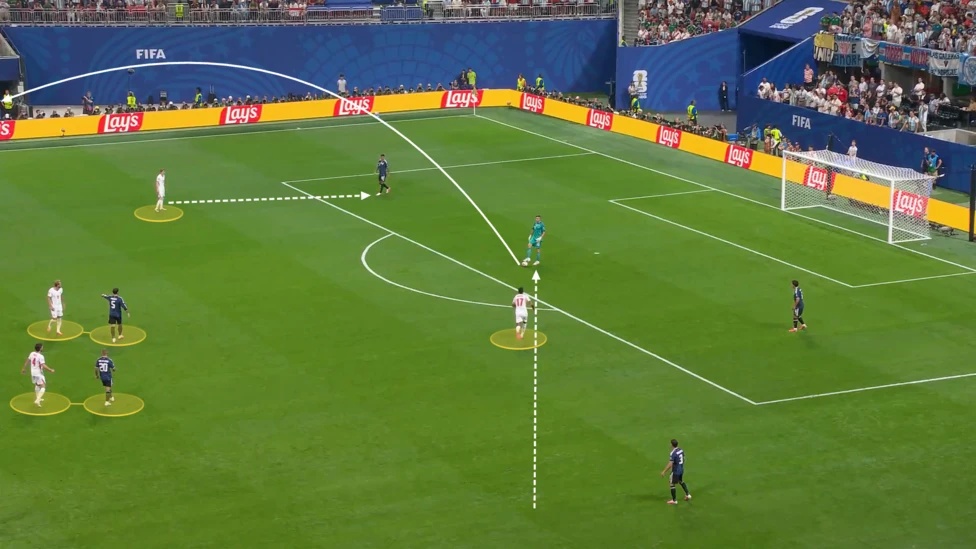 |
Rogers and Gordon press Emiliano Martinez to prevent wide passes. Harry Kane and the midfield closely mark players in the center, forcing the Argentina goalkeeper to make long balls. Screenshot
England's objective was to use strength and intensity to stifle Argentina's central play, a known strength of their opponents. This tactic proved effective for the first 20 minutes. Anderson excelled, constantly pressing, intercepting passes, and limiting Messi's time on the ball.
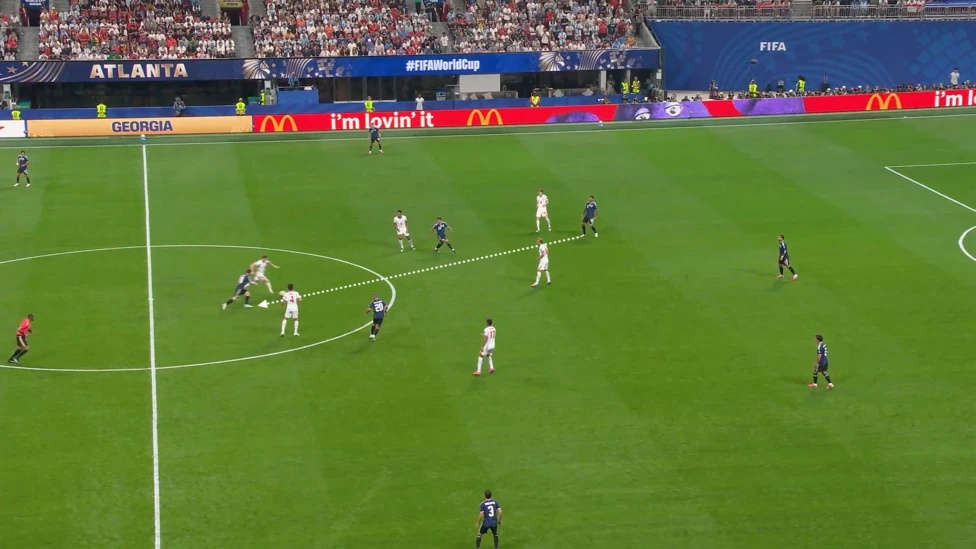 |
In the 10th minute, Elliot Anderson intercepts a pass intended for Messi. The England midfielder's ability to read situations and press proactively continued throughout the first half. Screenshot
However, Messi gradually adapted. He frequently dropped deep to receive the ball, creating a dilemma for Anderson: continue to follow or maintain position. Messi's deliberate, slow movements were also a trap. He would often walk before suddenly accelerating into open spaces to receive the ball. This change of pace consistently left England's midfield a step behind in their pressing attempts. As England's players began to tire, their pressing intensity noticeably decreased, allowing Argentina to gain better possession and push their lines higher.
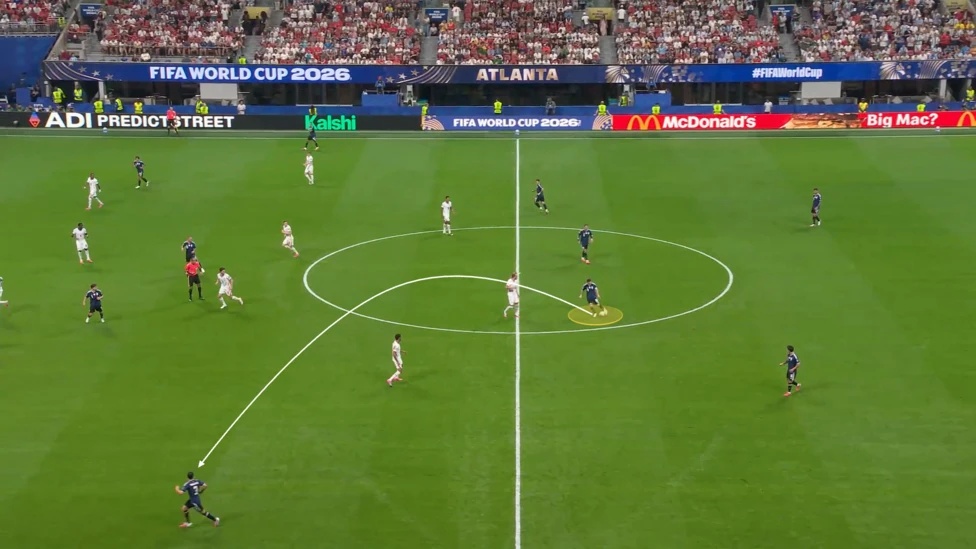 |
Messi frequently drops deep, moving away from England's midfield, helping Argentina build play forward. Screenshot
Messi exploits Anderson's strengths
After Gordon opened the scoring in the 55th minute, England retreated deep to protect their lead. From Gordon's goal until Enzo Fernandez's equalizer in the 85th minute, England maintained only about 12% possession, primarily focusing on defensive containment. Messi quickly identified a weakness in Anderson's play. The Newcastle midfielder consistently sought to intercept and challenge for the ball. Messi leveraged this by holding onto the ball longer than usual, waiting for Anderson to press, then releasing it to a teammate into the exact space Anderson had vacated.
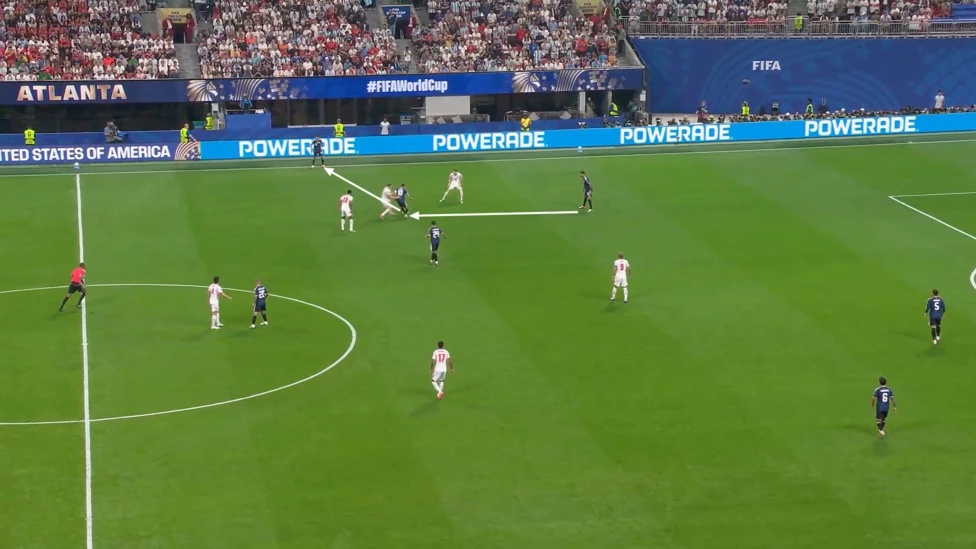 |
Under pressure from Anderson, Messi shields the ball, absorbs contact, then passes to a teammate to exploit the space the England midfielder just left. Screenshot
For the equalizer, Messi initiated a short corner routine before dribbling centrally. Anderson drifted wide to support Djed Spence defensively, leaving a significant space open in front of the penalty area.
Graphic of Messi's assist for Enzo's 1-1 equalizer. Video: X / TheTacticsApp
Messi calmly held the ball for a few more touches, feinting a shot with his left foot to draw in two English players before passing horizontally to Enzo Fernandez just outside the box. The Argentina midfielder had ample time to aim before striking past Jordan Pickford. Had it not been Messi, Anderson might not have left his position in that manner.
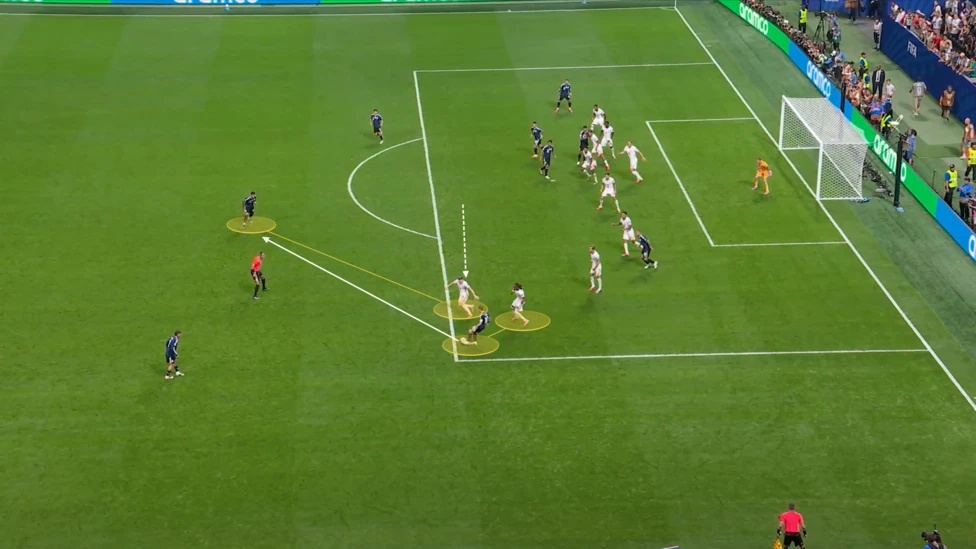 |
Messi draws in both Djed Spence and Anderson, then passes to Enzo Fernandez just outside the penalty area. The Argentina midfielder has enough space to shoot past Jordan Pickford. Screenshot
Constantly appearing where England left space
When England dropped deep to protect their lead, the central spaces around the penalty area became congested. Messi immediately changed his approach. Instead of staying in the middle, he frequently moved to the right wing or dropped deep in front of England's midfield – positions less tightly marked. This allowed Messi either to receive the ball in space or to draw English defenders out of position, creating openings for his teammates. Messi's positioning often deviated from that of a conventional forward, but it allowed Argentina to control the game with precise dribbling and passing. Despite not being at his physical peak, Messi possesses tactical vision and exceptional ball control, and allowing him space with the ball poses significant risks for any opponent.
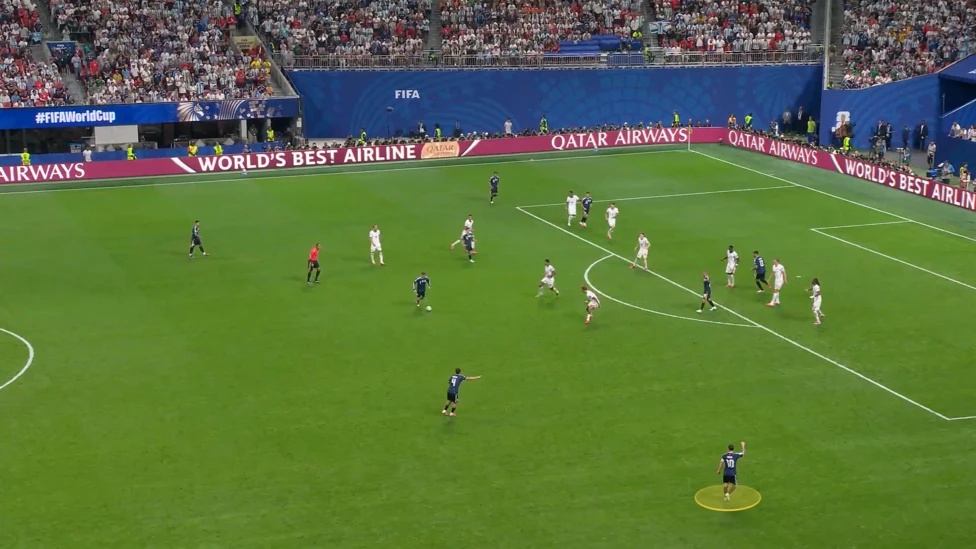 |
Messi constantly appears in open spaces, forcing England's defense to choose between holding position or pressing. Screenshot
The climax came in stoppage time when Messi received the ball on the right wing before delivering an accurate right-footed cross for Lautaro Martinez to head in the winning goal, securing a 2-1 victory and sending Argentina to their third consecutive World Cup final.
Utilizing Bellingham's position
While Jude Bellingham played an excellent attacking role throughout the World Cup, his defensive positioning in the semifinal created opportunities for Messi to exploit. When England defended in a 4-4-2 formation, the wide forward was typically expected to drop back and support the wing area. On Argentina's right flank, this should have been Bellingham's responsibility. However, Messi quickly recognized that Bellingham often pushed high or was drawn to the ball. Consequently, the 39-year-old superstar deliberately positioned himself in the space directly behind the England midfielder. This area, slightly to the right, was far enough to make it difficult for England's central midfielders to press him effectively.
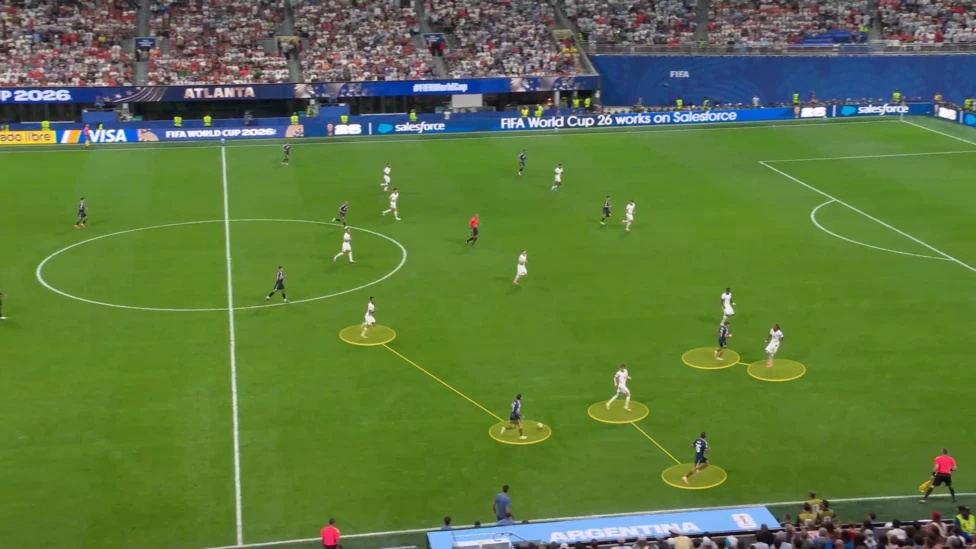 |
Bellingham pushes high in the center as Messi moves to the right wing. Argentina creates a three-on-two situation on the wing with Messi on the ball. Screenshot
This allowed Argentina to maintain constant pressure and create numerous two-on-two situations on the right wing. When both England's full-back and wide midfielder pressed Messi, Argentina sometimes even created a three-on-two advantage if Bellingham had not dropped back to assist. As a result, the defending champions had enough space to combine and deliver dangerous crosses into the box.
Argentina neutralizes Tuchel's adjustments
Argentina also made personnel adjustments to increase pressure during crosses. Enzo Fernandez and Alexis Mac Allister swapped roles, with Mac Allister given more freedom to enter the penalty area. Coach Lionel Scaloni introduced Nico Gonzalez and Lautaro Martinez, two strong aerial players, while moving Rodrigo De Paul to play wide on the wing. These changes, combined with Messi's orchestration, allowed Argentina to continuously exploit the right flank, delivering numerous quality crosses for their aerial threats. In the final half-hour of the match, almost every Argentina attack threatened Jordan Pickford's goal.
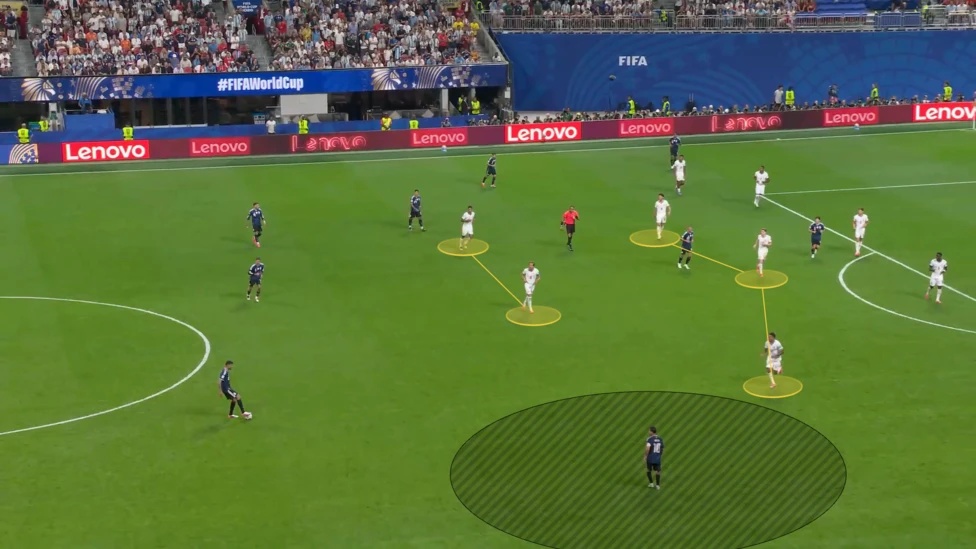 |
England's 5-3-2 formation is drawn to the left flank following the ball. When Argentina switches the attack to the right, Messi holds position in the space beyond the control of England's third central midfielder, in this instance Morgan Rogers. Screenshot
After Declan Rice was substituted for Nico O'Reilly, England switched to a 5-4-1 formation, which better covered the flanks. However, new issues arose. Bellingham was pulled back to play as a defensive midfielder, a position not his specialty. Instinctively, he often dropped too close to the defense, then had to sprint long distances to press Argentina's midfielders outside the box. This left Bellingham always a step behind, allowing Argentina to circulate the ball from the left wing to the right, where Messi continued to make a difference. Bellingham's deep positioning also gave Enzo Fernandez enough time and space for a long-range shot, which led to the corner that resulted in Argentina's equalizer.
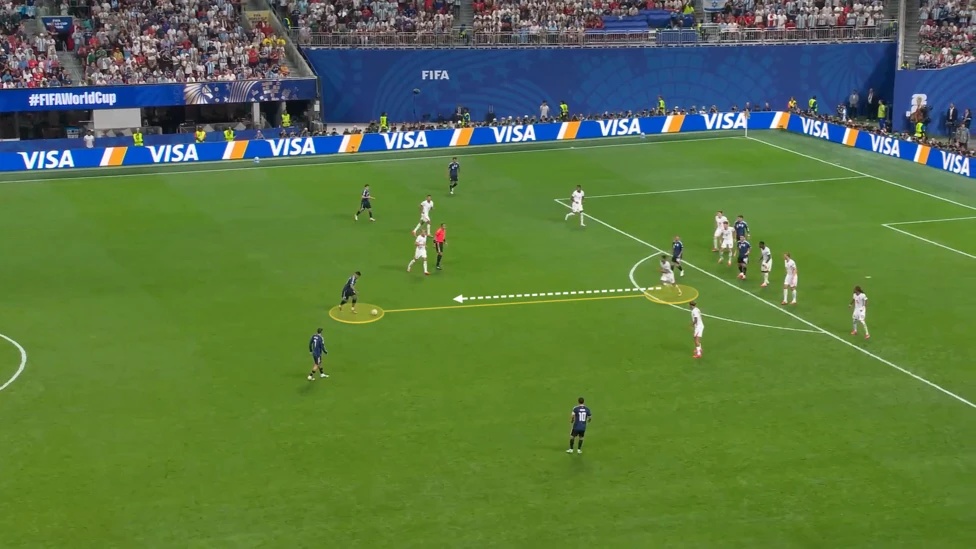 |
Playing out of position, Bellingham does not control defensive spacing as effectively as Declan Rice. Enzo Fernandez has enough time to shoot before earning the corner that leads to Argentina's equalizer. Screenshot
Scaloni and Messi create overwhelming pressure
As England's players tired, many were forced to play out of position and faced relentless attacks led by a great player. It was no surprise that Argentina produced their most dominant period of the World Cup.
Xuan Binh (according to BBC Sport)