The match, held at Hall 4, Impact Arena, Muang Thong Thani, Bangkok on the afternoon of 15/12, concluded in a 60-60 draw. However, Nor Farah was declared the loser due to being deemed to have committed more fouls.
This decision provoked a fierce reaction from the Malaysian delegation. They argued that the score did not accurately reflect the match's progression, claiming Nor Farah was more proactive and effective in her attacks, yet many of her actions went unacknowledged by the referees.
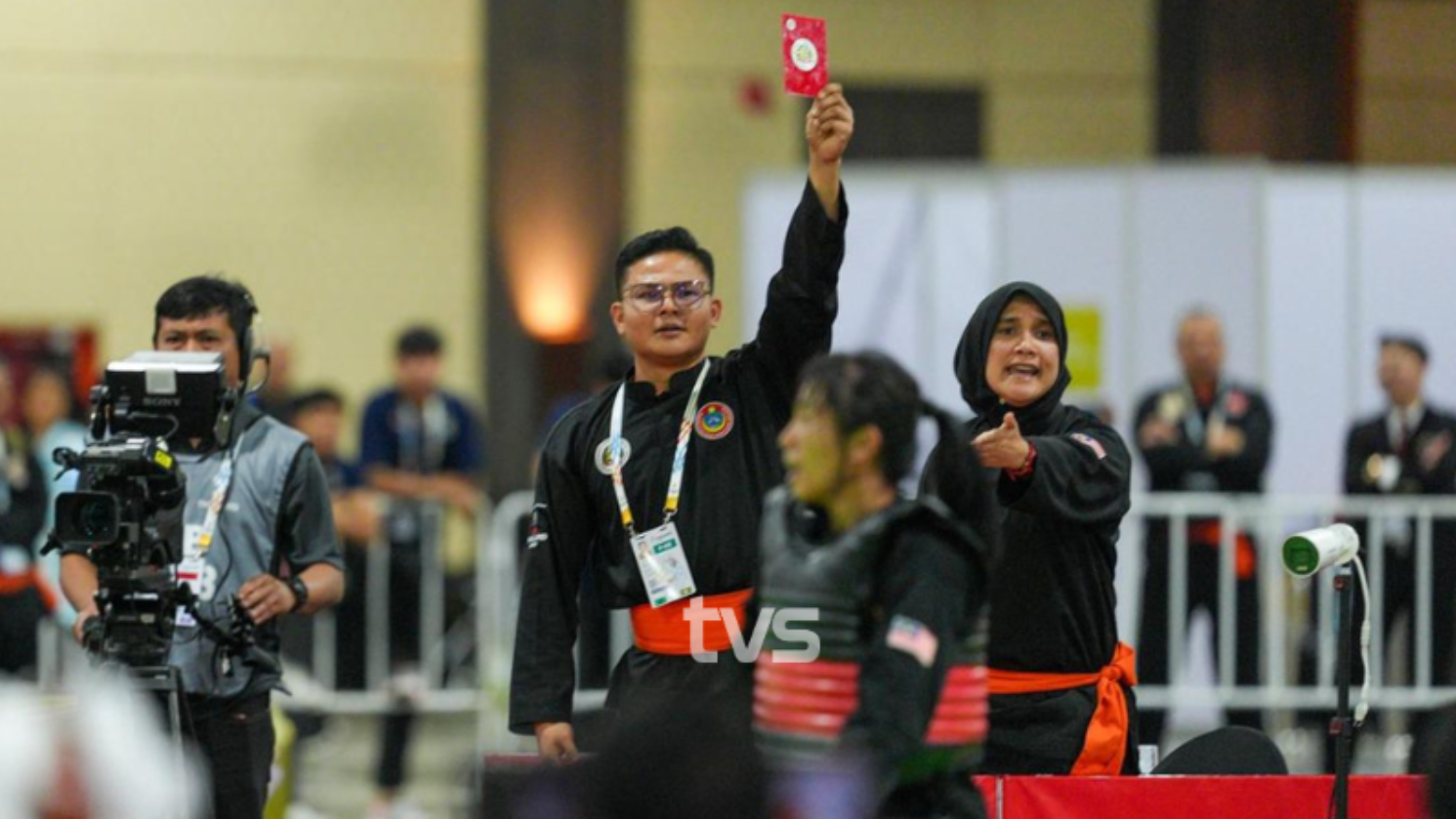 |
The Malaysian delegation protests the referee's decision after the women's B category (50–55 kg) quarterfinal at Impact Arena, Muang Thong Thani, Thailand on 15/12. Photo: TVS |
Immediately after the results were announced, the head of the Malaysian pencak silat team, coach Siti Rahmah Mohamed Nasir, along with Nor Farah and other coaching staff members, rushed to the referee's area to protest. The situation escalated, leading to a physical altercation as some Malaysian members made direct contact with referees and officials.
As the confrontation spiraled out of control, security forces and police stationed outside intervened, separating the parties and pausing the competition for a few minutes to stabilize the situation.
Despite significant pressure, the SEA Games 2025 organizing committee upheld the result: victory was awarded to Thailand, while the Malaysian delegation left the venue feeling aggrieved and disappointed.
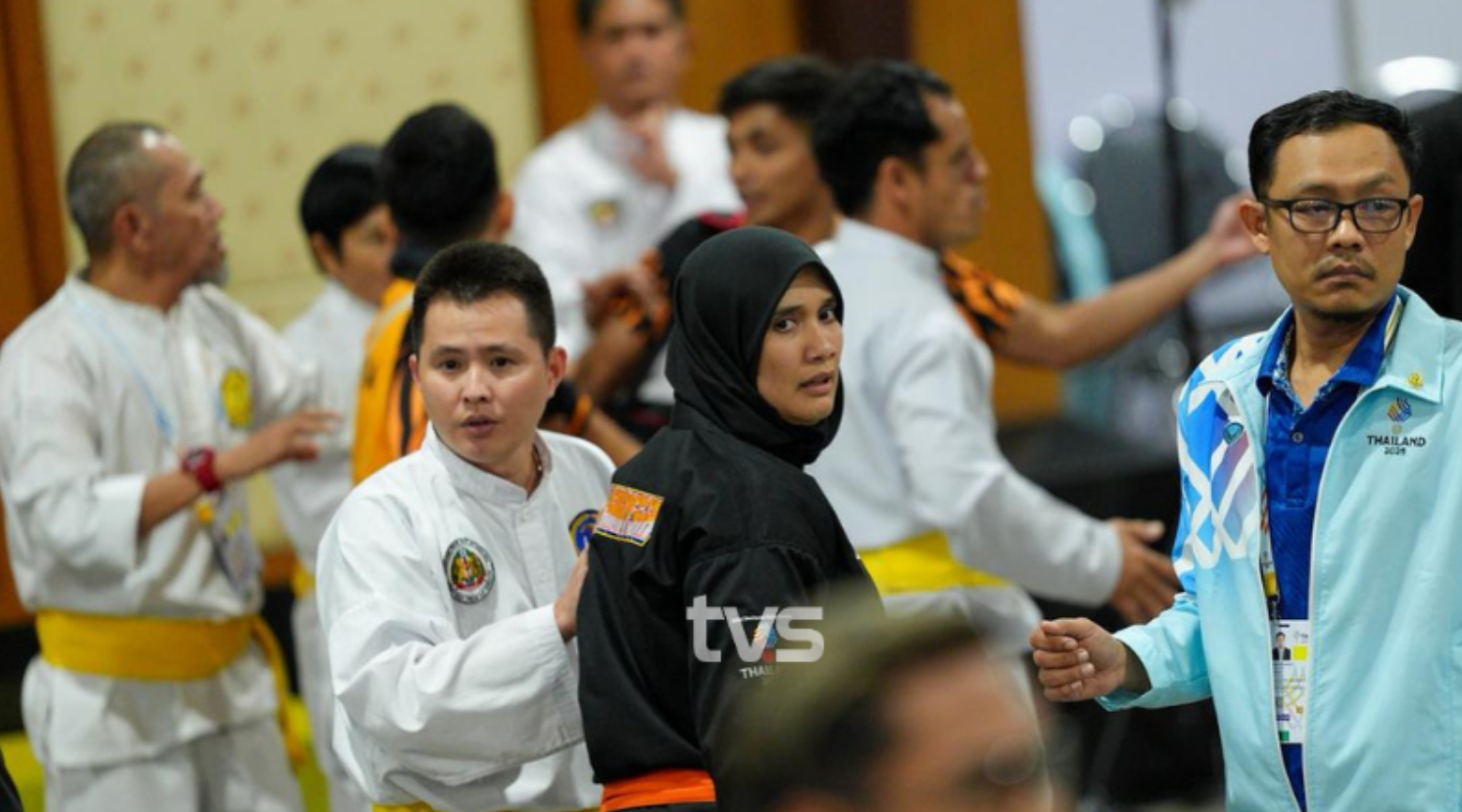 |
Malaysian pencak silat coach, Siti Rahmah Mohamed Nasir, is escorted from the referee's area. Photo: TVS |
The incident immediately garnered significant attention from the press and fans, particularly in Malaysia and Thailand. Malaysian media provided multi-faceted coverage, including acknowledging that their team's reaction had exceeded acceptable limits. Sarawak newspaper frankly suggested that pencak silat scoring methods lacked professionalism, but simultaneously emphasized that violent behavior towards referees is unacceptable in any sport.
According to Malaysian television channel TVS, the incident raises questions about the fairness of scoring in pencak silat sparring, a discipline that demands high precision and transparency in competitive combat.
Pencak silat originated in Indonesia and quickly spread throughout Southeast Asian countries. This martial art can be performed unarmed or with weapons, characterized by fluid, almost dance-like movements that combine aesthetic appeal with combat application.
Pencak silat was first introduced at the 14th SEA Games in 1987. Although it was excluded from some previous editions, the martial art returned for SEA Games 33.
Pencak silat encompasses two main categories: artistic performance (Seni) and sparring (Tanding). Seni evaluates technique, balance, rhythm, and team coordination, and may involve weapons. Tanding is direct combat, categorized by weight and gender, with the objective of attacking, defending, or taking down an opponent. Valid target areas include the chest, abdomen, hips, back, and legs.
Matches take place in a 10x10 meter arena, featuring an 8-meter central circle and a three-meter smaller circle for pre-match demarcation. Each match consists of three 2-minute rounds, with a one-minute break between rounds. Points are awarded for successful strikes, kicks, takedowns, or evasions followed by counter-attacks. Referees also impose penalties, including point deductions or disqualification for rule violations.
Hong Duy (via TVS, Murianews)