 |
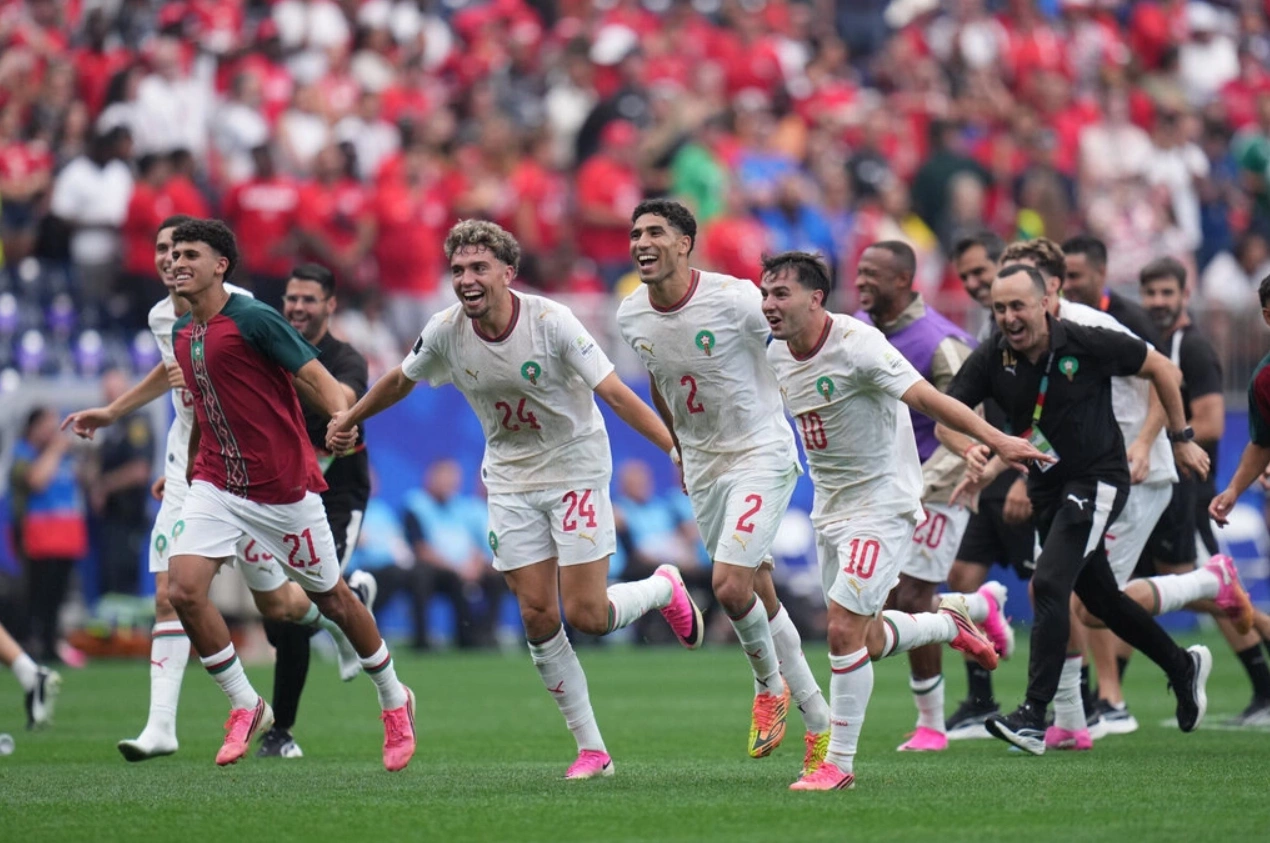
Morocco players celebrate after their 3-0 victory over Canada in the round of 16 at the 2026 World Cup at Houston Stadium, US, on 4/7. Photo: AP |
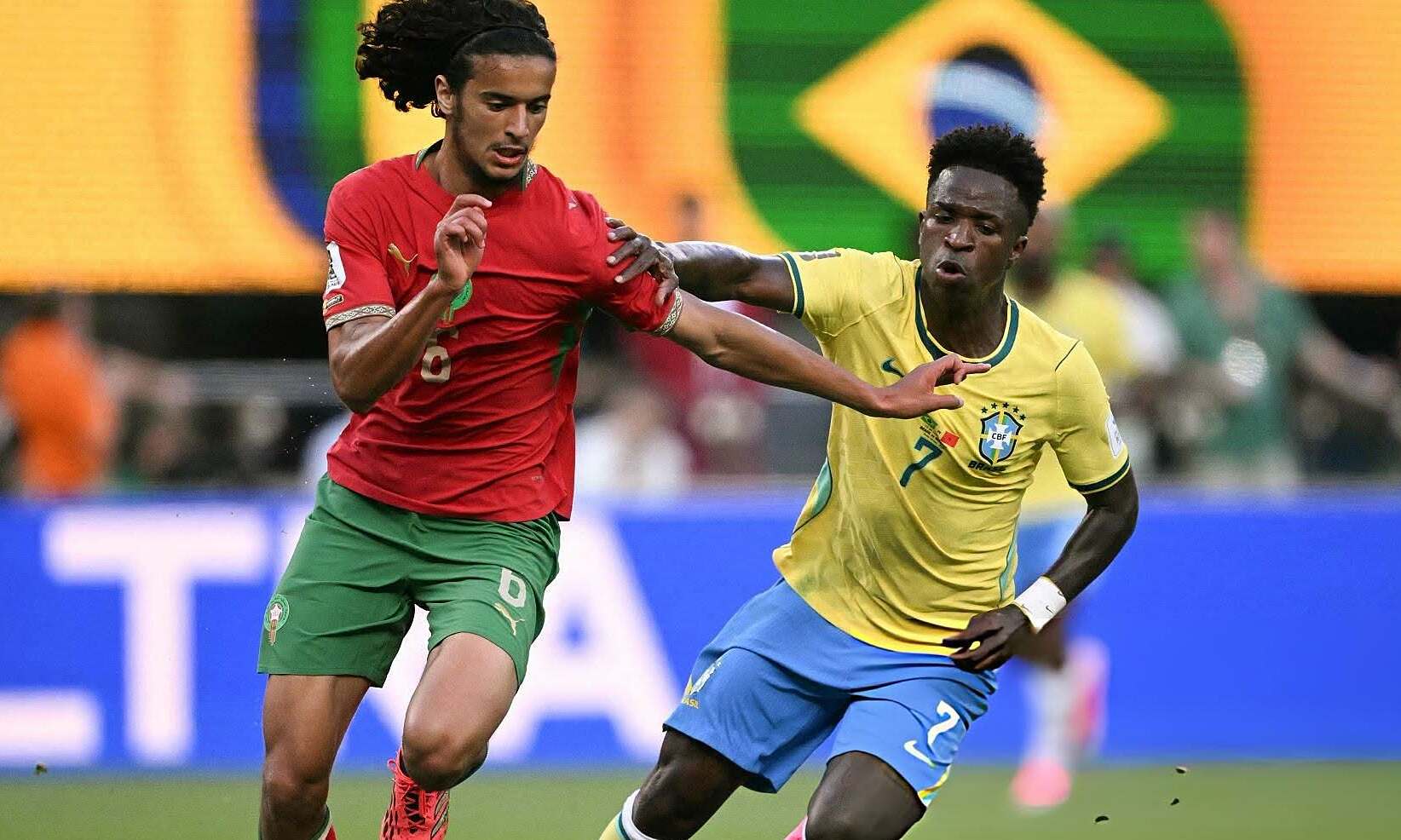
"I will not prepare differently when facing Brazil. We have our own football philosophy," Ouahbi declared, sending a clear message about Morocco's evolution before their opening match against Brazil at the 2026 World Cup. Their subsequent 1-1 draw further underscored that the North African team has entered a new phase of development.
In stark contrast to their 2022 World Cup image, where Morocco made headlines by reaching the semifinals with a disciplined defensive-counterattacking style, Ouahbi's team proactively held possession, consistently applied pressure, and often controlled the game against Brazil. From being the "hunted," Morocco has now become an opponent major teams must be wary of.
Their performance against the most successful team in World Cup history clearly reflected Morocco's evolution. While their success in Qatar stemmed from patience, tight organization, and timely decisive strikes, the current iteration is prepared to dictate play. Morocco no longer waits for opportunities to open up; they actively create them.
Key moments from Morocco 1-1 Brazil match.
This transformation bears the imprint of Mohamed Ouahbi, who was appointed just three months before the 2026 World Cup to replace Walid Regragui, the architect of their historic journey in Qatar. After leading Morocco U20 to victory in the FIFA U20 World Cup 2025, Ouahbi swiftly shaped a new playing style for the national team.
Before the Brazil match, Ouahbi asserted: "Morocco is currently experiencing the best technical period in our nation's football history."
According to the 49-year-old coach, controlling possession and proactively attacking is not about copying any particular school of thought or pursuing pure aesthetics. It forms the foundation of a project to build an identity based on the qualities of Moroccan players: good technique, quick maneuvering, confidence in receiving the ball in tight spaces, and sufficient physical fitness to maintain high-intensity pressing.
Before the 3-0 victory over Canada in the round of 16, Ouahbi explained: "We have technique and speed; what is needed is finding the right way to play. Now Morocco has a clear identity, so it's not difficult to convey ideas to the players."
A characteristic of top teams today is quickly moving the ball into the final one-third of the field without rushing shots. Many situations show that continued ball progression creates clearer scoring opportunities compared to long-range shots.
This is a principle Ouahbi has persistently built upon. "I don't forbid players from shooting from distance," he stated. "But when we consistently get the ball into the penalty area and become one of the teams with the most touches in that zone, why choose to shoot from outside the box?"
This composure was most evident in their match against the Netherlands, the birthplace of "Total Football" philosophy. Morocco dominated possession, holding 70% of the ball throughout the game. After the Netherlands took the lead and adopted a deeper defensive stance, the African representatives patiently controlled the tempo and dictated play without losing focus or resorting to long passes.
Key moments from Morocco - Netherlands match in the round of 32.
Their victory in the penalty shootout further solidified the players' belief. Defender Noussair Mazraoui shared with FIFA: "The Netherlands is one of the strongest opponents you can face. So, today's victory is a source of great pride."
To implement the new playing style, Ouahbi also possesses suitable players. Most notably is 18-year-old midfielder Ayyoub Bouaddi, one of the discoveries of the 2026 World Cup, who debuted for the national team in the match against Brazil. The Lille talent impressed with his ability to link lines, composure under pressure, and sharp tactical thinking—key elements helping Morocco refine its new identity.
Additionally, players who did not participate in the 2022 World Cup, such as Brahim Diaz, Ismael Saibari, Nayef Aguerd, and Chadi Riad, have added depth to the squad, enabling Morocco to proactively engage in attacking duels with top opponents.
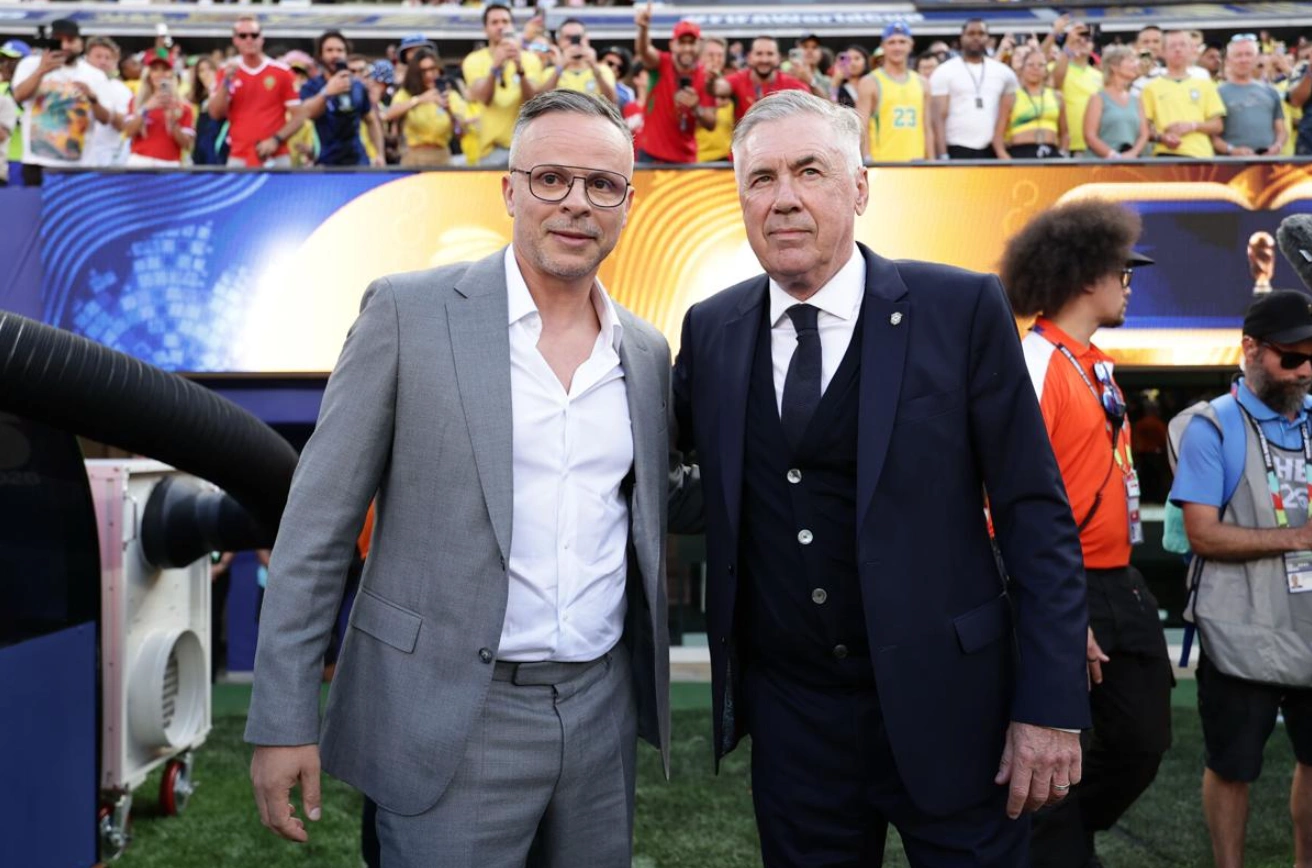 |
Coach Mohamed Ouahbi (left) and Carlo Ancelotti before Morocco's 1-1 draw with Brazil in Group C of the 2026 World Cup, at MetLife Stadium, East Rutherford, New Jersey, US, on 13/6. Photo: AP |
Remarkably, this renewal process has not erased the values that brought success in Qatar. Morocco has retained its ability to defend deep when necessary, along with the resilience that has become its trademark. This was evident in the match against Canada. After Azzedine Ounahi's opening goal, they deliberately ceded possession to exploit spaces when their opponents pushed forward, scoring two more goals.
Alongside new faces, key players from the 2022 World Cup success, such as goalkeeper Yassine Bounou, defender Achraf Hakimi, and midfielder Ounahi, remain the team's foundation, maintaining the fighting spirit that led Morocco to make history.
After eliminating the Netherlands in a penalty shootout, Bounou said: "Through these recent matches, everyone can see that the players are still competing with the same intense spirit as in 2022. We still maintain that resilience."
Key moments from Morocco - Canada match in the round of 16.
The combination of the winning mentality forged by former coach Walid Regragui and Ouahbi's new philosophy—prioritizing ball control, assertive play, and patient attacking—is creating a more complete Morocco than ever before.
However, the greatest challenge still lies ahead. At Gillette Stadium in Boston today, 9/7, the African representatives will face France, the 2018 World Cup champions and 2022 runners-up. This encounter will be the clearest measure of Ouahbi's ability to blend the legacy of a team that once shocked the world with the new identity he is building on North American soil.
Hong Duy (according to FIFA)