The 1-1 draw at Fulham exposed issues with Manchester United's intensity. Forward Matheus Cunha, who scored the late equalizer, admitted after the match that Fulham played with more energy. "They put in more energy than us, which is unacceptable," the Brazil forward told Sky Sports.
Gary Neville also criticized Manchester United's movement off the ball. The former defender stated he had never seen a Manchester United team "walk so much when not in possession".
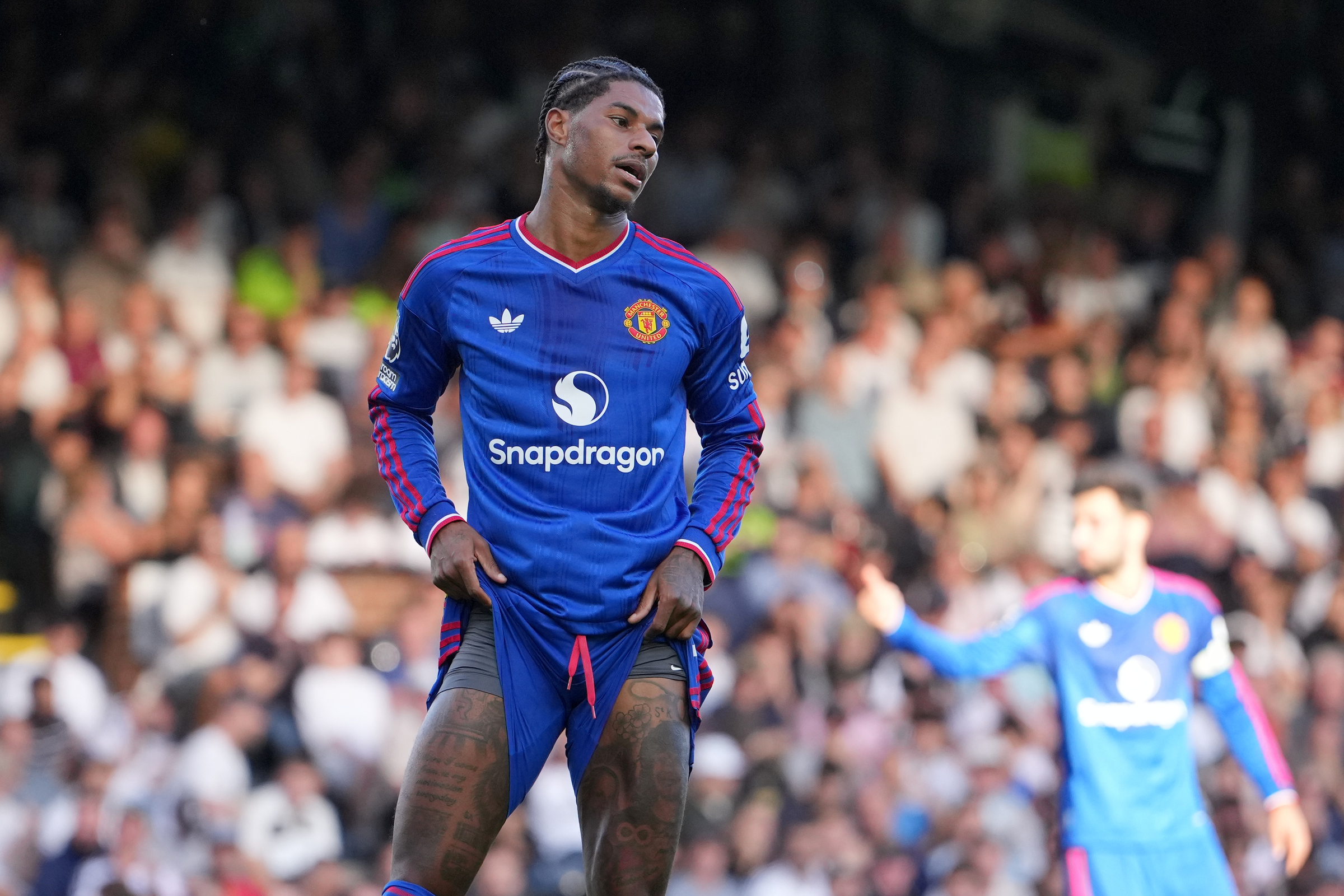 |
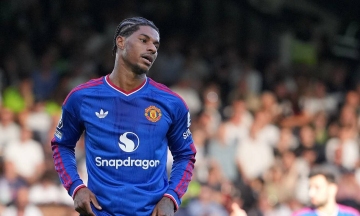
Marcus Rashford of Manchester United reacts after missing a scoring opportunity during a Premier League match against Fulham at Craven Cottage, London, England, on 20/9. Photo: AP
Data from Opta supports these observations. Manchester United ranks joint-last in the Premier League for high-intensity runs, with 1,691, matching Manchester City. However, Manchester City's figure needs context, as Phil Foden received a red card in the 23rd minute of the derby at Old Trafford, leaving them with ten players for most of the match.
At Fulham, Manchester United's fitness and intensity issues were further highlighted by the distance covered. The visitors ran only 110,2 km, ranking second-lowest among Premier League teams playing last weekend. Liverpool covered less overall distance, with 108,4 km in their match against Bournemouth.
Manchester United ran 6,5 km less than Fulham. This marks the second-largest distance difference between two teams in the Premier League this season in matches where both played with 11 players. Only Arsenal previously created a larger gap, running 6,8 km more than Coventry in the season's opening match.
Manchester United has also been outrun by Hull, Ipswich, and Everton this season in terms of distance covered. The sole exception is Manchester City, who played with ten men for most of the Manchester derby.
These figures draw more attention to the performance at Craven Cottage, as Manchester United did not actively control possession to explain their low movement. Instead, they spent most of their time defending.
At Fulham, Manchester United spent 52,98% of their time off the ball walking. This is their highest percentage this season and ranks eighth in the Premier League for that specific matchday. Manchester United's season average is 51,13%, ranking 17th in the league.
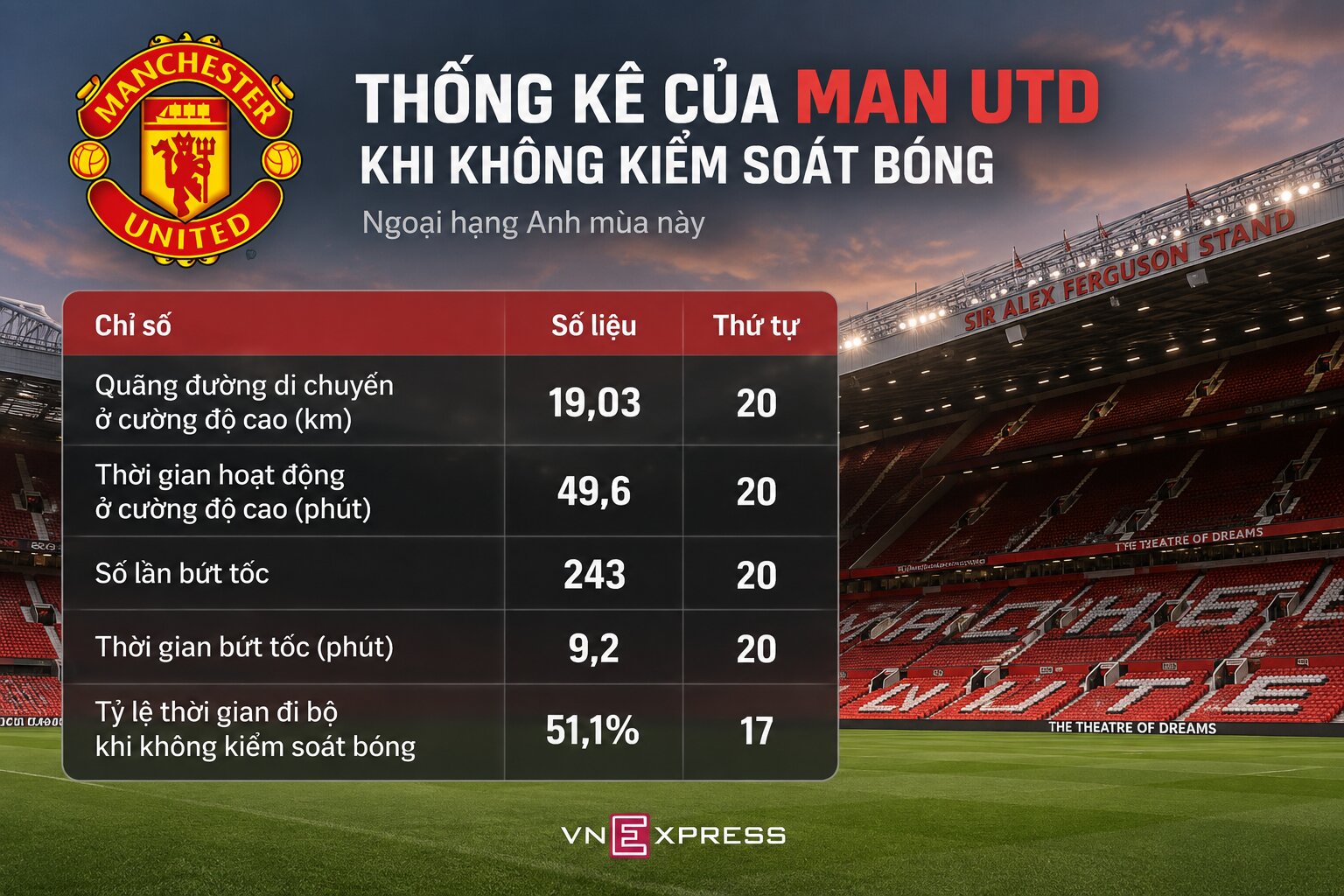 |
Four of five statistics on Manchester United's off-the-ball intensity rank bottom of the Premier League. Graphic: Hoang An (AI support)
Since the start of last season, there have been 30 instances where a Premier League team spent a higher percentage of time walking off the ball than Manchester United did against Fulham. This includes Manchester United themselves in their 3-0 victory over Brighton on the final day of last season, with a percentage of 54,59%.
Another issue lies in Manchester United's defensive starting position. Fulham was allowed to initiate passing sequences from an average position of only 36,9 m from Manchester United's goal. This was the closest an Premier League team allowed an opponent to start passing sequences last weekend.
This figure reflects Manchester United's deep defensive line when not in possession. Conversely, Fulham allowed Manchester United to start their attacks from an average distance of 43,4 m from the home team's goal, which was the third-highest in the matchweek.
Consequently, Fulham had ample time to build up play. The home team executed more sequences of 10 or more passes, ending with a shot or a touch in the penalty area, than any other Premier League team last weekend.
These are the aspects that fuel complaints about Manchester United's intensity. However, statistics also indicate that the narrative is not entirely negative.
Carrick dismissed the observation that Manchester United lacked energy. When asked about Cunha's statement, the Manchester United manager said the late-game performance did not give him that impression.
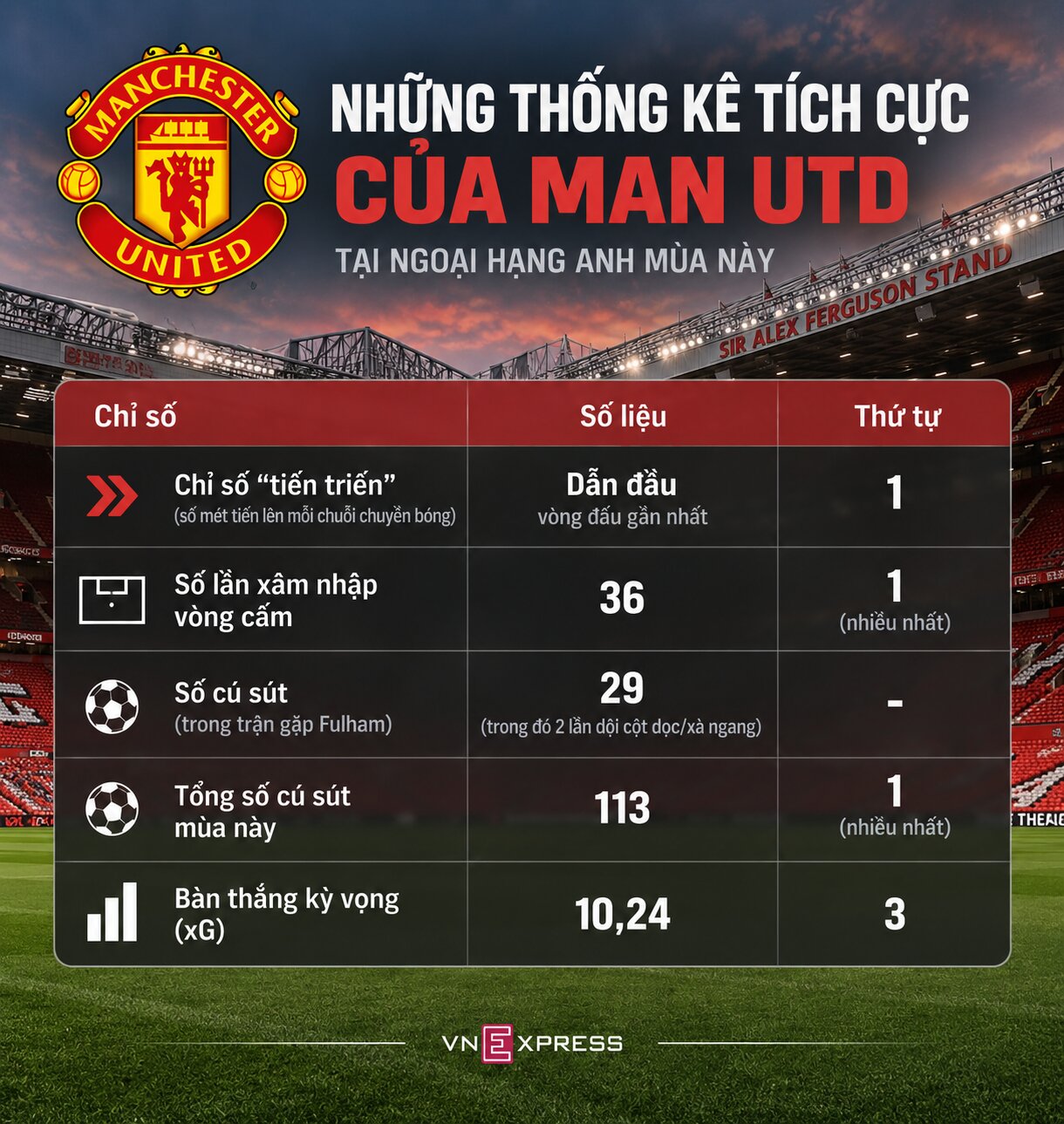 |
Positive attacking statistics for Manchester United. Graphic: Hoang An (AI support)
In fact, Manchester United still generates many positive statistics when in possession. Their "progress" metric, which measures the meters a team advances in each passing sequence, was the highest in the Premier League last matchweek. This indicates Manchester United's ability to move the ball forward significantly after regaining possession, despite often starting attacks from deeper positions.
Manchester United also had 36 penalty box entries at Fulham, their highest in a Premier League match this season. They took 29 shots, with two hitting the post.
Since the start of the season, Manchester United has taken 113 shots, the most in the league. Their total expected goals (xG) stands at 10,24, ranking third in the Premier League. Manchester United continues to create numerous opportunities. They are generating a sufficient number of attacking situations, but these positive statistics have not yet translated into equivalent results.
After 5 matches, Manchester United has only 5 points, placing them 12th. This start is particularly disappointing as the team finished third last season and entered this campaign with expectations of further progress.
However, beyond just their points tally, Manchester United is also being scrutinized for their playing style. Statistics on high-intensity runs, distance covered, walking time off the ball, and defensive positioning all provide further grounds for criticism after the draw against Fulham. The challenge for Carrick is to improve these fitness and intensity issues in upcoming matches, including the crucial clash against Tottenham at Old Trafford.
If they fail to defeat Tottenham, currently at the bottom of the table, Manchester United will face the club's worst start in Premier League history. In that scenario, questions about Carrick's performance and the team will become even more intense.
Xuan Binh (according to Sky Sports)